Why This Trade, Why Right Now
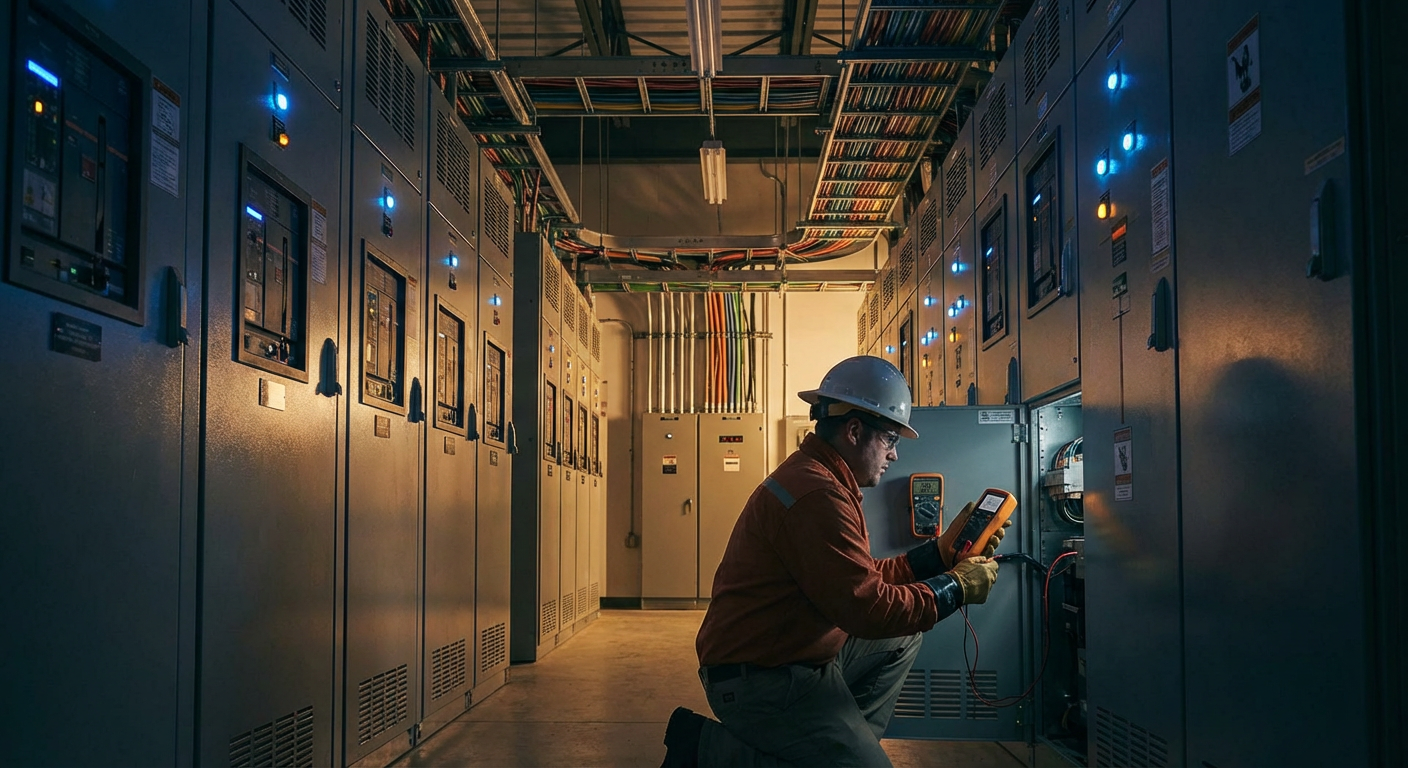
Here is a fact that will reshape how you think about your career options: you cannot run an AI data center without industrial electricians. There is no workaround, no software patch, no outsourcing solution. The physical infrastructure that makes artificial intelligence possible requires trained human beings who understand high-voltage systems, power distribution, and the unbelievably exacting electrical requirements of modern computing.
And right now, we have a serious shortage of those people.
The United States needs more than 300,000 electricians immediately just to support current data center construction. That number is not a projection for some distant future. It is a gap that exists today. Companies like Google, Microsoft, Amazon, and Meta are scrambling to build data centers as fast as physically possible, and the single biggest bottleneck is not funding, not land, not even hardware. It is licensed electricians who can do the work.
If you have been sitting in a white-collar job wondering whether your skills are becoming obsolete, wondering whether AI is quietly preparing to hand your tasks to an algorithm, this module is a direct answer: the people who keep AI running are not getting replaced by AI. They are getting paid more than ever to build the physical world that makes AI possible.
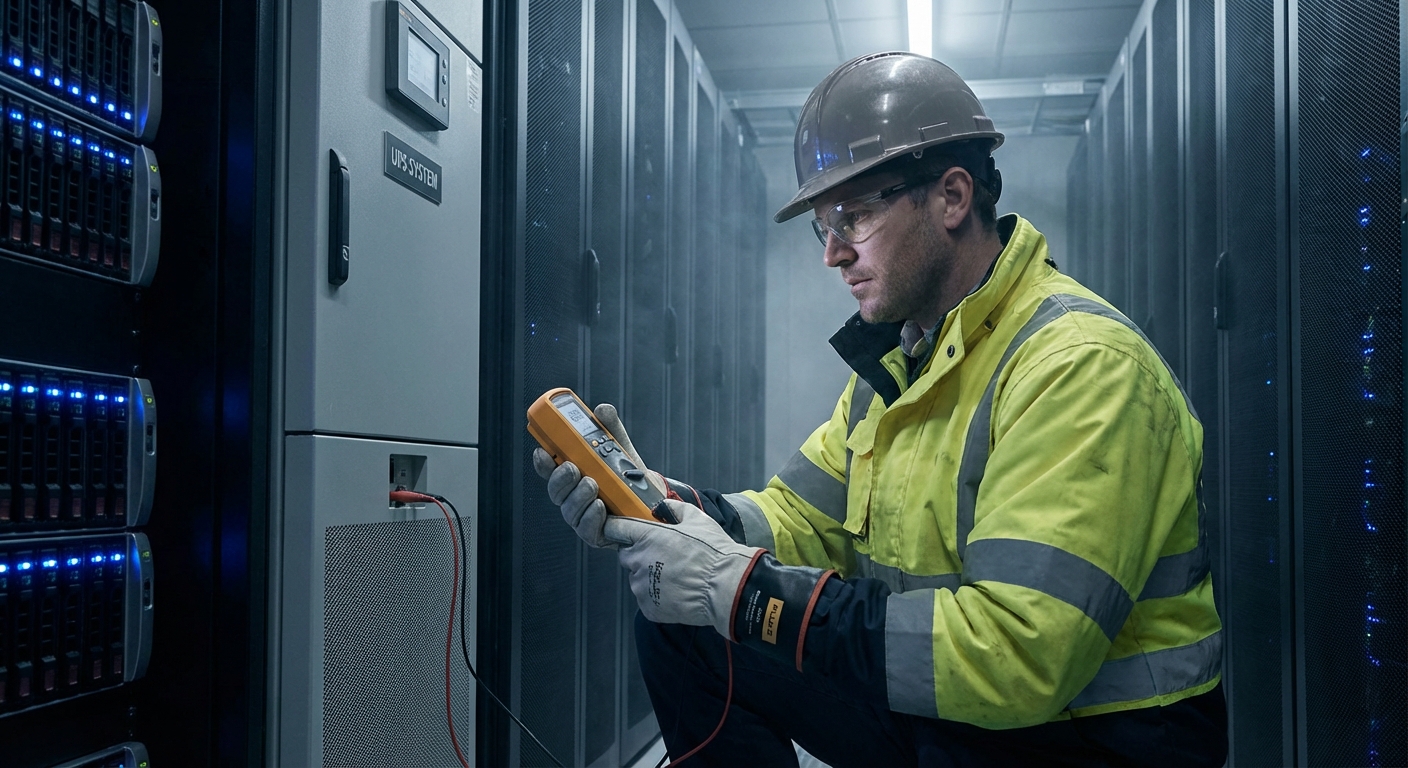
High-voltage UPS systems being tested during data center commissioning
$62,350
Median Annual Salary (BLS)
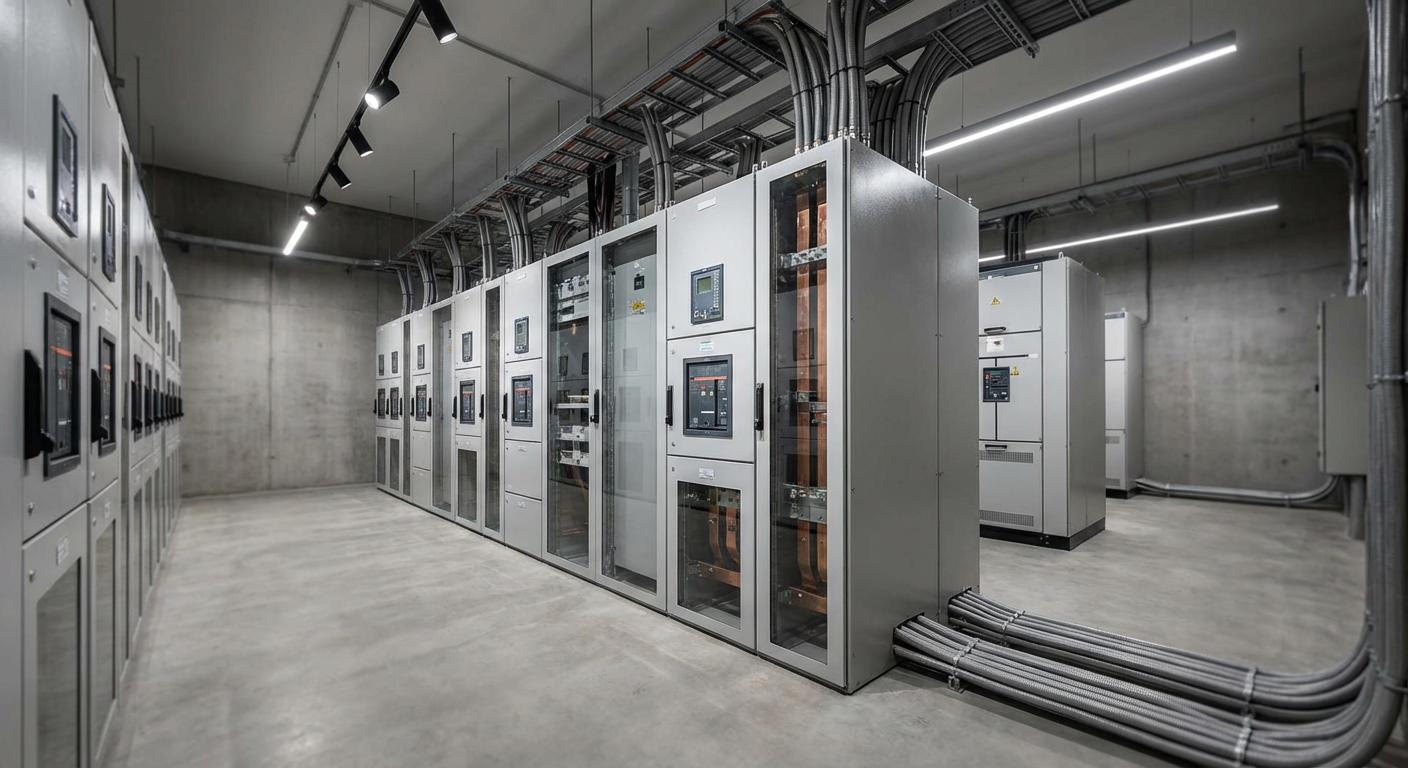
Switchgear rooms like this power entire data center campuses
$156,466
Top Earner Ceiling
81,000
Job Openings Per Year
9%
Projected Growth 2024-2034
300,000+
Electricians Needed for Data Centers Now
$200B+
Global DC Construction Market
The AI Connection: Why Electricians Are Becoming the Most Important People in Tech
Let's talk about what actually happens when you type a question into ChatGPT or ask an AI to write code for you. That request travels through the internet to a data center: a massive, warehouse-scale building packed with thousands of GPU servers drawing enormous amounts of electrical power. Each of those servers needs stable, clean, redundant power. The entire facility requires sophisticated power distribution systems, uninterruptible power supplies, backup generators, and the kind of meticulous electrical infrastructure that can keep millions of dollars of hardware running without a single interruption.
Training GPT-4 alone consumed as much electricity as approximately 1,000 homes use in an entire year. That was for a single training run of a single model. Now multiply that by every AI company, every model version, every retraining cycle, every inference cluster running 24 hours a day to serve billions of requests. The electrical demand is staggering, and it is growing exponentially.
The global data center construction market has surpassed $200 billion and continues to expand. Every single one of those projects needs industrial electricians at every stage: design review, rough-in wiring, gear installation, commissioning, and long-term maintenance. And data center electrical work pays premium rates because the standards are so demanding and the cost of mistakes is so high.
The Numbers That Should Excite You
Data center electricians earn significantly more than residential or commercial electricians. The typical data center range runs from $61,391 to $93,341 per year. Experienced specialists with high-voltage certifications and data center experience regularly hit $122,921 to $156,466. And electrical foremen overseeing large data center projects? Their total compensation package, including overtime, per diem, and project bonuses, frequently exceeds $200,000.
These are not outlier numbers. This is what the market pays for people with verified skills in a field where demand vastly outstrips supply.
Real People Who Made the Switch
Zen Stewart, 34: From Corporate Desk to IBEW Member
Zen Stewart was 34 years old, sitting in a white-collar job, watching the AI conversation unfold in his industry. He was worried. Not panicked, but genuinely concerned about where his career was heading. He started asking a different question: which jobs cannot be automated? Which skills will matter more in ten years, not less?
Electrical work kept coming up. Specifically, the kind of complex industrial and data center electrical work that requires licensed professionals with hands-on skills. Zen applied to an IBEW apprenticeship program. He got in. Today he is an IBEW member, earning real wages, building real infrastructure, and he told people he felt more financially secure than he ever did in his white-collar role.
The anxiety about AI being replaced by AI? Gone. The person who builds and maintains the systems running AI is not competing with AI. They are essential to it.
Dustin Snyder: Former Account Manager, No Looking Back
Dustin Snyder spent years as a corporate account manager. Good job, stable income, professional environment. But something was missing, and the ceiling felt lower than he expected when he took the job. After making the move into the electrical trade, Dustin said his life is "a million times better." He works with his hands. He solves real problems. He can see and touch what he built at the end of every day. And here is the kicker: he earns more than he did in his corporate role.
Dustin is not an anomaly. Stories like his show up in every IBEW local, every trade school graduating class, every crew on a data center project. The people who make the switch rarely regret it. What they usually say instead is that they wish they had done it sooner.
How Your White-Collar Background Actually Helps You
Here is something the trades community does not always say loudly enough: white-collar skills transfer beautifully to the electrical trade, especially at the industrial and data center level. You are not starting from zero. You are bringing assets that most people entering the trades do not have.
Software Engineers
You already think in systems. N+1 redundancy, fault tolerance, power budgeting, load balancing: these concepts map directly from software architecture to electrical infrastructure. Data centers use A/B power feeds, redundant UPS systems, and automatic transfer switches because the underlying philosophy is identical to how you design resilient software. You understand why uptime matters and what it costs when it fails. You will grasp the logic of data center electrical design faster than almost anyone else entering the trade.
You also understand documentation. The kind of meticulous, version-controlled, system-aware documentation that data center operators require is second nature to engineers. That makes you valuable on day one in ways that go beyond your hands-on skills.
Accountants and Finance Professionals
Electrical work is built on precision and compliance. The National Electrical Code (NEC) is a dense, detailed document that governs everything from wire sizing to panel labeling to grounding requirements. Sound familiar? It is essentially a regulatory framework, not unlike tax code or GAAP standards. Your trained eye for catching errors, your comfort reading compliance documents, and your habit of verifying calculations make you exceptionally well-suited for the code-compliance aspects of electrical work.
Load calculations, voltage drop calculations, short circuit analysis: these are math-heavy tasks that many tradespeople find tedious. For someone with a finance background, they are familiar territory. Meticulous attention to detail in electrical work is not a nice-to-have. It is a safety requirement. You already have that habit built in.
Operations Managers
Operations management experience is arguably the fastest path to becoming a high-earning electrical foreman. Foremen do not just wire buildings. They coordinate crews, manage schedules, handle materials procurement, communicate with general contractors and building owners, and ensure that complex, multi-phase projects stay on schedule. If you have run a department, managed vendors, owned a P&L, or coordinated large teams through complex logistics, you have the foundation for a foreman role baked in.
Most electricians who rise to foreman level do so over 10 to 15 years because they are learning the management skills along the way. You already have them. Combine your existing leadership and operational skills with the technical certifications, and you can compress that timeline significantly.
Lawyers and Compliance Professionals
The NEC is revised every three years and adopted (with local amendments) by jurisdictions across the country. Understanding which code version applies in a given location, how to read and interpret code sections, how to navigate the variance and inspection process: these are skills that map directly from legal practice. Contract interpretation, permit applications, inspection documentation, and dealing with inspectors all benefit from someone who understands how rules and compliance frameworks actually work in practice.
Large commercial and data center projects also involve substantial contract work. Electricians who understand contracts, scope of work documents, change orders, and liability are valuable assets to electrical contractors who deal with these issues constantly. Your legal background does not become irrelevant in the trades. It becomes a competitive advantage.
The Salary Reality: What You Can Actually Earn
Let's get specific, because vague promises about "good money" are not useful when you are making a major career decision.
| Stage |
Typical Annual Earnings |
Notes |
| IBEW Apprentice (Year 1) |
$20,000 to $35,000 |
50% of journeyman rate to start; increases each year |
| IBEW Apprentice (Years 2-4) |
$35,000 to $52,000 |
Wages step up annually; benefits included |
| Journeyman Electrician |
$62,350 median nationwide |
Higher in union markets and high-cost areas |
| Data Center Specialist |
$61,391 to $93,341 |
Premium for data center specific experience |
| Senior / High-Voltage Certified |
$122,921 to $156,466 |
Top earner range for experienced specialists |
| Electrical Foreman (Data Center) |
$200,000+ total comp |
Includes overtime, per diem, project bonuses |
These numbers represent what the market is actually paying today, not hypothetical projections. And they do not include the full picture of IBEW membership benefits: pension, health insurance, annuity funds, and paid training that together add significant value beyond the base wage. Many journeymen with full benefits packages are effectively earning the equivalent of what appears to be a much higher salary when total compensation is calculated.
The Apprentice Wage Structure
One of the most important things to understand about IBEW apprenticeship is the wage progression. You start at 50% of the journeyman rate and receive raises every six months as you complete coursework and accumulate on-the-job hours. By your fourth year, you are earning close to journeyman rates. By your fifth year, when you test out and become a journeyman, you are often already earning more than many college graduates. And you did it without student loan debt.
Training Paths: How You Get There
There is no single correct path into industrial electrical work. The right choice depends on your timeline, your financial situation, and how quickly you want to be working. Here are the main options, explained honestly.
Option 1: IBEW Apprenticeship (5 Years, Essentially Free)
The IBEW Joint Apprenticeship and Training Committee (JATC) program is one of the best workforce training programs in any field in the United States. You earn while you learn from day one. The coursework happens in the evenings and on weekends through your local IBEW training center. The cost is minimal, covered largely by the union and your employer contributions. Over five years, you accumulate approximately 8,000 hours of on-the-job experience and 900 hours of classroom instruction covering electrical theory, code compliance, blueprint reading, and specialized systems.
The tradeoff is time. Five years is a real commitment. But during those five years, you are being paid wages and building toward journeyman status. Compare that to a four-year degree that costs $100,000 or more and may or may not lead to a job that pays well. The math is striking.
Applications open periodically through your local IBEW chapter. The process typically involves an aptitude test and an interview. If you have a white-collar background, you are likely well prepared for both. The aptitude test focuses on algebra and reading comprehension: skills you use every day.
Option 2: Trade School (1 to 2 Years, $5,000 to $20,000)
If you want to move faster, licensed trade schools offer accelerated programs that can have you working as an apprentice or entry-level electrician in one to two years. The cost ranges from about $5,000 to $20,000 depending on the program length, location, and whether you pursue any specialty certifications alongside the core curriculum.
Trade school does not replace the apprenticeship entirely. In most states, you still need a certain number of on-the-job hours before you can sit for your journeyman license exam. But completing a trade school program can give you a strong technical foundation that makes you a more competitive apprenticeship applicant and helps you advance faster once you are on the job.
Some trade school graduates find work with non-union contractors immediately after graduation, accumulate their hours, and test for their license on a faster timeline than the traditional apprenticeship route. This path requires more upfront investment but can compress the timeline to journeyman status.
Option 3: Community College Programs (2 Years, Moderate Cost)
Many community colleges offer associate degree programs in electrical technology or industrial maintenance that blend electrical theory with hands-on skills. These programs often have articulation agreements with IBEW locals that can credit some of your coursework toward apprenticeship requirements. They also give you more time to explore the field before committing fully, and the associate degree can open doors to supervisory and technical roles later in your career.
The Certification Ladder
Beyond your journeyman license, the certifications that command serious premium pay in the data center world include: OSHA 30 for general industry, NFPA 70E for electrical safety, Arc Flash Hazard Analysis certification, and specialized high-voltage training. Many data center operators also require their electrical staff to have facility-specific training on systems like Eaton, Schneider Electric APC, and Vertiv power infrastructure. Each certification you add makes you more valuable and more hireable.
A Day in the Life: What This Actually Looks Like
Theory is useful, but let's talk about what a typical day looks like for an industrial electrician working on data center projects. This is not a job where every day is identical. There is always something new to problem-solve, and that variety is part of what makes it engaging.
6:30 AM
Safety Briefing and Site Setup
The day starts with a crew safety briefing. On a data center project, this is not a formality. High-voltage environments require everyone to understand the specific hazards of that day's work: which panels are energized, what lockout/tagout procedures apply, what PPE is required for each task. You review the day's work orders, confirm the scope with the foreman, and get your tools staged at the work area.
7:00 AM
High-Voltage Work and UPS Systems
Depending on the project phase, the morning might involve pulling wire through conduit runs in the raised floor environment, terminating feeders at switchgear, or commissioning UPS systems. Data center UPS units are complex, expensive pieces of equipment that require careful startup procedures and precise electrical connections. This is where experience with technical documentation pays off: UPS commissioning follows detailed manufacturer procedures that must be executed exactly.
10:00 AM
PDU Installation and Power Whip Work
Power distribution units connect the UPS systems to the server racks. Installing PDUs involves precise electrical connections, load calculations to ensure proper phase balancing, and coordination with the IT team who will be racking the servers. The "power whip" connections that run from PDUs to individual rack units require both technical knowledge and patience: these connections must be correct the first time.
12:30 PM
Documentation and As-Built Updates
Documentation in a data center is not optional. Every circuit, every panel, every connection needs to be accurately recorded in the as-built drawings. This is work that often gets rushed on construction sites but cannot be rushed in data centers, because the operators will use these drawings for every maintenance action and emergency response for the life of the facility. If your white-collar background includes any technical writing or documentation work, this part of the job will feel natural.
2:00 PM
Coordination and Problem-Solving
Large data center projects involve multiple trades working simultaneously: mechanical, electrical, plumbing, fire suppression, low-voltage cabling. Coordination between trades is constant. An afternoon might involve a coordination meeting to work out sequencing conflicts, a conversation with the mechanical team about clearances around electrical gear, or troubleshooting an issue that came up during morning commissioning. The ability to communicate clearly, think through problems systematically, and work collaboratively is as important here as technical knowledge.
4:30 PM
Site Cleanup and Next-Day Planning
The day ends with site cleanup (a safety requirement, not just housekeeping), a quick debrief with the foreman on what was accomplished, and a review of the next day's work plan. On larger projects, experienced electricians are often involved in planning conversations that affect crew size, material delivery schedules, and work sequencing. This is where ops and management experience genuinely shines.
The Physical and Mental Reality
Let's be honest about what this work involves, because going in with accurate expectations matters.
Industrial electrical work is physically demanding, especially during the construction phase of large projects. You will be on your feet for most of the day. You will work in confined spaces, climb ladders, pull heavy wire, and spend time in equipment rooms that may be very hot or very cold. Over the course of a long career, the physical demands do ease as you advance into foreman and supervision roles, but the early years require a level of physical conditioning that is genuinely different from desk work.
The good news: most people who transition from sedentary office work find the physical component is one of the things they like most about the trade. There is real satisfaction in ending a day tired from actual work, with something visible to show for it. The physical component also becomes significantly more manageable as you develop the right techniques and build the specific strength and endurance the work requires.
Mentally, the work is engaging in a different way than office work. It demands problem-solving, spatial reasoning, and the ability to hold complex systems in your head while working on individual components. Troubleshooting electrical problems in a live data center, where mistakes have immediate and expensive consequences, requires a particular kind of focused, methodical thinking. Many people with analytical white-collar backgrounds find this type of problem-solving deeply satisfying.
Safety Is the Foundation
Electrical work done correctly is safe work. The safety protocols, lockout/tagout procedures, PPE requirements, and electrical safety standards that govern industrial electrical work exist because they were developed in response to real accidents. Respecting these systems completely is not optional and is not overcaution. It is how professionals in this field protect themselves and their crews. Every apprenticeship program spends significant time on safety, and that investment pays dividends throughout your entire career.
The Long Game: Where This Career Can Take You
Becoming a journeyman electrician is not a ceiling. It is a foundation. The career paths available from that point are genuinely diverse.
Electrical foremen and superintendents on large commercial and data center projects are high earners with significant responsibility. If you have management experience, this path can feel like a natural extension of work you already know how to do, now applied to a field where the work genuinely matters and the pay reflects the stakes.
Electrical contractors hire project managers who need to understand both the technical and business sides of large projects. Someone who transitions from a corporate background into the trades and then moves into contractor-side project management is bringing a combination of skills that is genuinely rare and valuable.
Facility management and critical environment operations are another strong path. Data center operators need people who understand their electrical systems deeply and can manage ongoing maintenance, upgrades, and incident response. These are often salaried roles with benefits packages that compete with corporate employment, and the job security is exceptional because the role cannot be outsourced or automated.
Some journeymen go on to start their own electrical contracting businesses. The combination of technical skills, business acumen from a previous career, and real relationships in the industry creates a solid foundation for entrepreneurship. Electrical contractors have healthy margins on commercial and data center work, and a business owner with management experience from a prior career has a meaningful advantage over a contractor who learned only the technical side.
How to Get Started: Your Action Plan
-
Find your local IBEW chapter. Go to ibew.org and use the local union finder to identify your nearest IBEW local. Read their apprenticeship program information, including current application windows and eligibility requirements. Most locals require a high school diploma or GED, a valid driver's license, and proof that you are at least 18 years old. The aptitude test covers algebra and reading comprehension. Start refreshing your algebra skills now if it has been a while.
-
Visit a local trade school with an electrical program. Even if you plan to apply for IBEW apprenticeship, visiting a trade school gives you a realistic sense of the curriculum, lets you talk to instructors, and helps you confirm that this path genuinely appeals to you. Many trade schools have open houses or tours for prospective students.
-
Spend time around electricians doing this work. If you know anyone in the trades, spend time with them. Visit a job site if you can. Watch YouTube content from working electricians (Mike Holt, Tom Henry Electric, and the IBEW official channel are all worth your time). Understanding what the daily reality looks like before you commit is valuable due diligence.
-
Get your OSHA 10 card now. The OSHA 10 for construction is a 10-hour online course that costs approximately $30 and is required or highly preferred by virtually every contractor. Completing it before you start your apprenticeship shows initiative and makes you a more competitive applicant. It also introduces you to the safety framework that governs construction work.
-
Start researching data center construction projects near you. Google your region plus "data center construction" and see what is being built. This gives you a sense of local demand and helps you identify which electrical contractors are winning those projects. Those are the contractors you want to know.
-
Connect with the electrical community online. The r/electricians subreddit is active and welcoming to people asking genuine questions about entering the trade. ElectricianTalk.com has experienced professionals discussing both technical and career topics. People in this community are generally generous with their knowledge and encouraging toward career changers who show genuine interest.
The Bottom Line
You are reading this because you are taking your career future seriously. That already puts you ahead of most people who are just hoping things work out.
Industrial electrical work, specifically data center and high-voltage systems, is one of the most economically secure trades you can enter right now. The demand is real, urgent, and growing. The pay is excellent. The work is genuinely interesting and increasingly technical. Your white-collar background does not hold you back. It helps you get ahead faster.
The people who will run the electrical infrastructure of the AI era are deciding right now whether to make this move. Some of them are sitting exactly where you are sitting, reading exactly what you are reading. The ones who take the next step and start the process will look back in five years and wonder why they hesitated at all.
Move on to Module 2 when you are ready. We have eleven more skilled trades to explore, all of them connected to the same exploding demand for physical infrastructure. The picture gets even better.

IBEW apprentices earn while they learn from day one