The Heat Problem That Only One Profession Can Solve
Here is a physics problem that no software engineer, no matter how brilliant, can code their way around: when you run electricity through a circuit, it generates heat. The more computation you do, the more electricity you use, the more heat you generate. And modern AI infrastructure generates heat at a scale that would have seemed absurd five years ago.
A single NVIDIA H100 GPU, the workhorse of current AI training clusters, generates 700 watts of heat. Now put 8 of those in a single server. Put 40 servers in a rack. Put thousands of racks in a data center. You are now managing a heat load that makes traditional air cooling physically impossible. The numbers simply do not work. Air cannot remove heat fast enough from the densities that modern AI computing requires.
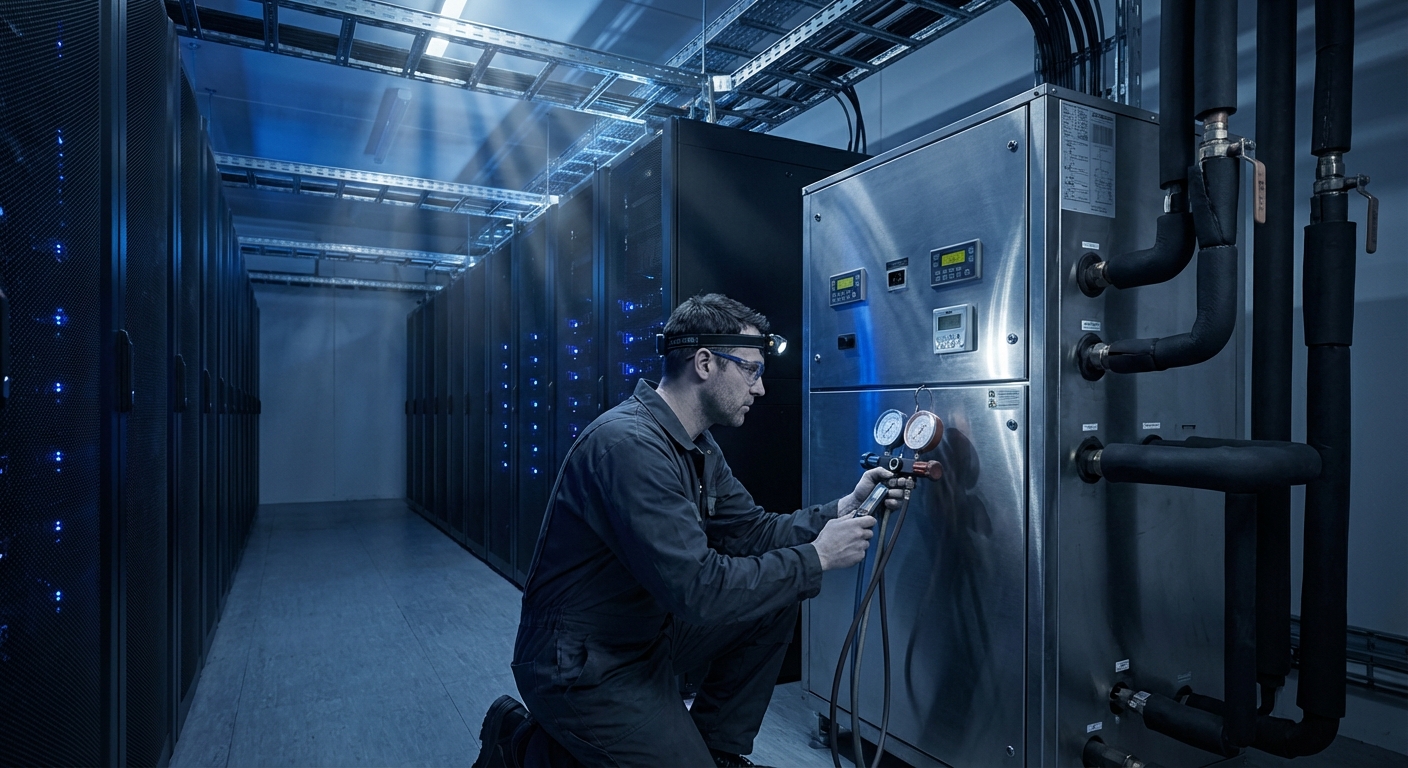
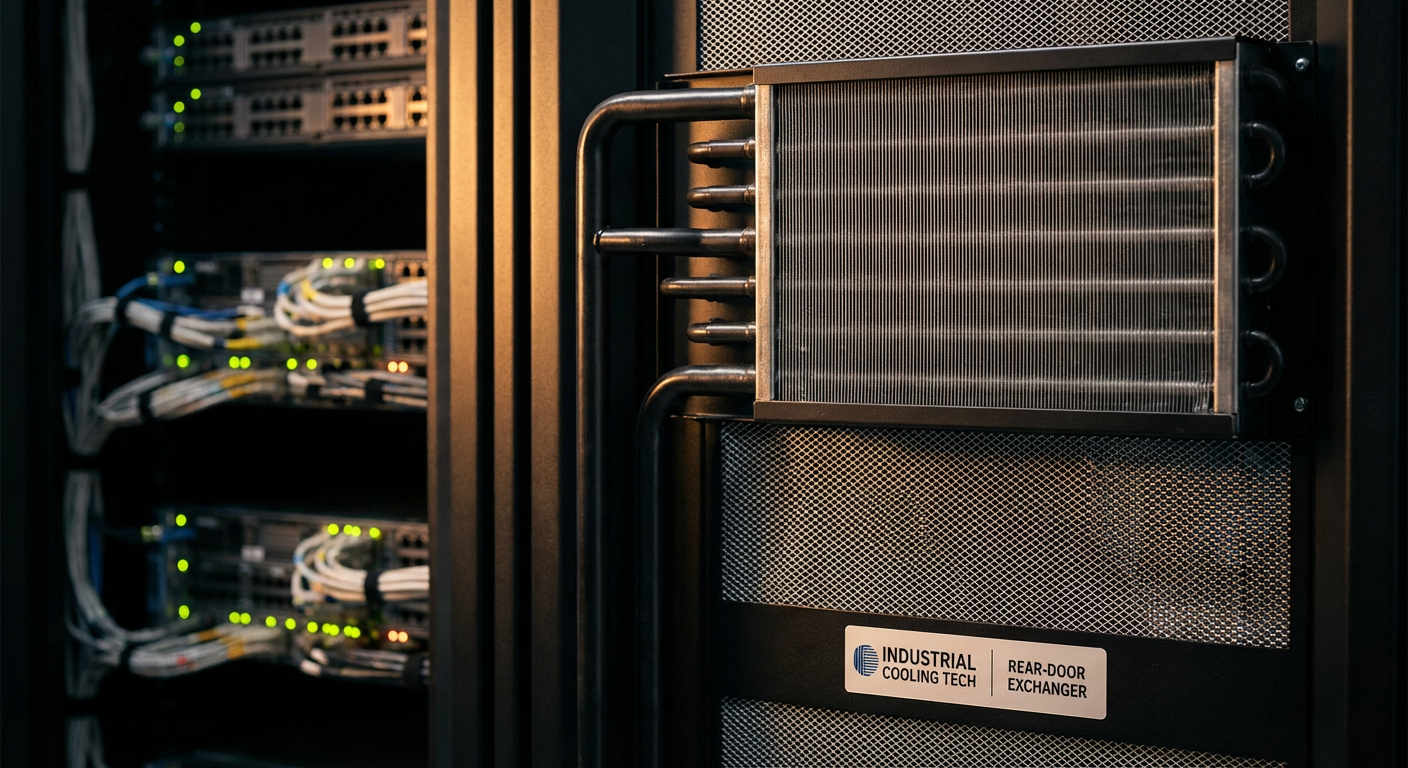
The solution is liquid cooling: direct liquid cooling (DLC), immersion cooling, rear-door heat exchangers, and chilled water systems engineered specifically for the thermal loads of AI infrastructure. And the people who design, install, commission, and maintain these systems are HVAC/R specialists with data center expertise.
This is not a niche specialty that might become relevant someday. The data center cooling market is nearly doubling right now, approaching $3 billion in spending in 2025 alone. Companies are hiring HVAC/R talent 41% faster than the broader workforce. If you want a skilled trade with an absolutely clear and urgent connection to the AI economy, HVAC/R in data center environments is one of the strongest options in this entire course.
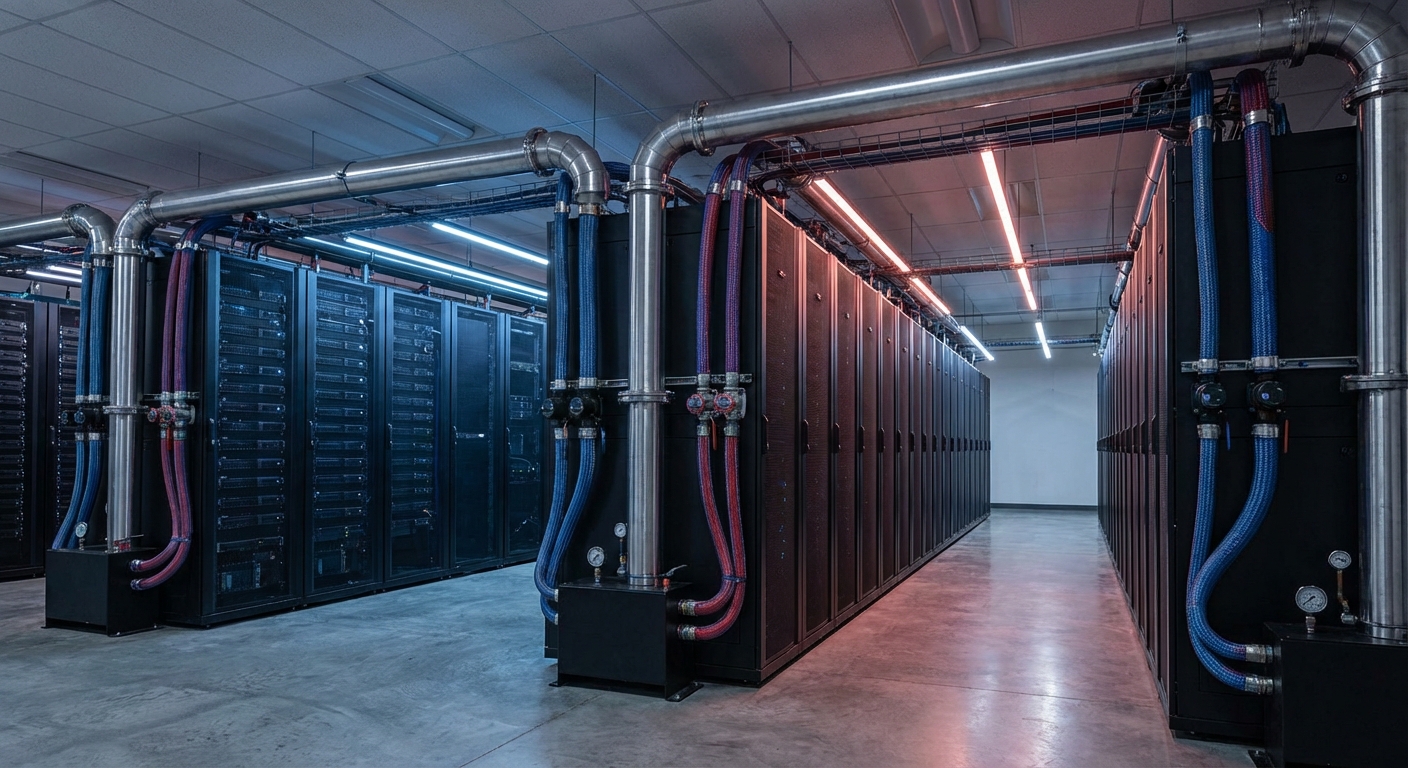
Direct liquid cooling systems are now standard in GPU-dense AI racks
$54,100
Entry Level Annual Salary
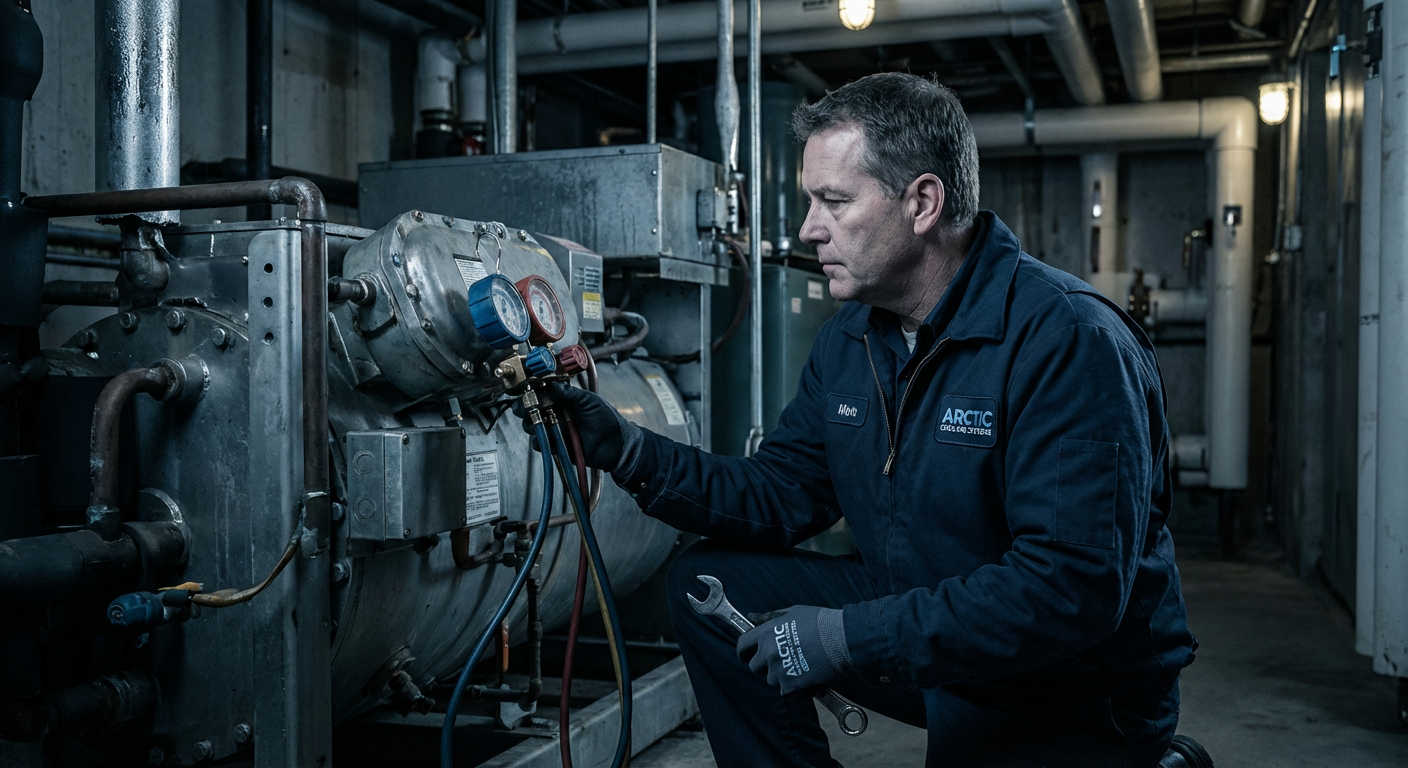
Precision monitoring keeps liquid cooling systems running at peak efficiency
$115,547
Experienced DC HVAC Average
$90,800
Senior Specialist Salary
41%
Faster Hiring Than Other Sectors
$3B
DC Cooling Market in 2025
Year-Round
Employment Stability
Understanding the Heat: Why AI Changed Everything for HVAC
To understand why this trade is so valuable right now, you need to understand what changed. Traditional data center cooling was already a specialized field, but the thermal loads involved were manageable with sophisticated air-based systems. A conventional server rack in 2015 might generate 5 to 10 kilowatts of heat. Demanding, but solvable with the right CRAC units, raised-floor plenum design, and hot-aisle/cold-aisle containment.
Then AI happened.
A single rack of modern AI training hardware generates 40 to 80 kilowatts of heat. Some configurations push beyond 100 kilowatts per rack. To put that in context: you would need to cool that rack as if it contained 8 to 16 conventional server racks. The air cooling system that worked perfectly in a 2018 data center is simply inadequate for a 2025 AI training cluster.
This is not a temporary situation that will resolve when chip manufacturers make GPUs more efficient. More efficient chips get deployed at higher densities, which means the total heat load per rack continues to rise. The thermal challenge of AI infrastructure is a structural feature of the industry, not a transitional problem. HVAC/R specialists who understand liquid cooling are going to be in demand for the entire foreseeable future.
The Liquid Cooling Revolution
Direct Liquid Cooling (DLC) runs coolant directly through cold plates attached to CPUs and GPUs, removing heat at the source with dramatic efficiency. Immersion cooling submerges entire servers in non-conductive dielectric fluid. Rear-door heat exchangers mount directly on server racks and use chilled water to capture exhaust air before it even leaves the rack. Each of these technologies requires specialized HVAC/R knowledge, specific certifications, and hands-on experience that is currently in very short supply. The technicians who develop this expertise early are positioning themselves at the front of a very long demand curve.
Real People Who Made the Switch
Dion Arrington: From Corporate Desk Job to Cooling Specialist at 40
Dion Arrington was 40 years old when he decided his corporate desk job was not where he wanted to spend the rest of his working life. He was not fired, not laid off, not facing a crisis. He was just honest with himself about whether the trajectory he was on was leading somewhere he actually wanted to go. The answer was no.
He enrolled in a 10-month HVAC/R technical program. He studied, he worked on equipment, he earned his EPA 608 certification, and he finished the program ready to work. Within two years of completing that program, his earning potential had tripled compared to where he started. Not where he was at his corporate peak: compared to his starting point in the trade.
Dion made the switch at an age when plenty of people tell themselves it is too late. He will tell you directly that it was not too late. It was exactly the right time.
The Accounting Major Who Found the Right Math
A former accounting major with several years of corporate finance experience found herself genuinely fascinated by the technical side of HVAC after a chance conversation with a friend in facilities management. She had always liked math and precision. What she had not expected was that HVAC/R work would be as numbers-intensive as it is: refrigerant charge calculations, BTU load calculations, system efficiency ratios, pressure differential readings.
She made the transition in her late 20s, completed an associate degree program, earned her certifications, and moved into data center HVAC work within three years. She now manages precision cooling systems for a colocation facility and earns more than her accounting career would have paid. She has said, directly, that she has no regrets. The precision and technical rigor that drew her to accounting is present in her current work. It just comes with better pay and more interesting problems.
How Your White-Collar Background Translates
The transition to HVAC/R might seem like a leap from a white-collar career, but many of the skills you have already developed are directly applicable. Let's look at the specific angles for different backgrounds.
Operations and Facilities Managers
You already understand SLAs, uptime requirements, and the organizational consequences of system failures. Data center cooling is fundamentally a reliability engineering problem: the system must work, continuously, to specific performance parameters, with essentially zero tolerance for failure. Your background in managing complex systems and teams positions you well for senior roles in data center operations.
Facilities managers who transition to HVAC/R often find that the institutional knowledge they bring about how buildings and organizations work makes them more valuable than a purely technical candidate of the same certification level. You understand how to work with other departments, how to communicate uptime requirements to leadership, and how to manage maintenance schedules around business operations. That combination is genuinely rare.
Accountants and Finance Professionals
HVAC/R work has a quantitative side that many people do not expect. Refrigerant charge calculations require precise measurement and mathematical verification. BTU calculations for cooling load design are applied mathematics that require methodical accuracy. Efficiency ratios (COP, EER, SEER) and their financial implications are exactly the kind of analysis that finance professionals find straightforward.
In data center environments, cooling efficiency directly translates to energy cost. A poorly tuned chilled water system might cost a facility hundreds of thousands of dollars in unnecessary electricity costs per year. The technician who can optimize a cooling system and demonstrate the financial impact of that optimization is bringing value that management immediately understands. Your ability to frame technical improvements in financial terms is a genuine competitive advantage.
Software Engineers
Modern data center cooling systems are not just mechanical. They are heavily instrumented and software-controlled. DCIM (Data Center Infrastructure Management) platforms monitor temperature sensors, airflow measurements, power consumption, and cooling system performance across thousands of data points. The cooling automation systems that control variable-speed drives, economizer modes, and setpoint optimization look and feel familiar to anyone who has worked with control systems or industrial automation software.
Software engineers who transition to HVAC/R often find themselves uniquely positioned to bridge the gap between the mechanical systems and the data-driven management layer. The ability to understand both the physical cooling systems and the software platforms that monitor and control them is a combination that commands premium compensation. Some companies specifically seek this profile for senior technical roles that blend hands-on skills with data analysis capabilities.
Marketing and Communications Professionals
This one might surprise you, but hear it out. The HVAC/R industry, particularly at the data center level, needs people who can communicate technical information clearly to non-technical stakeholders. Technical service managers and customer success roles at HVAC equipment manufacturers and cooling system integrators regularly go to people who combine solid technical knowledge with strong communication skills.
If you have a background in marketing, client communications, or account management, and you add HVAC/R technical certifications, you open a path to roles that blend both skill sets. These hybrid roles are particularly common at companies selling cooling solutions to hyperscale data center operators, where the sales and service cycle involves detailed technical conversations at multiple levels of the customer organization.
The Salary Picture: What You Can Realistically Earn
HVAC/R compensation varies significantly based on specialization, certifications, and geographic market. Data center and precision cooling experience consistently commands a premium over general commercial HVAC work. Here is a realistic breakdown.
| Stage |
Typical Annual Earnings |
Notes |
| Entry Level (EPA 608, First Job) |
$38,000 to $54,100 |
General commercial HVAC; data center experience adds premium |
| Journeyman Technician (3-5 Years) |
$55,000 to $75,000 |
Higher with NATE certification and DC specialization |
| Data Center HVAC Specialist |
$75,000 to $90,800 |
Precision cooling experience, chilled water systems |
| Experienced DC HVAC Technician |
$115,547 average |
Top market average for experienced specialists |
| Lead Technician / Supervisor |
$110,000 to $140,000+ |
Mission-critical environments; 24/7 operations teams |
Year-round employment is one of the significant advantages of HVAC/R compared to some other trades. General residential HVAC work has seasonal patterns. Data center cooling systems require maintenance, monitoring, and repair 365 days a year, regardless of season. Mission-critical environments almost universally employ technicians on long-term contracts or direct staff arrangements that provide stable, predictable income without the seasonal variability that affects other HVAC markets.
The Overtime Factor
Data center cooling failures are emergencies. When a cooling system has an issue at 2 AM on a Sunday, someone gets called. That someone gets paid premium emergency rates. While no one should rely on emergency overtime as a primary income source, HVAC/R technicians in data center environments regularly earn meaningful additional income from on-call and emergency response work. Many facilities also pay premium rates for scheduled weekend maintenance windows, which are common because facilities prefer to do planned work during lower-traffic periods.
Training Paths: Finding the Right Entry Point
HVAC/R has several viable paths to licensure and certification. The right path depends on your timeline, your budget, and how quickly you want to be earning in the field.
Technical School Programs (6 to 12 Months, $1,200 to $15,000)
The fastest route to working in the field is a focused technical school HVAC/R program. Programs in this range give you the foundational knowledge: refrigeration theory, electrical systems, airflow and ductwork, controls, and hands-on equipment work. At the end, you sit for your EPA 608 certification exam, which is the federal requirement for anyone who handles refrigerants.
The shorter, less expensive programs are concentrated and demanding. You are covering in months what an apprenticeship spreads over years. This works well for people who are disciplined, self-directed learners and who can commit to intensive study. Many white-collar professionals find this format comfortable because it resembles the kind of concentrated learning they did in college or professional certification programs.
The cost range is wide because program quality and equipment access vary significantly. Paying more for a program with better lab facilities and stronger industry connections is often worth it, because hands-on time on actual equipment is what the learning is built on. Visit programs before you enroll, and ask specifically about their job placement rates and employer partnerships.
Associate Degree Programs (18 to 24 Months, $15,000 to $35,000)
Community college associate degree programs in HVAC/R provide more depth, more hands-on time, and often more robust career services than shorter programs. The longer timeline allows for additional coursework in building automation systems, energy management, and technical communications that directly supports career advancement.
Associate degrees also provide a credential that matters for certain supervisor and technical manager roles. If your goal is to move into management-track positions within a few years of entering the trade, the additional coursework and credential of an associate degree can accelerate that path.
Apprenticeship Programs (3 to 5 Years, Earn While Learning)
HVAC/R apprenticeships through UA (United Association of Plumbers and Pipefitters) and other organizations follow the same earn-while-you-learn model as electrical apprenticeships. You work under a licensed journeyman during the day and attend classroom instruction in the evenings and weekends. Wages start at a percentage of journeyman rates and increase annually.
The apprenticeship timeline is longer, but the combination of earning wages, having benefits, and gaining deep on-the-job experience is compelling. Many data center HVAC specialists who are now top earners in the field came through apprenticeship programs and credit the depth of their training as the foundation for their current expertise.
The EPA 608 Certification: Your First Mandatory Step
Regardless of which training path you choose, the EPA 608 certification is required for anyone who purchases or works with refrigerants. The exam takes 2 to 4 weeks to prepare for, costs roughly $50 to $300 depending on the testing center, and is available in four sections based on refrigerant type. Most technicians pursue Type II (high-pressure refrigerants) and Universal certification.
You can begin preparing for the EPA 608 right now, before you even enroll in a formal program. Study materials are widely available and the exam is not overly complex for someone with a technical background. Arriving at your first day of trade school with an active EPA 608 card demonstrates initiative and saves you time during the program.
NATE Certification: The Gold Standard
The North American Technician Excellence (NATE) certification is widely recognized as the top professional credential in the HVAC/R industry. NATE has multiple specialty areas, and earning NATE certification in a specialization like Commercial Refrigeration or Controls demonstrates a level of verified expertise that employers and customers value highly. NATE-certified technicians consistently earn more than non-certified peers. Pursuing NATE certification after you have some field experience should be on your roadmap from day one.
A Day in the Life: Precision Cooling at Scale
Let's walk through a representative day for an HVAC/R technician working in data center environments. This is a role that blends hands-on mechanical work, data analysis, and coordination with other technical teams.
7:00 AM
Morning Check-In and System Review
The day starts with a review of overnight system logs and any alerts that were generated. Most data center cooling systems have continuous monitoring that generates alarms for temperature excursions, pressure anomalies, and equipment faults. You review these logs to identify any patterns that indicate developing problems, even if no individual alarm was critical enough to trigger a call. This kind of proactive analysis is where experience and pattern recognition pay off.
8:30 AM
Precision Cooling Diagnostics
A scheduled diagnostic on a CRAC (Computer Room Air Conditioning) unit requires you to measure supply air temperature and humidity, return air conditions, refrigerant pressures and temperatures, electrical consumption, and airflow rates. You compare these against baseline specifications and trending data to assess whether the unit is performing as designed. Small deviations that are trending in the wrong direction often indicate a developing problem that is much cheaper to address preventively than reactively.
10:30 AM
Chilled Water System Inspection
A large data center chilled water system is a significant piece of infrastructure: chillers, cooling towers, pumps, heat exchangers, piping, valves, and the controls that manage all of it. Your morning inspection might include checking fluid temperatures at multiple points in the loop, verifying flow rates, inspecting chemical treatment levels to prevent scale and corrosion, and reviewing the performance data from the chiller plant. This work requires understanding both the mechanical systems and the control logic that governs them.
1:00 PM
Monitoring Dashboard Review and Trend Analysis
After lunch, you spend time at the DCIM workstation reviewing cooling performance trends across the facility. Temperature maps, power usage effectiveness (PUE) metrics, and cooling efficiency data tell you how well the overall system is performing and where opportunities for optimization exist. You note that one area of the facility is running slightly warmer than design intent and document it for investigation in the afternoon.
2:30 PM
Troubleshooting an Alert
The afternoon involves responding to a temperature alert in a high-density AI compute area. You arrive to find that a rear-door heat exchanger is not performing to spec. Systematic troubleshooting: you check chilled water supply pressure, verify the control valve is operating correctly, measure actual heat rejection versus design, and trace the issue to a partially closed balancing valve that was inadvertently adjusted during recent construction work. The fix is straightforward. The value you provided was identifying the root cause quickly and correctly, rather than chasing symptoms.
4:00 PM
Documentation and Coordination
Every action you take in a mission-critical facility gets documented: what you found, what you did, the before-and-after measurements, and any follow-up items. This documentation is not just bureaucracy. It is the institutional memory that lets the next technician understand what happened and why. You also touch base with the data center operations team about planned maintenance work for the coming week, coordinating the HVAC maintenance windows with their server maintenance schedule to minimize risk.
The Technology You Will Work With
One of the things that distinguishes data center HVAC/R from residential and commercial work is the depth of technology involved. You are not just working with mechanical systems. You are working with sophisticated, software-controlled systems that integrate with the broader data center management infrastructure.
CRAC and CRAH units in data centers are precision equipment with sophisticated controls that allow remote monitoring and adjustment. They log performance data continuously and can be managed through centralized DCIM platforms. Understanding both the mechanical operation and the control interface makes you significantly more valuable than a technician who only knows one side.
Direct liquid cooling systems represent the frontier of data center cooling technology. The companies deploying AI infrastructure at scale are adopting DLC aggressively, and the technicians who know how to install, commission, and service these systems can essentially name their price in markets where this work is being done. Pursuing specific manufacturer training and certifications on DLC systems from companies like Vertiv, Schneider Electric, and CoolIT Systems is a high-value investment in your career development.
Building automation systems and energy management platforms are increasingly common in facilities that want to optimize their cooling efficiency. Technicians who can read, understand, and work within BAS environments are more versatile and more hireable than those who only work on standalone equipment.
The Sustainability Angle
Data center cooling is one of the largest contributors to total data center energy consumption. A facility might spend as much on cooling electricity as it does on powering the servers themselves. Companies with sustainability commitments and energy cost pressures are actively investing in cooling efficiency improvements, which creates ongoing work for HVAC/R specialists who understand energy optimization. Technicians who can measure and document efficiency improvements are providing value that directly affects the facility's operating costs and sustainability reporting. This is a growing area of specialization that commands premium rates.
The Work Environment and Physical Reality
Data center HVAC/R work is physically active but generally cleaner and more controlled than some other HVAC environments. You are mostly indoors. You are usually in a climate-controlled facility (the irony of data centers being cold because of all the cooling). You are not climbing rooftops in August heat or crawling through residential attics.
The work involves lifting and carrying equipment (HVAC components can be heavy), working in mechanical rooms that may be loud due to running equipment, and spending time in the raised-floor environment under data hall floors where cable and piping work happens. You will use hand tools, power tools, refrigerant gauges, HVAC diagnostic equipment, and data logging devices regularly.
Most people transitioning from desk work find that the physical activity is a welcome change. The mental engagement is also higher than many expect: data center cooling work constantly presents new situations, new problems, and new equipment to understand. It is not repetitive work where you do the same task the same way every day.
Mission-critical facilities often operate 24/7 maintenance schedules, which means some roles involve shift work, on-call rotation, or weekend coverage. How this affects you depends on your specific employer and role. Many technicians find that the premium pay associated with off-hours work makes it worthwhile, especially during the earlier years of building financial stability in the new career.
Career Paths from Here
HVAC/R in data center environments is a career with multiple upward trajectories, and your white-collar background gives you a head start on several of them.
Senior technician and lead tech roles are the natural progression for someone who builds deep technical expertise. These roles involve mentoring junior technicians, handling the most complex diagnostic and repair work, and often serving as the technical lead during critical maintenance events and commissioning projects.
Facilities management roles at data center operators are a natural destination for technicians who also have management backgrounds. A technician who understands the cooling systems intimately and can also manage teams, budgets, vendor relationships, and SLA reporting is enormously valuable to any colocation or hyperscale operator.
Technical sales and applications engineering at HVAC equipment manufacturers and system integrators is a path where the combination of hands-on experience and professional communication skills opens doors to high-earning roles. Manufacturers pay well for people who can both understand the product deeply and communicate its value to sophisticated buyers.
Independent contracting and consulting is an option for experienced technicians who want to work on their own terms. Specialized HVAC/R consultants who focus on data center environments can earn excellent rates working project to project, commissioning new facilities, troubleshooting complex problems, or providing training to operations teams.
Your Action Plan: How to Start
-
Study for and pass your EPA 608 certification. You can start this process today. Purchase a study guide from a recognized provider (ESCO Group and Refrigeration Technologies both publish excellent materials), study for 2 to 4 weeks, and schedule your exam at a local testing center. Arriving at a trade school program with your EPA 608 already in hand demonstrates initiative and saves you time in the program itself. The exam costs $50 to $300 depending on the testing center.
-
Research HVAC/R programs in your area. Look specifically for programs that include refrigeration, commercial systems, and controls in addition to residential HVAC. Ask about their lab facilities and whether they have any industry partnerships or employer relationships related to data center work. Program quality varies more in this field than in electrician training, so do your research before enrolling.
-
Look up local data center operators and colocation facilities. Understanding the specific employers in your market helps you tailor your training and networking. Major operators like Equinix, Digital Realty, CyrusOne, and QTS have facilities throughout the country. Regional colocation providers and corporate data centers also employ HVAC/R specialists. Identify the employers near you so you understand who you will be pursuing as you build your skills.
-
Join ASHRAE and start reading. The American Society of Heating, Refrigerating and Air-Conditioning Engineers (ASHRAE) publishes technical resources, standards, and guidelines specifically relevant to data center cooling, including their TC 9.9 data center guidelines. Joining as a student member is inexpensive and gives you access to resources that help you understand the technical landscape before you are fully in the field.
-
Start exploring NATE certification requirements for your target specialization. Even if you are not close to sitting for NATE exams yet, understanding what knowledge they test helps you know where to focus your learning as you progress through your training program.
-
Connect with working technicians. The r/HVAC subreddit is active and generally welcoming to questions from people exploring the trade. HVAC-Talk.com is a professional forum with depth on technical and career topics. People in this trade who have made career transitions are usually willing to share their experience with someone genuinely interested in following that path.
The Bottom Line
The heat generated by AI is real, it is massive, and it cannot be solved with software or outsourcing. It requires skilled, certified professionals who understand how to move enormous amounts of thermal energy out of incredibly dense computing environments.
The HVAC/R specialists who develop data center expertise right now are entering a field with extraordinary demand, exceptional pay, and essentially no automation risk. The irony is complete and rather beautiful: the AI systems that many white-collar workers worry about replacing them are creating one of the most durable and well-compensated skilled trade careers available. And the cooling systems that make AI possible need human beings with your kind of analytical background at every level.
Module 3 takes us into fiber optics, another field where AI is driving explosive demand and where the fastest certification path in this entire course offers entry into a rapidly growing specialty.