Industrial and Structural Welder: Fabricating AI Infrastructure
Every data center on Earth is built from steel. Every semiconductor fab being built right now under the CHIPS Act requires fabricated infrastructure. The welders who build this country's AI backbone are in shorter supply than at any point in modern history, and that shortage is only getting wider.
You made it to the final module. This is a big one, and not just because welding is one of the most in-demand skilled trades in America right now. This module is about the choice in front of you and the broader mission that connects all twelve paths in this course.
Steel Is the Skeleton of the AI Economy
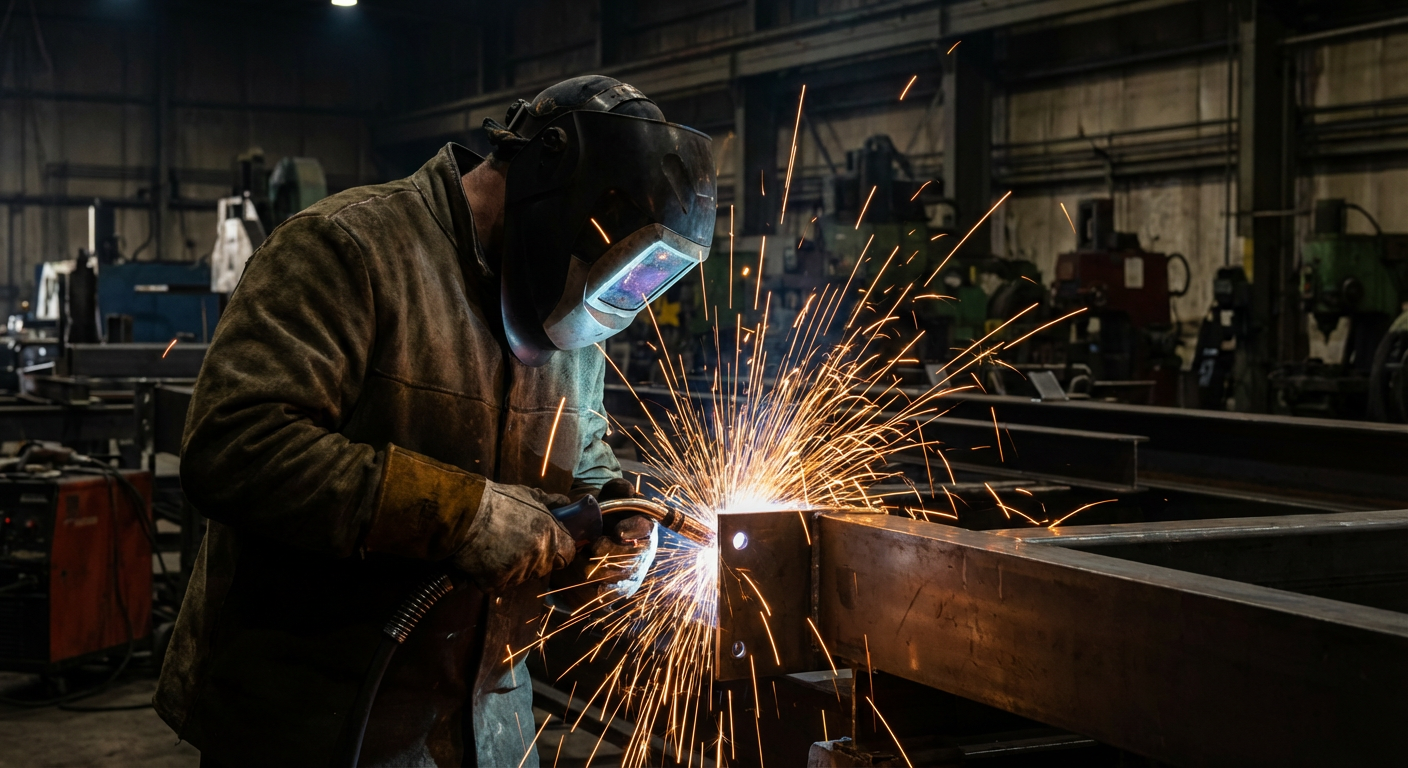
Think about what a data center actually is, physically, as a structure. Before the servers, before the cooling units, before the power distribution units and network switches, before any of the technology that makes it a data center: it is a building. A massive, sophisticated, industrial building made primarily of steel.
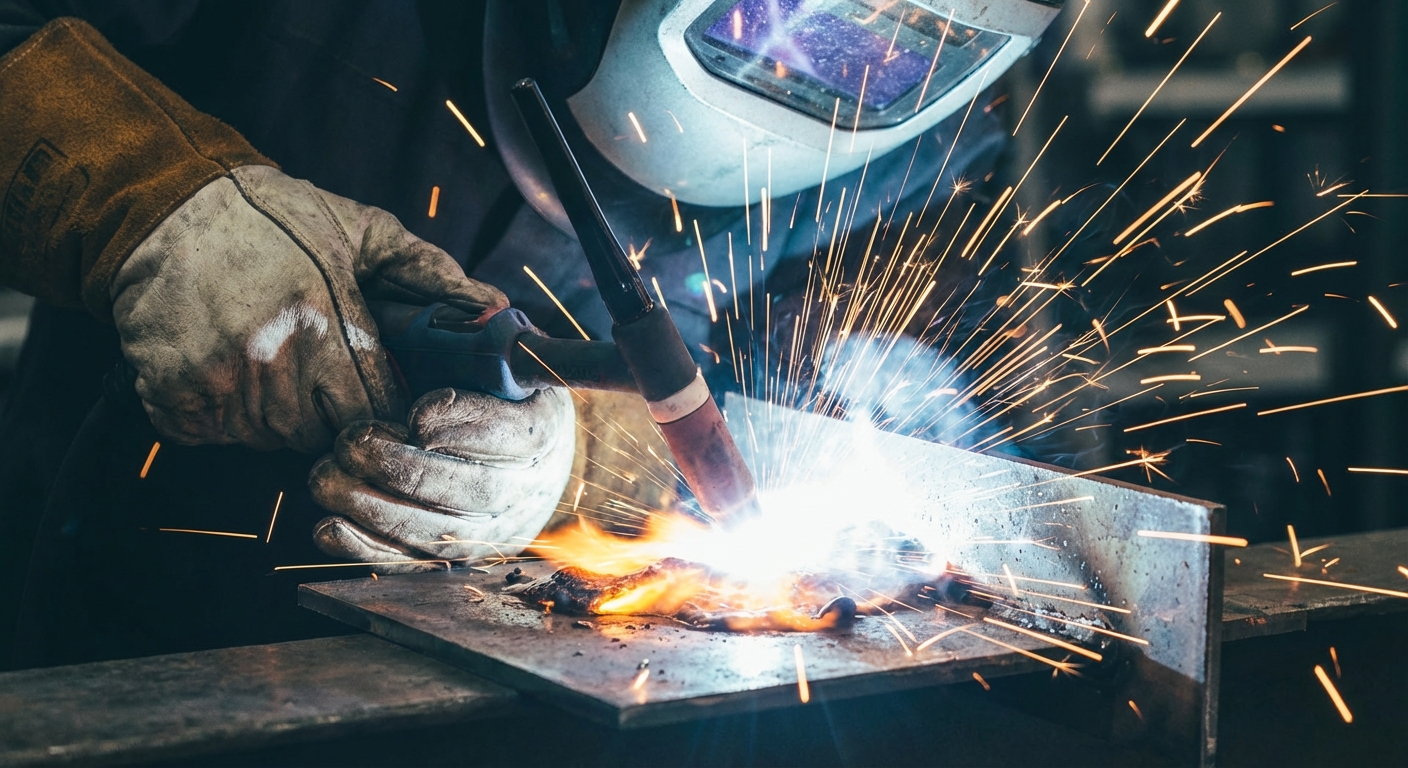
TIG welding is the premium skill tier -- precision, clean, and high-paying
The structural steel frame that holds up the building. The raised floor systems that create the organized spaces below for power and cooling distribution. The cable tray systems running tens of thousands of feet through the facility, organizing the thousands of cables connecting racks and switching equipment. The cooling tower structures on the roof. The generator skids outside, each one holding a diesel engine the size of a locomotive capable of carrying the entire facility load. The pipe systems moving chilled water through the building's mechanical systems at volumes measured in thousands of gallons per minute. The conduit systems. The bus duct. The structural supports for equipment weighing tens of thousands of pounds.
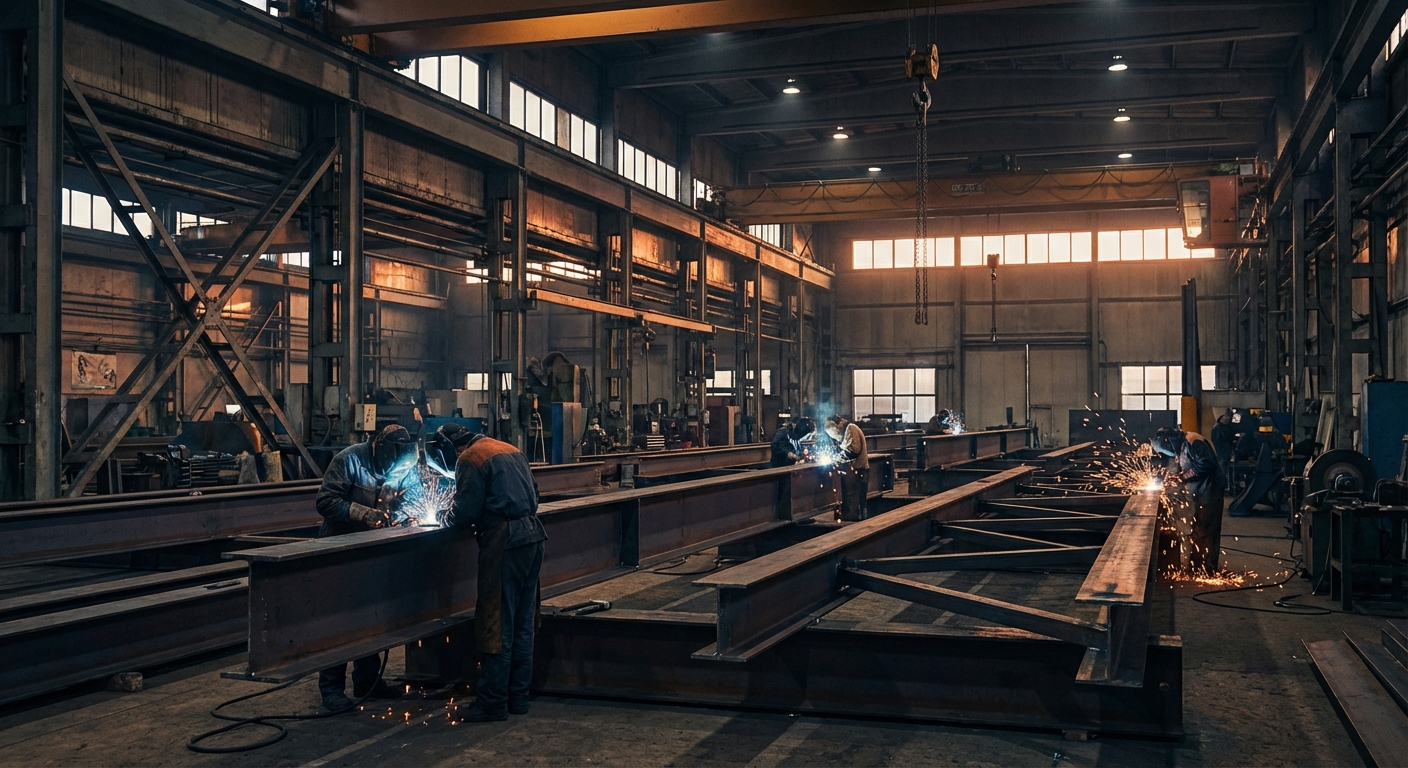
All of it is fabricated steel. Most of it is fabricated to custom specifications, from engineered drawings, to tolerances that matter for the overall system to work correctly. And increasingly, the hyperscalers are building their data centers as standardized modules, prefabricated in shops and delivered to sites ready to integrate. That prefabrication happens in welding shops, done by skilled welders working from detailed fabrication drawings.
Amazon, Google, and Microsoft have each moved toward modular data center designs that allow them to deploy compute capacity faster by standardizing the physical plant. When Google needs to add a megawatt of capacity in Virginia, they want to pull a pre-built, pre-tested module off the shelf, not design a new one from scratch. The shops that build those modules are running continuous production operations. They need welders who show up, read the drawings, hit the tolerances, and document their work. The demand is extraordinary and it will not decrease.
330,000
New welding professionals needed by 2028 (American Welding Society)
82,500
Annual job openings in welding through 2028
$280B
CHIPS Act investment driving domestic fab construction, each facility requiring thousands of tons of welded infrastructure
$120K+
Union welders with advanced certifications in high-demand markets
Fabrication shops supply the structural steel for every data center campus
The Earnings Range: From Entry to Expert
Welding has one of the widest earnings ranges of any skilled trade. The entry-level numbers are modest, but the ceiling for specialized welders is genuinely high, and the path between them is shorter than most people outside the trade realize.
Welder Type and Experience
Typical Annual Earnings
Entry Level / General Shop Welder
$38,000 to $48,500
National Average (all welders)
$48,500 to $62,000
Experienced Welder (5+ years)
$65,000 and above
Certified Structural / Pipe Welder
$75,000 to $100,000+
Union with Advanced Certifications
$80,000 to $120,000
Certified Welding Inspector (CWI)
$80,000 to $120,000
Underwater Welder (extreme specialty)
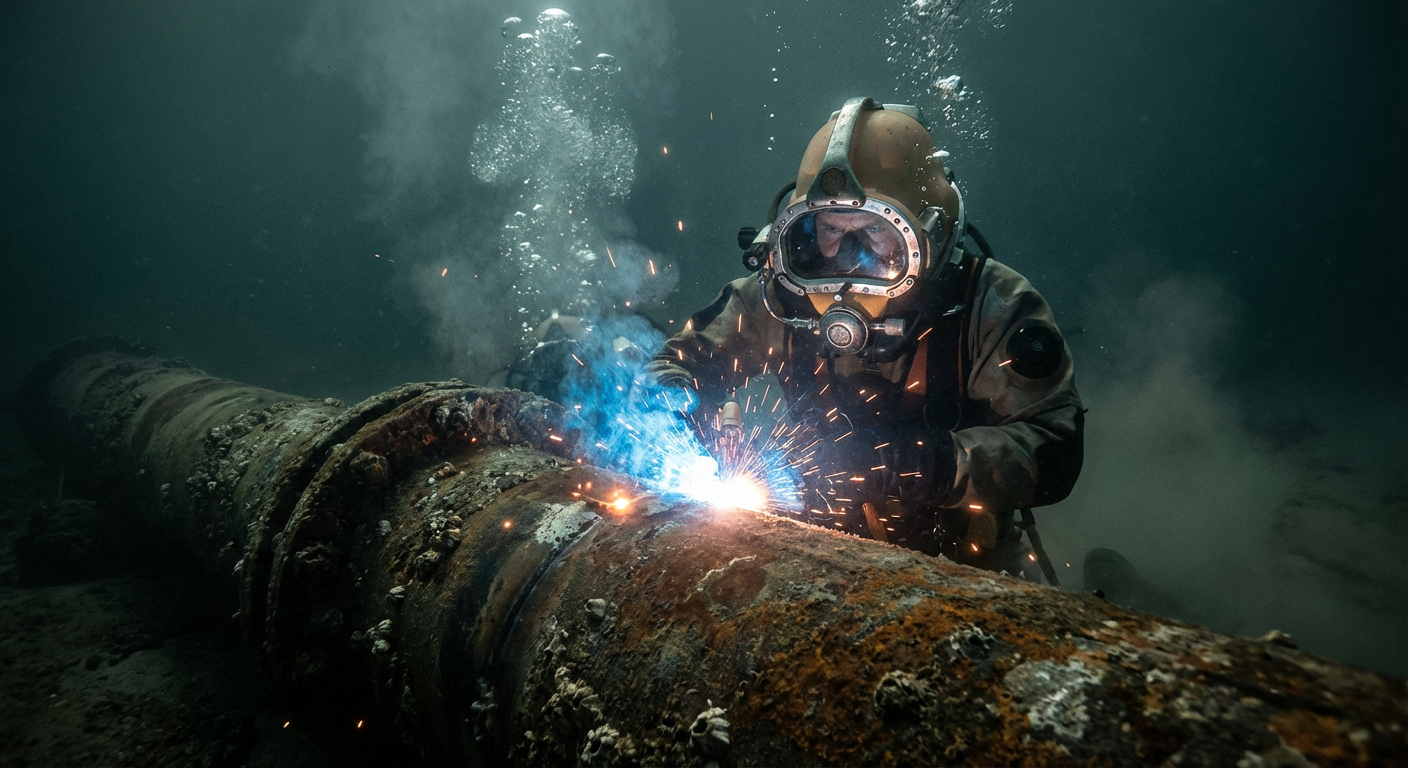
$150,000 to $300,000+
The 6G pipe welding certification is the gold standard in the industry. 6G means you can weld a pipe in the fixed, inclined position, which is the hardest position and the most versatile certification. A welder who can pass a 6G test is qualified for nearly any welding job in the industry, including pressure piping work on power plants, refineries, and process facilities. The demand for 6G certified pipe welders exceeds supply by a wide margin, and their wages reflect that.
The CWI (Certified Welding Inspector) credential deserves its own mention because it represents one of the most natural transition points for white-collar professionals entering this field. A CWI inspects and certifies welded joints rather than performing the welding themselves. They review procedures, examine joints, interpret code requirements, and sign off on documentation that goes into a permanent quality record. The AWS CWI exam requires 5 years of welding-related experience (waivable with certain degrees), and the career path can diverge entirely from hands-on welding into quality management, engineering, and consulting.
The Demand Picture: Manufacturing Renaissance Plus AI Infrastructure
Welding has always been a steady trade, but the current demand environment is exceptional for two reasons that are happening simultaneously.
The first is the AI-driven data center construction boom we have talked about throughout this course. Every facility requires enormous amounts of structural and industrial fabrication. The modular construction trend is accelerating demand at fabrication shops specifically, because prefabricated modules require high-volume, high-quality production welding rather than one-off field welding on individual projects.
The second reason is the American manufacturing renaissance. The combination of supply chain lessons from the pandemic years, tariff and trade policy shifts, and deliberate federal investment through the CHIPS Act, Inflation Reduction Act, and Infrastructure Investment and Jobs Act is driving the largest wave of domestic manufacturing facility construction in decades.
The CHIPS Act alone is directing $280 billion toward domestic semiconductor manufacturing. A semiconductor fabrication facility (a "fab") is one of the most complex and infrastructure-intensive industrial buildings ever built. TSMC's facility under construction in Arizona and Samsung's facility in Texas each represent multi-billion dollar construction projects requiring thousands of tons of custom fabricated infrastructure. Every clean room support structure, every process piping system, every vibration-isolated equipment mount, every utility distribution system: fabricated by welders.
Add the battery gigafactories being built for electric vehicles (each one a massive industrial facility with enormous mechanical infrastructure requirements), the semiconductor equipment manufacturing facilities being built domestically to support the fabs, and the grid infrastructure being expanded to serve all of this new load, and you have a demand environment for industrial welders that is essentially unprecedented in modern American history.
The American Welding Society's projection of 330,000 new welding professionals needed by 2028 was made before the most recent acceleration in domestic manufacturing investment. The actual need may be significantly higher. The training pipeline cannot keep up. This is a structural shortage that will define the next decade of the trades labor market.
The Manufacturing Connection: From White Collar to Weld Shop
One thing worth being direct about: for someone coming from a professional background, welding requires a genuine reorientation. This is hands-on skilled craft work. You are standing at a welding station, running beads, learning to control your heat input, your travel speed, your arc length, your electrode angle. It takes real time to develop proficiency. There is no shortcut for the physical skill development.
But the context around that physical skill is where your white-collar background becomes a genuine advantage, and in some cases, an accelerant to an entirely different and more lucrative career path than production welding itself.
Engineers (Any Discipline)
If you are a mechanical engineer, structural engineer, materials engineer, or any other engineering discipline who is drawn to hands-on work, welding offers an unusually direct path to a career that combines technical depth with craft mastery.
Engineers who weld become natural candidates for Certified Welding Inspector roles and, beyond that, for Certified Welding Engineer (CWE) roles that involve developing welding procedures, qualifying processes, and specifying requirements for critical applications. The CWE designation requires engineering credentials and welding knowledge, a combination that commands premium compensation at aerospace, defense, power generation, and industrial companies.
Blueprint reading, GD&T (geometric dimensioning and tolerancing), materials specifications, and process documentation are native territory for engineers. In a weld shop, these skills translate immediately into the ability to interpret complex fabrication drawings, understand fit-up and dimensional tolerances, and contribute to the procedural side of quality control from day one.
Accountants and Financial Professionals
This might be the most surprising fit in this module, but it is genuine. Welding quality control is, at its core, a documentation and verification discipline. Every weld on a structural or pressure-bearing assembly has a paper trail: the welding procedure specification (WPS), the procedure qualification record (PQR), the welder performance qualification (WPQ) record, the nondestructive testing (NDT) results, and the as-built record. That trail exists because codes (AWS D1.1 for structural steel, ASME Section IX for pressure vessels and piping, API 1104 for pipelines) require it and because failure of a weld in a critical application can have catastrophic consequences.
Accountants understand audit trails. They understand the difference between documentation that says the right things and documentation that actually reflects what happened. They understand pass/fail criteria and the importance of clean records. These instincts translate directly into quality assurance roles in welded fabrication, and from there into CWI and quality management careers. A quality manager at a structural fabrication shop earning $90,000 to $120,000 is not an unusual outcome for someone who started with accounting instincts and added welding knowledge.
Operations Managers
Production welding in a fabrication shop is a manufacturing operation. It has throughput rates, bottlenecks, work-in-process inventory, quality defect rates, equipment utilization, and labor efficiency metrics. If you have ever managed a production operation, a distribution center, or a service delivery team with measurable output, the mental model is directly applicable.
Weld shop supervisors and production managers who understand both the craft and the operational side are uncommon and valuable. Getting there requires first developing credibility as a welder, which takes 2 to 3 years of dedicated effort. But the career path from journeyman welder to lead to foreman to production manager is a well-worn track, and someone with operations management experience makes the leadership transitions faster than most.
Lawyers and Compliance Professionals
The welding industry is governed by codes. AWS D1.1 (Structural Welding Code for Steel) is a dense, technically rigorous document that specifies requirements for everything from base metal qualifications to preheat requirements to joint design to inspection methods. ASME Section IX governs welding for pressure vessels and piping. API 1104 covers pipeline welding. Each code has interpretation questions, compliance gray areas, and enforcement nuances.
Lawyers who move into welding or adjacent quality roles often find the code-compliance dimension highly familiar. They are already accustomed to reading complex regulatory documents, identifying the controlling language, and applying it to specific fact patterns. In a fabrication environment, that skill applies directly to determining whether a particular joint meets code requirements, how an ambiguous specification should be interpreted, and what documentation is needed to demonstrate compliance. Compliance consulting and expert witness work in welding-related disputes is a legitimate niche career path for lawyers with welding knowledge. The combination is rare enough that hourly rates can be substantial.
The Training Path
Welding training is widely available and the paths are well-established. Here is the honest breakdown:
1
Welding Trade School or Vocational Program
This is the most direct path for most people. Programs range from 7 months to 2 years. Community college welding programs are typically 1 to 2 years and result in an associate degree or certificate. Cost: $3,000 to $15,000 depending on program length and institution type. Private welding schools can run $5,000 to $15,000 for shorter intensive programs. What you are looking for in a program: time in the booth (hands-on welding practice), instruction across multiple processes (MIG, TIG, stick, and flux-core at minimum), and exposure to different positions (flat, horizontal, vertical, overhead). The more time you spend actually welding, the faster your skill develops.
2
AWS Certified Welder (CW) Tests
The American Welding Society offers certification tests that are recognized across the industry. Each test is position and process specific: a 3G vertical test on structural steel certifies you for that specific application. Tests cost $600 to $1,200 each and take about a day. The 6G pipe test (inclined fixed position, groove weld) is the gold standard because passing it qualifies you for almost any welding work in the industry. Build your certification portfolio strategically, based on the types of work you are targeting. Structural and pipe certifications together open the highest-paying doors.
3
Union Apprenticeship (Boilermakers, Pipefitters, Ironworkers)
Multiple unions have welding-intensive apprenticeships. The Boilermakers (IBB) train some of the most skilled pressure welders in the industry. The United Association (UA, the plumbers and pipefitters union) trains pipe welders who work on power plants, refineries, and industrial facilities. The Ironworkers train structural welders. Apprenticeships are 3 to 5 years, earn wages from day one, and include comprehensive benefits. Union welders with advanced certifications in high-demand markets earn among the highest wages in the craft. Contact your local union hall to ask about application processes and current cohort openings.
4
CWI as a Career Pivot (for Experienced White-Collar Professionals)
If you have significant professional experience and want to enter the welding field in a supervisory and inspection role rather than a production role, the CWI pathway is worth researching. AWS CWI requires passing a rigorous exam covering welding metallurgy, codes, drawing interpretation, and inspection techniques. Work experience requirements can be partially satisfied by education and professional credentials. A CWI earns $80,000 to $120,000 at established industrial contractors and inspection companies. The exam is difficult. Preparation resources include the AWS online study courses, the Welding Inspection Technology (WIT) course, and the extensive body of AWS publications. Budget 6 to 12 months of study time while you are still in your current job, then transition after the certification.
A Day in the Life: The Structural Welder
6:00 AM
Blueprint Review and Material Inspection
The day starts with the drawings. You pull the fabrication drawing for the day's assemblies, review the joint details, note the specified weld sizes and types, identify any preheat requirements based on material thickness and grade, and check the welding procedure specification (WPS) that governs this specific combination of material, process, and position. Then you verify that the material in the staging area matches what the drawing calls for: right grade, right dimensions, mill test report in the file. This is not administrative busywork. Using the wrong material on a structural assembly can have catastrophic consequences and cost companies hundreds of thousands of dollars in rework or liability.
7:00 AM
Station Setup and Process Selection
You set up your welding station for the day's work. Select the process based on the job: MIG (GMAW) for high-production structural work in the shop, TIG (GTAW) for precision work on stainless or aluminum, stick (SMAW) for field repair and some structural applications, or flux-core (FCAW) for high-deposition-rate work on heavy structural members. Set parameters: wire feed speed, voltage, gas flow rate (or electrode selection for stick). Run a test bead on scrap material and verify the appearance and penetration before touching production work.
7:30 AM
Tack Welds and Fitup
Before production welding begins, the assembly is fit up and tack welded to hold the pieces in position. Fit-up is critical: gaps that are too wide or too narrow affect weld quality and final dimensions. You measure, adjust, and verify that the assembly is within tolerance before making it permanent with production welds. A few minutes of careful fit-up prevents hours of rework later.
8:00 AM
Production Welding
This is the core of the day. Running bead after bead on the production assemblies, maintaining consistent technique, monitoring for signs of inadequate fusion, porosity, or other discontinuities. For multi-pass welds on heavy structural members, you interpass clean (remove slag and spatter between passes) and verify that each pass is properly fused to the previous one before adding the next. This requires focus and physical endurance. It is demanding skilled craft work and it is what you came here to do.
10:30 AM
Visual Inspection and Dimensional Check
After completing a weld or assembly, you do your own visual inspection before calling the QC inspector. Weld profile, surface condition, no visible porosity or cracks, proper tie-in at start and stop locations. Then dimensional verification: the finished assembly matches the drawing dimensions within tolerance. If something is off, it is better to find it now and fix it than to have the QC inspector reject it after it has cooled and been marked with your welder stamp.
1:00 PM
Preheat and Interpass Temperature Monitoring
For structural work on heavier material or higher-carbon steels, preheat requirements are specified by code and procedure. You use a temperature stick or infrared thermometer to verify that the base material is at or above the minimum preheat temperature before welding begins. Between passes, you monitor that the interpass temperature does not exceed the specified maximum. Getting this wrong produces welds that pass visual inspection but fail UT (ultrasonic testing) or have reduced notch toughness that would not show up until a real load application. Code compliance here is not optional.
2:30 PM
NDT Coordination
For welds requiring nondestructive testing, you coordinate with the NDT technician to schedule testing after the appropriate hold time (some procedures require a minimum time after welding before UT is performed). Radiographic testing (RT, or x-ray) may be specified for pipe welds or critical structural connections. UT (ultrasonic testing) is common for structural welds where RT is impractical. When test results come back, you review them for your joints. A rejection is not a personal failure. It is information. You find out what caused the discontinuity, adjust your technique or parameters, repair the joint, and retest.
3:30 PM
Documentation and Traceability Records
Every joint you weld gets documented: your welder ID stamp, the WPS used, the heat number of the material (traceable to the mill certificate), the date, and the QC status. On a job with ASME or AWS code requirements, this documentation is as important as the weld itself. A structurally perfect weld with missing documentation can fail a code audit. A mediocre weld with perfect documentation gets caught by NDT. The paper trail is the quality system. You take it seriously.
The CHIPS Act and the Manufacturing Renaissance: Your Bigger Context
We want to spend a moment on something that does not fit neatly into a salary table or a credentials list but matters enormously for understanding the opportunity you are looking at.
The United States is in the middle of the largest domestic manufacturing investment since the post-World War II era. The CHIPS and Science Act is directing $52 billion in direct subsidies and $280 billion in total investment toward bringing semiconductor manufacturing back to American soil. Intel's new fabs in Ohio. TSMC in Arizona. Samsung in Texas. Micron in Idaho and New York. Each of these facilities is a multi-billion dollar construction project and then a permanent manufacturing operation requiring ongoing maintenance, expansion, and specialized fabrication work.
The Inflation Reduction Act is driving investment in battery manufacturing, solar panel production, wind turbine components, and electric vehicle assembly. Each factory is a massive industrial construction project requiring structural steel, process piping, mechanical systems, and specialized fabrication.
The Infrastructure Investment and Jobs Act is funding bridge replacements, highway expansion, water system upgrades, and port modernization. Structural welders and bridge welders are part of every project.
These are not one-time projects. They are facilities that will operate for decades, require periodic major maintenance shutdowns, and will expand as capacity needs grow. The welders who develop deep specialization in semiconductor fab maintenance, battery plant process systems, or data center module fabrication will be positioned at the center of the American economy for the next 20 years.
When you zoom out to this level and see the full picture, the case for this career path is not just about your personal financial situation (though that case is also strong). It is about being part of building the physical infrastructure that the country's future runs on. That is meaningful work in the most literal sense of the word.
The Moment You Decide
This is the last module. You have now read about twelve careers: electricians and plumbers, pipefitters and ironworkers, HVAC technicians and construction managers, solar installers and data center operators, fiber splicers and heavy equipment operators, building automation specialists and welders. Each one is a real path to a real life that is different from the one you have right now.
At some point, the research phase has to end and the decision phase has to begin. That moment might be uncomfortable. Change is uncomfortable. Leaving the professional identity you have built over years for something unfamiliar takes real courage. We want to acknowledge that directly, because minimizing it would be dishonest.
But here is what we also want you to see clearly: the people who took these paths before you are not extraordinary. They are people who reached a point where the discomfort of staying was greater than the discomfort of moving. People who looked at what the trades could offer, looked at what their professional skills could translate into, and decided that the math made sense. And then they got to work.
The AI economy is not destroying careers. It is creating a hierarchy of work. The people at the top of that hierarchy are the ones who can do things that AI cannot do: operate physical equipment with precision, manage complex human systems under pressure, fabricate structures that have to hold weight in the physical world, maintain critical infrastructure that cannot fail. These are the people who will be most economically secure in the decades ahead.
That is the mission behind this course. Not just career advice. Not just salary data. A genuine argument that the trades offer something that most white-collar professionals have been conditioned to overlook: durability, dignity, and in the right specialization, extraordinary compensation for work that matters.
Now go build something.
Your next step is the only one that matters right now. Not all twelve steps. Not the whole plan. Just the next one. Pick the path that resonates most with you across all twelve modules. Find the training provider, the union hall, or the certification body that connects to that path. Make one phone call or send one email. That action is the difference between reading about this and doing it.
Getting Started in Welding
1
Decide on Your Entry Strategy
Are you going for production welder through trade school or apprenticeship? Or are you targeting the CWI or quality management path using your existing professional credentials? These are different plans with different timelines. Get clear on which path fits your situation before you spend money on training.
2
Research Programs Near You
For production welding: aws.org has a directory of AWS-accredited testing facilities and educational institutions. For union apprenticeships: contact your local Boilermakers lodge (boilermakers.org), UA local (ua.org), or Ironworkers local (ironworkers.org). Ask specifically about welding-track apprenticeships and current application timelines.
3
Get Hands-On Experience Before You Commit
Many community colleges offer non-credit welding introduction courses. Taking a weekend or evening intro course before committing to a full program is a good idea. Welding is physically demanding work in hot, bright, noisy conditions. It helps to know that the work environment suits you before you invest time and money in a credential. Most people love it once they experience the craft. But it is worth confirming that you are one of those people.
4
Build Your Code Knowledge in Parallel
Download AWS D1.1 (the structural welding code) and spend a weekend getting familiar with its structure. You do not need to understand everything immediately. But knowing that the code exists, understanding its overall organization, and beginning to develop fluency with its language puts you ahead of most new welders. The AWS also publishes a Welding Handbook that is an excellent technical reference. Reading widely about welding metallurgy, process parameters, and quality requirements accelerates your development in training.
5
Think About Specialization From Day One
Generalist welders earn general welder wages. Specialized welders with specific certifications in high-demand applications earn premium wages. From the beginning of your training, keep the specialization question in mind. Pipe welding (6G certified), structural welding with AWS and AISC experience, stainless and chrome-moly for process industries, aluminum for aerospace and marine applications: each specialization has different demand and different wage premiums. Talk to working welders in your area about which specializations are most in demand locally and nationally. Then build your certification portfolio with intention.
The summary for welding: 330,000 professionals needed by 2028. Wages from $65,000 to $120,000 for certified specialists. Training available in 7 to 18 months for under $20,000. The combination of AI-driven data center construction, CHIPS Act semiconductor manufacturing investment, and the broader domestic manufacturing renaissance means welding demand is accelerating across multiple major industries simultaneously. The shortage is real. The opportunity is real. The path is clear.
A Final Word
You made it through all twelve modules. That is not nothing. Most people who think about making a major career change never get this far into the research. They get stuck in the anxiety of the decision and never give themselves enough information to make it clearly.
You now have real information. Salary data from actual market sources. Demand data from BLS and industry reports. Training paths with real costs and real timelines. White-collar to blue-collar translations that are honest about what transfers and what needs to be built from scratch. Portraits of what actual workdays look like in each career.
What you do with that information is entirely up to you. Nobody is going to make this choice for you. Nobody is going to push you out of your current job or pull you into a new one. The decision is yours, and the courage to act on it is yours to find.
What we can tell you is this: the people who study the trades carefully and make deliberate moves into specializations that align with their existing skills are reporting, consistently, that the transition was one of the best decisions of their lives. Not because the work is easier (it is often harder, in different ways) but because the work is tangible, the compensation is honest and immediate, the demand is durable, and the satisfaction of building physical things that matter is real in a way that is difficult to find behind a desk.
The AI economy is not the end of your career. It is the beginning of a better one, if you choose to build it.
Now go build it.
Specialty welders can earn six figures -- underwater welding is the peak of the trade