Module 4 of 12
Let me start with a number that might surprise you: the BLS reports a median salary of $92,560 for utility lineworkers as of May 2024. Not after twenty years on the job. That is the median. Half of all lineworkers earn more than that.
Now add in union scale, overtime, and hazard pay, and you are looking at experienced workers routinely clearing $120,000 to $130,000 or more. Foremen push well past that. And before you ask: yes, there is a clear path from apprentice to foreman, and it typically takes five to eight years.
This is not a consolation prize for people who could not make it in the knowledge economy. This is one of the best-compensated skilled trades in America at the entry level, with demand that is about to go parabolic. The reason? You are reading about it every day. AI data centers need power. Enormous, almost incomprehensible amounts of power. And none of it gets delivered without lineworkers.
If you have spent your career in a white-collar field and you are physically capable, reasonably comfortable with heights, and genuinely interested in working outdoors with your hands, keep reading. This might be exactly what you have been looking for.
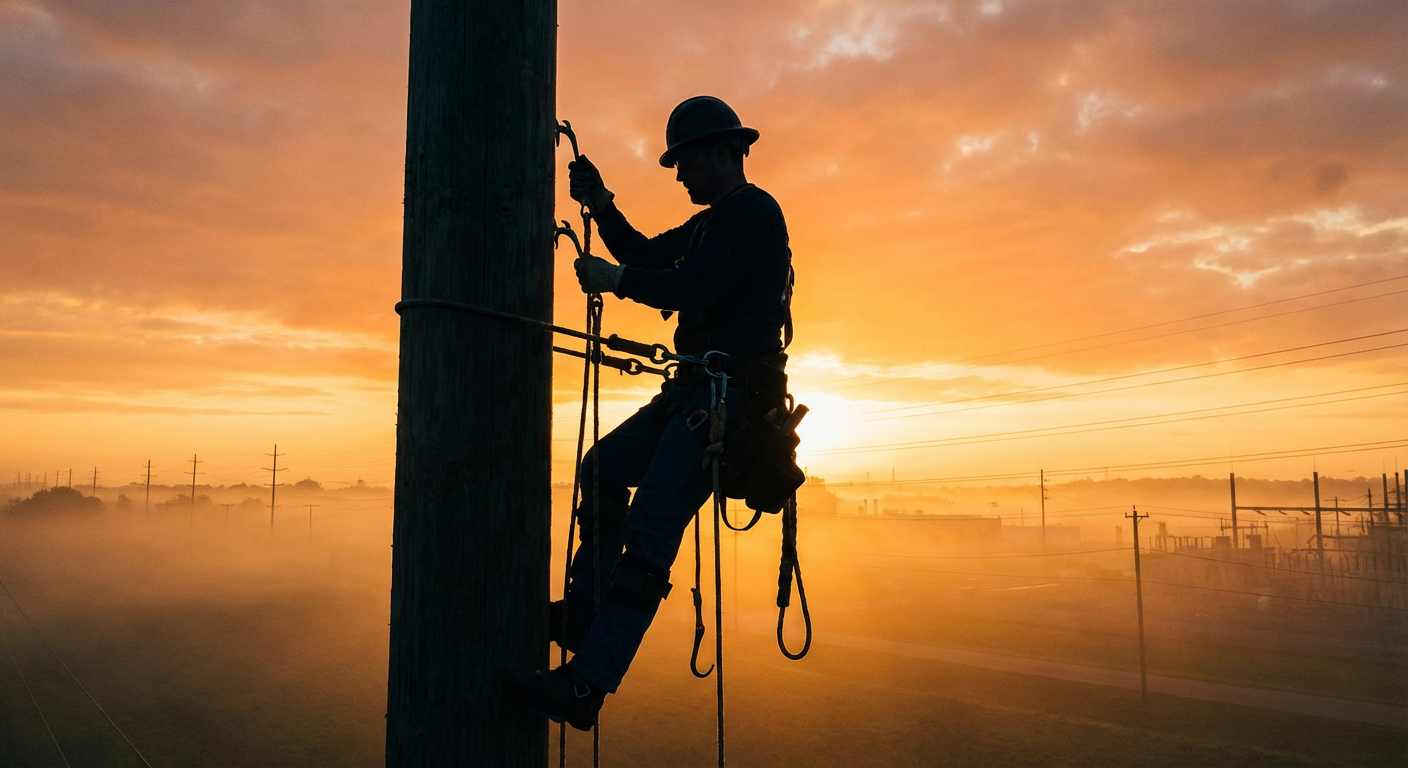
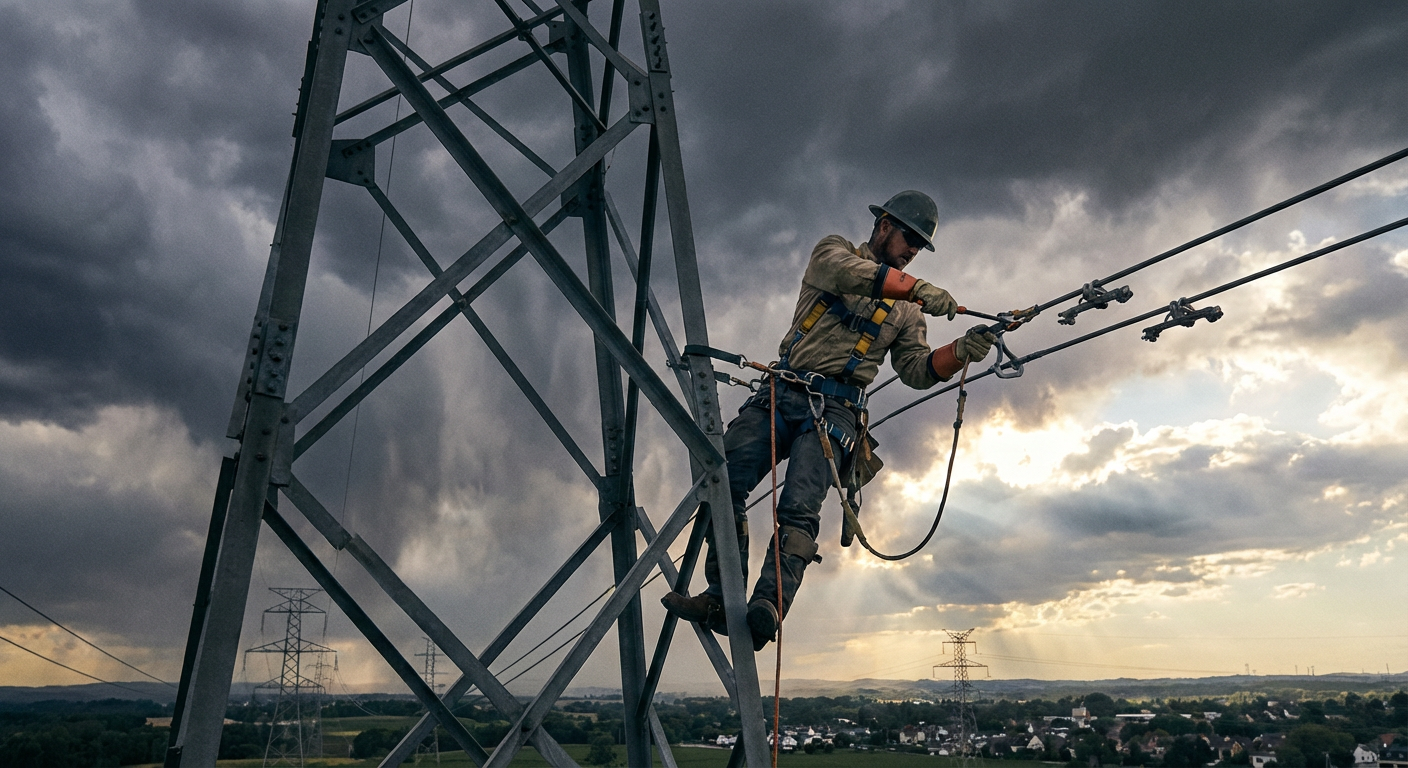
Lineworkers climb and work at height every day -- it is part of the job
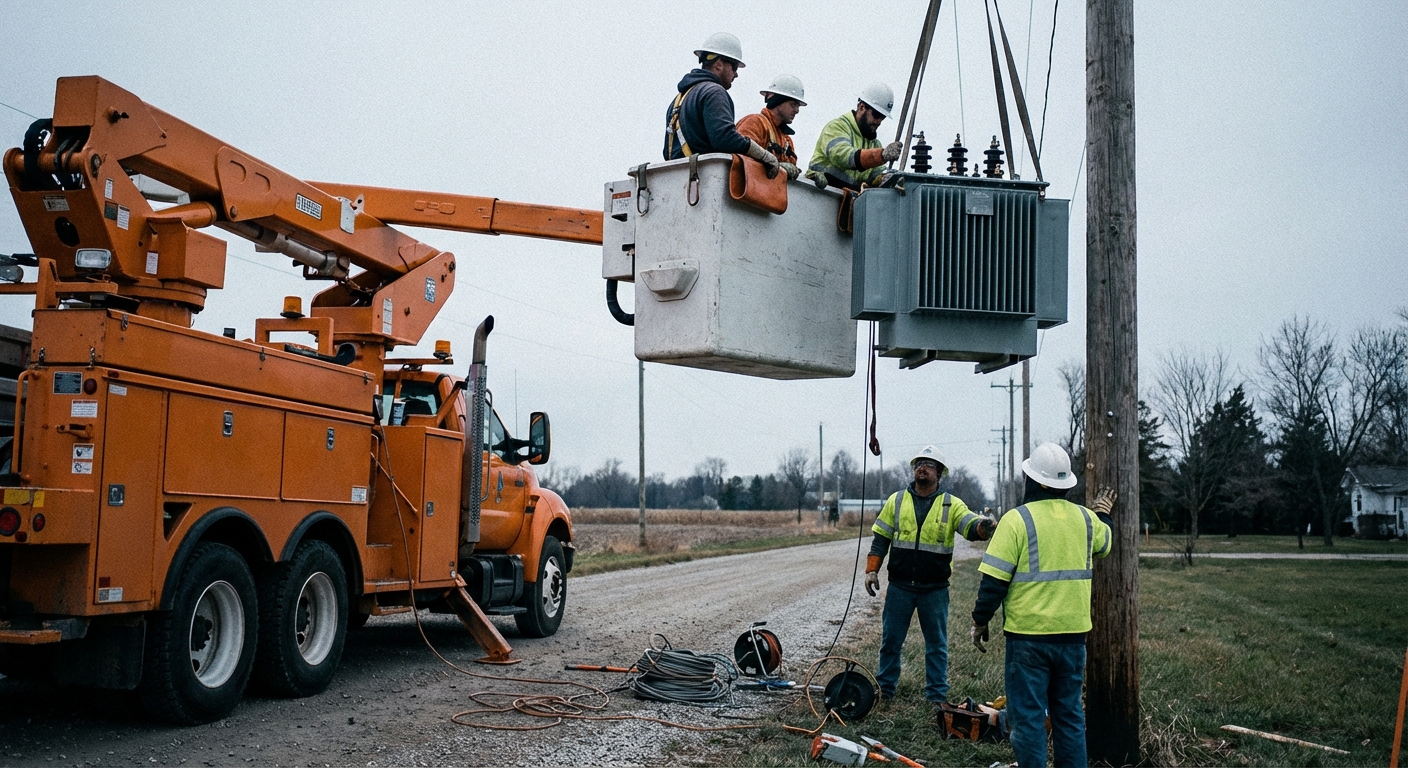
Grid upgrades for AI power demand require transformer installations across the country
Most skilled trades pay modestly at the apprentice level and reward seniority. Utility lineworkers are different. The physical demands and risks mean the pay scale starts high and climbs fast. IBEW apprentices earn 40 to 50 percent of journeyman scale from day one, and journeyman scale in many markets is $35 to $45 per hour before overtime.
Power demand in the United States has been essentially flat for two decades. Efficiency gains offset population growth, and utilities could plan around predictable, slow change. That era is over.
A landmark study from the Belfer Center at Harvard projects that US power demand from AI data centers alone could surge more than 30-fold by 2035. That is not a typo. Thirty times. Global data center electricity consumption is currently doubling by 2030 and growing at roughly 15 percent annually, which is four times faster than any other sector of the economy.
The strain is already showing up in real ways. The Northern Virginia data center corridor, which houses more than a third of the world's data center capacity, has a power problem so severe that new data centers are waiting years just to get a grid connection. Dominion Energy is running out of transmission capacity. Utilities are fast-tracking projects that would normally take a decade. Billions of dollars in federal and state grid modernization funding are flowing right now.
Every single one of those projects needs lineworkers. New transmission lines. Upgraded substations. Distribution network reinforcement. Smart grid sensor installation. Underground cabling in urban corridors. The work is everywhere, and the workforce pipeline has not caught up. The BLS projects 21,800 new openings in 2026 alone. That is not demand spread over a decade. That is a single year.
Data center developers in Northern Virginia are currently waiting two to three years just to get a power connection from Dominion Energy. The utility has publicly stated it needs to add more transmission capacity than it built in the previous thirty years, compressed into the next ten. The lineworkers to build that infrastructure do not exist yet. You could be one of them.
There are two main routes into this trade, and they serve different priorities. One is essentially free and pays you while you learn. The other is faster but costs money. Both lead to the same journeyman credential.
The International Brotherhood of Electrical Workers runs a joint apprenticeship program with the National Electrical Contractors Association called the NJATC. For utility lineworkers specifically, this is a three to four year program combining on-the-job training with classroom instruction. You will accumulate over 7,000 hours of paid, supervised field experience alongside experienced journeymen.
The cost to apply is approximately $100 for the application fee plus $25 for the aptitude test. That is it. You earn wages from day one, your wages increase at regular intervals tied to your progression, and your training is funded by the employer. There are IBEW locals in virtually every major metro area and many smaller markets. You apply to your local, pass a physical, take the aptitude test, and interview with the JATC committee.
Health insurance, pension, and annuity benefits begin during the apprenticeship in most locals. This is not just free training. It is a career with a real benefits package from the beginning.
If you want to get to the field faster, lineman colleges offer intensive programs ranging from three months to twelve months. Costs typically run $5,000 to $20,000 depending on the school and program length. The major programs include Northwest Lineman College (Idaho and California campuses), the Electric Power Training Center in Texas, and a handful of regional community college programs.
These programs give you the fundamental skills to get hired as a "groundman" or entry-level apprentice, which then puts you on the path to journeyman certification. They can shorten your overall timeline if you want to enter the field quickly while still planning to pursue union membership through your employer.
| Career Stage | Typical Compensation | Timeline |
|---|---|---|
| Apprentice Year 1-2 | $35,000 to $55,000 | Immediately after acceptance |
| Journeyman Lineworker | $75,000 to $110,000 | 3 to 4 years |
| Experienced Journeyman | $90,000 to $130,000+ | 5 to 8 years |
| Foreman / Crew Lead | $110,000 to $150,000+ | 8 to 12 years |
| SCADA / Smart Grid Specialist | $100,000 to $140,000+ | Varies by background |
I want to be straight with you because you deserve a realistic picture, not a sales pitch.
This is physically the most demanding trade on this entire list. You will work at heights of 100 feet and above. You will work in rain, sleet, heat, and cold. Storm response is part of the job, and it means long hours in the worst weather at the worst times. You will be handling energized high-voltage equipment, and while training and safety protocols are rigorous, the margin for error is small. People get hurt in this trade. They also take it seriously because of that fact, and the safety culture in union shops is strong.
The pay reflects all of this. When you look at that $92,560 median and think it sounds high for a trade, remember what lineworkers are doing to earn it. The risk premium is real. The physical toll is real. So is the pride that comes with doing a job that most people cannot do.
If you have a back condition, significant fear of heights, or a medical situation that limits physical exertion, this is probably not the right fit. Be honest with yourself at this stage. There are other trades on this list that are less physically demanding and still pay well.
If, on the other hand, you are physically fit, have always been somewhat drawn to outdoor work, and are tired of sitting at a desk, this trade might genuinely excite you. Many career changers report that the physical challenge is part of what they love about it. After years in front of a screen, building something real with your hands while your body actually works is deeply satisfying to a lot of people.
Here is something the trade rarely talks about but that career changers discover quickly: your professional background gives you capabilities that most entry-level apprentices simply do not have. You understand systems. You can read and interpret complex documentation. You can communicate professionally with supervisors and clients. You think about risk analytically. These skills matter in this trade, and they accelerate advancement.
SCADA systems, smart grid sensors, and grid management software are increasingly sophisticated. Lineworkers who understand data systems and can interface with utility management platforms are genuinely rare and highly valued. Many experienced lineworkers with software backgrounds move into SCADA specialist or smart grid integration roles earning $100,000 or more. Your ability to read code, understand network architecture, and troubleshoot systems is directly applicable as grids become more intelligent.
Emergency management, crew coordination, logistics under pressure: these are things you already know. Lineworker foremen and crew supervisors do exactly this work, just in a different context. Understanding how to manage a multi-person crew responding to a storm outage, coordinate with dispatch and the utility control room, track job status, and ensure safety compliance is a direct transfer from operations management. You will climb faster than most to supervisory roles.
Risk assessment, documentation precision, and the ability to understand cost structures are valuable in utility project management. Many lineworkers with financial backgrounds move into project estimating, contract management with utility companies, or foreman roles where budget tracking and job costing matter. Your comfort with numbers translates directly to understanding pay scales, overtime calculations, and project economics.
The structure of a union apprenticeship, the hierarchy of a crew, the safety-first culture, and the emphasis on doing the job right under pressure will feel very familiar. Many veterans find the lineworker trade one of the most comfortable trades to enter because the culture is disciplined, merit-based, and built around mutual accountability. Your leadership experience is directly applicable to foreman and supervisor tracks.
What does a typical day actually look like? Here is a representative day for a journeyman lineworker on a transmission line upgrade project:
Here is the big picture: every AI model you use, every chatbot, every image generator, every recommendation algorithm runs on servers that consume enormous amounts of electricity. That electricity travels through transmission and distribution infrastructure. The Belfer Center at Harvard projects US power demand from AI alone could surge more than 30 times current levels by 2035. The Northern Virginia grid is already at capacity. Utilities across the country are fast-tracking grid modernization that was previously planned over decades. The lineworkers to build and maintain this infrastructure are in desperately short supply. This is not a job that AI can automate. You cannot send a robot up a 100-foot pole in an ice storm to restore power to a hospital. This is human work, it will be human work for the foreseeable future, and there is not nearly enough human talent to do it.
"I spent twelve years as a project manager at a logistics firm. I liked the work but I was exhausted in a way I could not explain. I always wanted to do something physical. My dad was a lineman but I went the college route. At 38, I applied to my local IBEW. I was the oldest apprentice in my cohort by about six years. I am now a second-year journeyman making $88,000 plus benefits, and I feel better physically and mentally than I did at any point in my desk career. The guys I work with respect competence and effort, period. My project management background made me look like a natural leader from day one."
Operations professional, career-changed to IBEW lineworker, age 38
Ready to explore this seriously? Here is exactly what to do:
The BLS median of $92,560 is base pay. Overtime in this trade is not occasional. Storm response, infrastructure projects with tight deadlines, and scheduled outage windows all generate substantial overtime. Lineworkers with five or more years of experience commonly report total compensation of $120,000 to $160,000 in years with significant storm response. This is real income, not a rounding error. When you are evaluating whether this trade compares favorably to your current or previous salary, factor in the full compensation picture.
We put the utility lineworker at Module 4 because it represents something important: the highest physical ceiling paired with some of the highest base compensation in skilled trades. This is not for everyone. It demands genuine physical capability, real comfort with risk, and the willingness to work outside in conditions that your current job shields you from entirely.
But if that description resonates rather than repels you, this trade offers something remarkable: entry-level pay that matches or exceeds what many white-collar workers earn after years in their careers, a path to leadership that rewards the analytical and organizational skills you already have, and a role that is central to one of the biggest infrastructure buildouts in modern American history.
The AI economy needs power. Power needs lineworkers. Right now, there are not enough. You could be part of solving that problem, and you could be paid very well to do it.
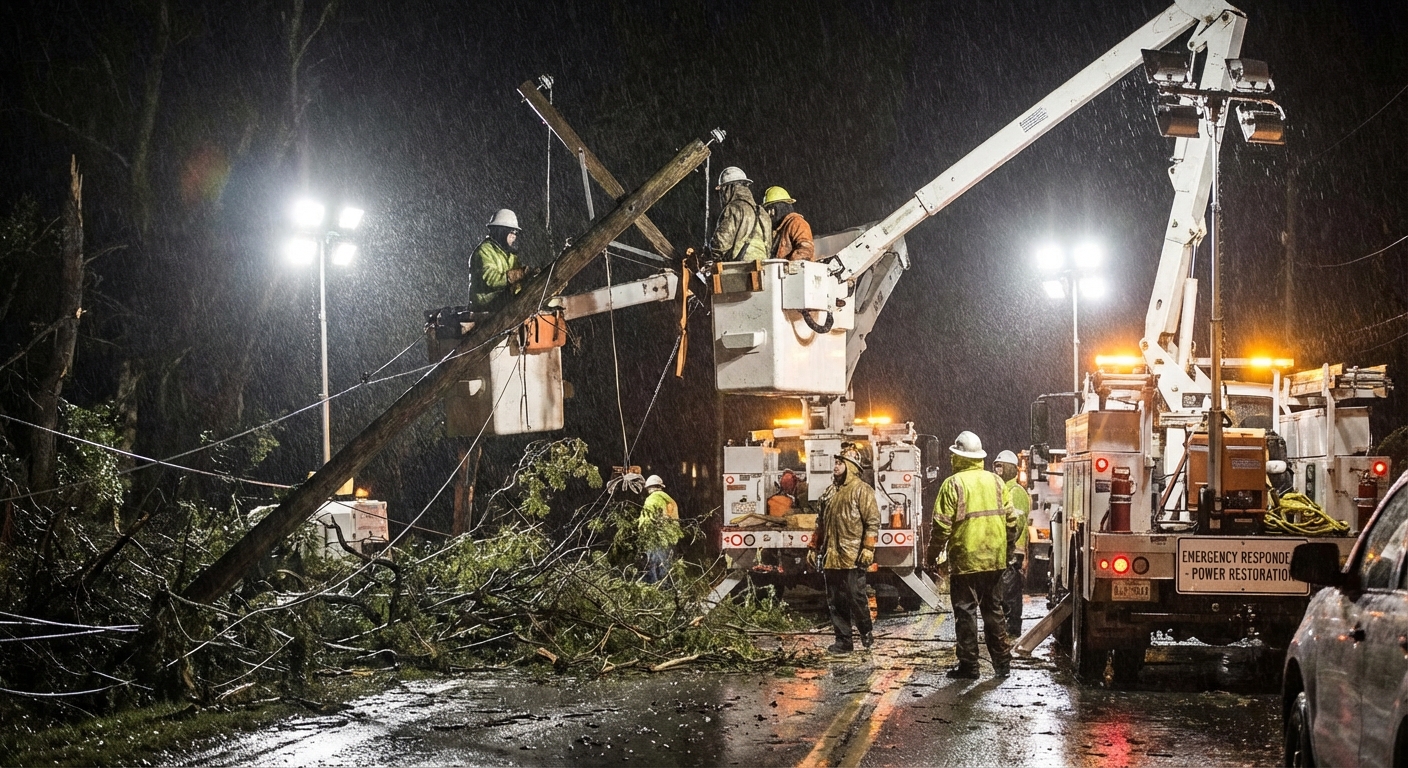
Storm response is one of the highest-paying and most in-demand parts of linework