
Module 5 of 12
There is a beautiful irony at the center of this module. AI is displacing white-collar workers at an accelerating rate. Lawyers losing document review work to algorithms. Accountants watching tax preparation automate. Programmers watching AI write code. And yet, there is one job that AI literally cannot do by definition: putting hands on the physical hardware that runs AI.
Data center technicians rack servers. They swap failed drives at 3:00 AM. They trace cable runs through crowded hot aisles. They install network gear. They respond when a hardware alert fires in the monitoring dashboard and something needs a human hand to fix it. AI cannot teleport itself into a data hall and replace its own components. The people who maintain the physical infrastructure of the AI economy are, structurally, immune to AI displacement in a way almost no other role can claim.
And the industry is desperate for them. A 2025 industry survey reported that the average total compensation for a permanent data center position was $180,951. Entry-level starts around $54,726. Senior techs earn $85,000 to $120,000. Managers clear $130,000 to $180,000 and beyond.
The fastest path to this career from zero is three to six months and costs between $1,000 and $3,000 in certifications. That makes this the shortest, cheapest on-ramp on the entire list. If you are looking for the quickest viable pivot into a growing physical-tech role, this module deserves your full attention.
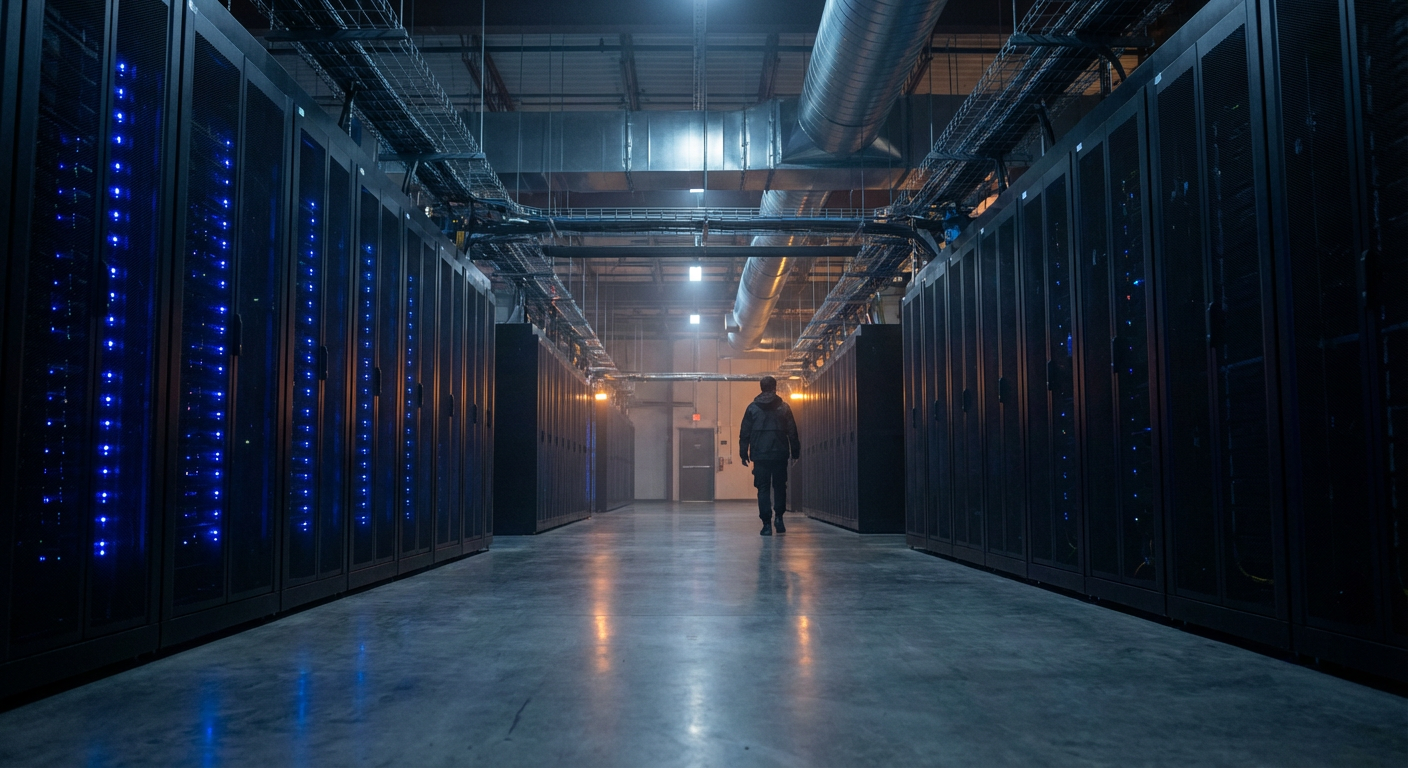
Hot/cold aisle containment is a fundamental data center cooling strategy
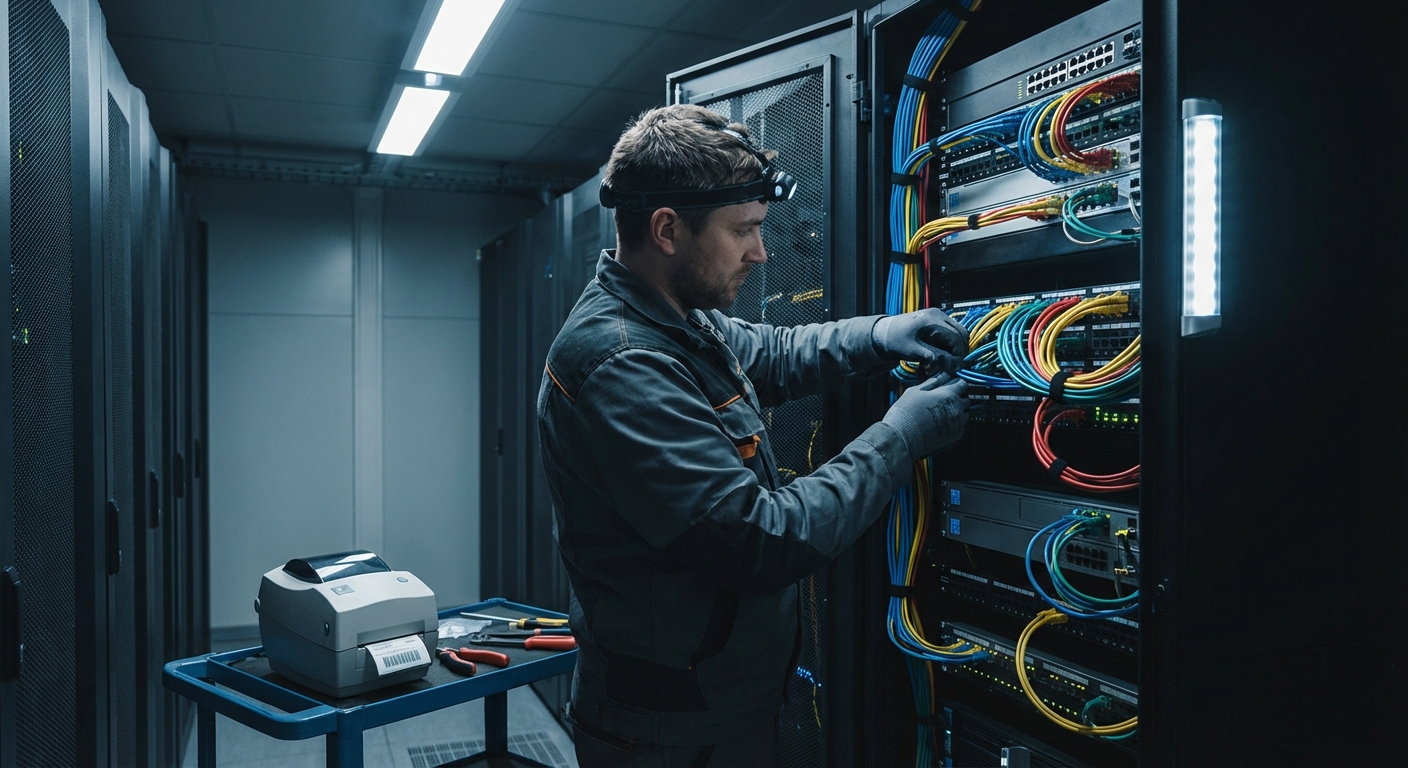
Meticulous cable management is a professional standard in data center operations
This is worth saying plainly: data center technicians are structurally immune to AI displacement because someone physically present at the machine is required to do the work. When a server fails in an AI training cluster, an algorithm cannot fix it. A person has to walk into that data hall, pull the chassis, swap the component, and verify the fix. The very AI systems that are displacing desk workers are generating demand for the people who keep those AI systems physically operational. This is one of the few roles where the growth of AI creates jobs rather than eliminating them.
The numbers in this industry move fast, and they only move in one direction. Between 2019 and 2025, the global data center workforce added more than 325,000 net new positions. Industry analysts project another 140,000 positions are needed by 2030, and that estimate was made before the current wave of AI infrastructure buildout accelerated even further.
Amazon Web Services, Google Cloud, Microsoft Azure, and Meta are each investing $60 to $100 billion in new data center capacity during 2026 and 2027. That is not across five years. That is a single year of capital expenditure from each company. Hyperscale facilities are going up in Virginia, Texas, Ohio, Nevada, Georgia, and dozens of other markets. Each facility requires staffing from day one of operations, and the staffing takes years to hire and train.
Fifty-eight percent of data center operators report significant difficulty finding qualified technicians. That is not a niche complaint. That is the majority of the industry saying, collectively, that they cannot hire fast enough. If you are qualified, the jobs will find you. The hard part is just getting qualified, and that part is genuinely accessible.
Microsoft alone announced plans to add enough data center capacity in 2026 to require thousands of new technicians. Amazon is building new availability zones in multiple US regions simultaneously. Google is expanding in four states at once. Meta is constructing what will be one of the largest AI training clusters ever built. Every one of these projects needs people who understand physical server infrastructure. The demand is not theoretical. It is live job postings right now, today.
This is where the data center technician role really stands out from the other trades on this list. You do not need a four-year degree. You do not need a five-year apprenticeship. The core credentials are two CompTIA certifications that you can realistically earn in three to six months with focused study, and the total cost is well under $3,000.
CompTIA A+ is the foundational certification for IT support and hardware. It covers computer hardware, operating systems, troubleshooting, networking basics, and security fundamentals. It is the baseline credential that most data center roles require or strongly prefer. Study materials are widely available: free YouTube courses from Professor Messer, paid courses on Udemy for $20 to $30, and the official CompTIA study guide. The exam fee is $478 for each of the two required parts.
If you have any IT background at all, even informal home lab experience, you can likely prepare for A+ in two months or less. With no background, give yourself three to four months of consistent study. This is a certification that rewards methodical preparation rather than technical brilliance.
Server+ builds directly on A+ and focuses specifically on server hardware, storage, virtualization, and data center fundamentals. For data center technician roles specifically, this credential signals that you understand the environment you will be working in. Study time is shorter because it builds on A+ knowledge. Most candidates with a solid A+ foundation complete Server+ in four to eight weeks.
Once you have CompTIA A+ and Server+, vendor-specific certifications can increase your salary and open specific roles. Dell EMC, HPE, Cisco, and Juniper all offer technician-level certifications that range from free online courses to exams costing a few hundred dollars. These are not required to get your first role, but they are worth pursuing once you are employed and can often be reimbursed by your employer.
| Career Stage | Typical Salary | Key Certifications |
|---|---|---|
| Entry-Level Technician | $50,000 to $65,000 | CompTIA A+, Server+ |
| Mid-Level Technician | $65,000 to $85,000 | A+, Server+, vendor certs |
| Senior Technician | $85,000 to $120,000 | Multiple vendor certs, CDCP |
| Data Center Manager | $130,000 to $180,000+ | CDCS, CDCE, PMP |
| Permanent DC Role (avg, 2025) | $180,951 | Full cert stack plus experience |
"AI took my desk job, but it created my shop job."
Former corporate employee profiled by BeaconNews, Kansas City data center worker, March 2026
BeaconNews ran a feature in March 2026 on the growing cohort of data center workers in Kansas City who came from corporate backgrounds. The pattern was consistent: people whose office-based roles had been automated or downsized found that the skills they had were directly applicable to data center work, and the path from layoff to new employment was measured in months rather than years. The quote above stuck because it captures something true about this moment. AI is both the disruption and the opportunity, depending on where you stand relative to the hardware.
One thing that sets data center technician work apart from most of the other trades on this list is how directly it maps to common white-collar backgrounds. If your career involved computers, technology, or analytical thinking, you have a head start that is more substantial than it might appear from the outside.
This is arguably the easiest transition on the entire list. You already understand servers, networking, operating systems, and the general architecture of the systems you will be working with. The gap is purely physical: knowing how to rack a server, manage cables, and work safely in an active data hall. That can be learned in days or weeks. Your ability to read system logs, interpret monitoring alerts, and understand what a hardware failure means in context of a broader workload will make you look exceptional compared to candidates with only hardware backgrounds. Many SWEs who pivot here move to senior tech roles faster than any other background.
If you have spent time in IT ops, systems administration, or even help desk work, this is nearly a direct transfer. The credentialing formalizes what you already know, and the physical environment of a data hall is the logical extension of the work you have been doing at a higher level of abstraction. Your understanding of ticketing systems, incident response procedures, and escalation paths is directly applicable to data center operations. This is probably the most natural transition of any white-collar background into this specific role.
This one surprises people but makes sense when you think about it. Data centers are required to maintain rigorous documentation for compliance purposes. ISO 27001, SOC 2 Type II, and PCI-DSS certifications all require meticulous record-keeping, change management documentation, and audit trails. The skills that make a good accountant, attention to detail, comfort with formal documentation, understanding of compliance processes, are genuinely valuable in data center operations. Finance professionals who move into DC roles often find a natural home in compliance, audit support, or eventually operations management.
If your career involved working closely with technical systems, even from the user or analytics side, your general technology fluency is more valuable here than you might think. The certification path is the same for everyone, but candidates who can demonstrate comfortable familiarity with how systems work, even at a conceptual level, stand out in interviews. Many data center facilities also have roles that blend technical operations with documentation, vendor coordination, or SLA management where business skills complement technical knowledge directly.
Data center operations run 24 hours a day, seven days a week. Shifts vary: some facilities use standard day shifts, others use 12-hour rotating shifts with three or four days on and three or four days off. Here is what a typical day shift looks like for a mid-level data center technician at a colocation or hyperscale facility:
If you came from a technical background, especially software engineering or IT operations, there is something intellectually satisfying about data center work that is hard to articulate until you experience it. All those abstractions you worked with, servers, networks, storage, compute, become physical and real. You understand what you are touching and why it matters. And when something breaks, you fix it with your hands. There is no ticket queue lag. No waiting for another team. You walk to the problem and you solve it. Many people who transition from desk-based technical work find this directness deeply rewarding.
Let me be honest about a few things so you go in with clear eyes.
Data center work is physical, but not in the same extreme way as lineworker or plumber work. You will be on your feet for most of your shift. You will lift servers weighing up to 50 pounds, sometimes repeatedly. You will work in cold, noisy environments. If you have significant physical limitations, talk to your doctor, but most people without specific health constraints can do this work.
Shifts can include nights, weekends, and holidays, especially early in your career. Twenty-four-hour operations need around-the-clock staffing, and seniority typically determines schedule preference. This is a real consideration if you have family commitments tied to a standard schedule. Most facilities cycle people through varied shifts on rotation, and day shift becomes more accessible with tenure.
The entry-level pay is lower than some other trades on this list. Starting around $54,000 is meaningful compared to unemployment or underemployment, but it is less than a senior SWE or partner-track attorney. The growth curve, though, is steep. Senior technicians and managers in this field earn very well, and the combination of low barrier to entry and high ceiling makes the career trajectory genuinely attractive.
The certification path is real and it is achievable. CompTIA A+ and Server+ are not trivial, but they are not gatekeeping credentials designed to exclude people. They test knowledge that you will actually use. If you study consistently, you will pass. Give yourself an honest schedule and hold yourself to it.
Three to six months of preparation. Under $3,000 in certification costs. Entry-level salary around $54,000 with a clear path to $85,000 to $120,000 as a senior tech. A field where AI literally creates demand rather than destroying it. This is not a compromise career. It is a genuinely strong option that happens to have an unusually accessible on-ramp. If your situation requires moving quickly, this module deserves extra attention.
The data center technician role sits at an unusual intersection: it is a hands-on physical job that requires real technical knowledge, and both of those factors are accelerating in value simultaneously. Physical presence is required and cannot be automated away. Technical knowledge of modern server and network infrastructure is increasingly specialized and valuable. The combination creates a career where smart, motivated people advance quickly.
If you came from a technical white-collar background and you are open to working with your hands, this might be the most direct, fastest, most natural transition available to you. The certifications are achievable. The employers are actively hiring. The pay is competitive from the start and grows substantially with experience. And the structural protection from AI displacement is not a talking point. It is a physical reality of how these systems work.
You cannot train AI to put its hands on hardware. You have hands. Use them.
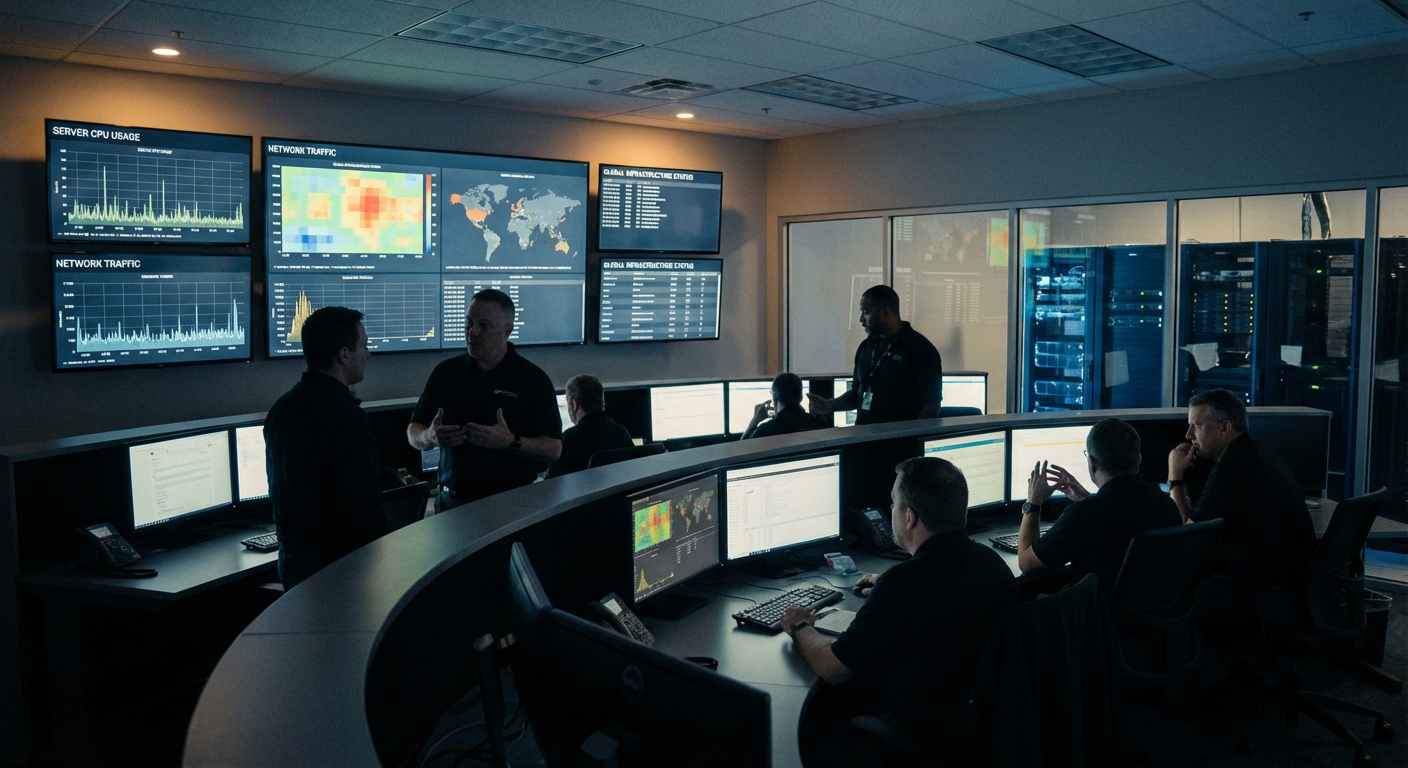
Data center technicians monitor thousands of metrics in real time