Module 6 of 12
In February 2026, Futunn News published a headline that nobody in the trades thought they would ever see: "The Most Wanted Talent in the US AI Industry: Plumbers." It sounds absurd until you understand the physics.
The most advanced AI chips on the market, NVIDIA H100s, H200s, and Blackwell GPUs, generate heat at a density that air cooling physically cannot handle at scale. A single modern GPU server rack can produce 50 to 100 kilowatts of heat. A traditional server rack with hot-aisle containment tops out at around 15 kilowatts. The gap between what AI hardware generates and what air can remove is not an engineering inconvenience. It is a fundamental thermodynamic problem. The only solution is liquid.
Liquid cooling systems, whether direct-to-chip cooling loops, rear-door heat exchangers, immersion tanks, or building-level chilled water loops, require pipe. A lot of pipe. Precisely installed, rigorously tested, impeccably documented pipe. And someone has to design, install, and maintain those systems. That someone is a pipefitter with data center specialization, and right now, the industry cannot find nearly enough of them.
The Cowboy State Daily reported in February 2026 that a plumber shortage in Wyoming was directly causing construction delays on a data center project. Not a labor shortage in general. A plumber shortage specifically. Union locals across the country report demand running at two, three, or sometimes four times their current membership for single data center construction projects. CBS News ran a documentary on it. The construction industry trade press has been sounding the alarm for two years. The shortage is real, it is acute, and it is not going away.
If you are the kind of person who likes precision work, finds complex systems intellectually engaging, and is attracted to being the person who solves a problem that genuinely has no other solution, this module is for you.
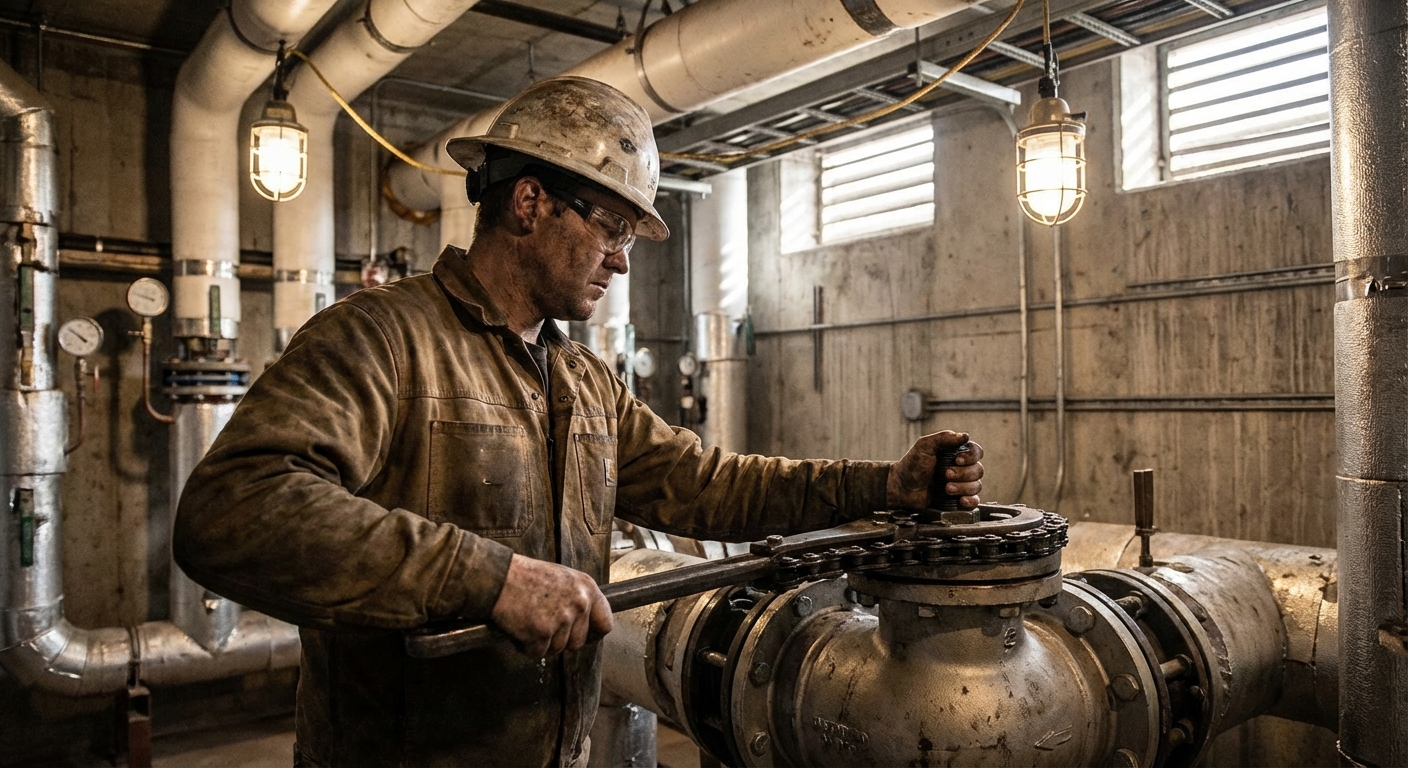
Chilled water piping for data center cooling requires precision pipefitting
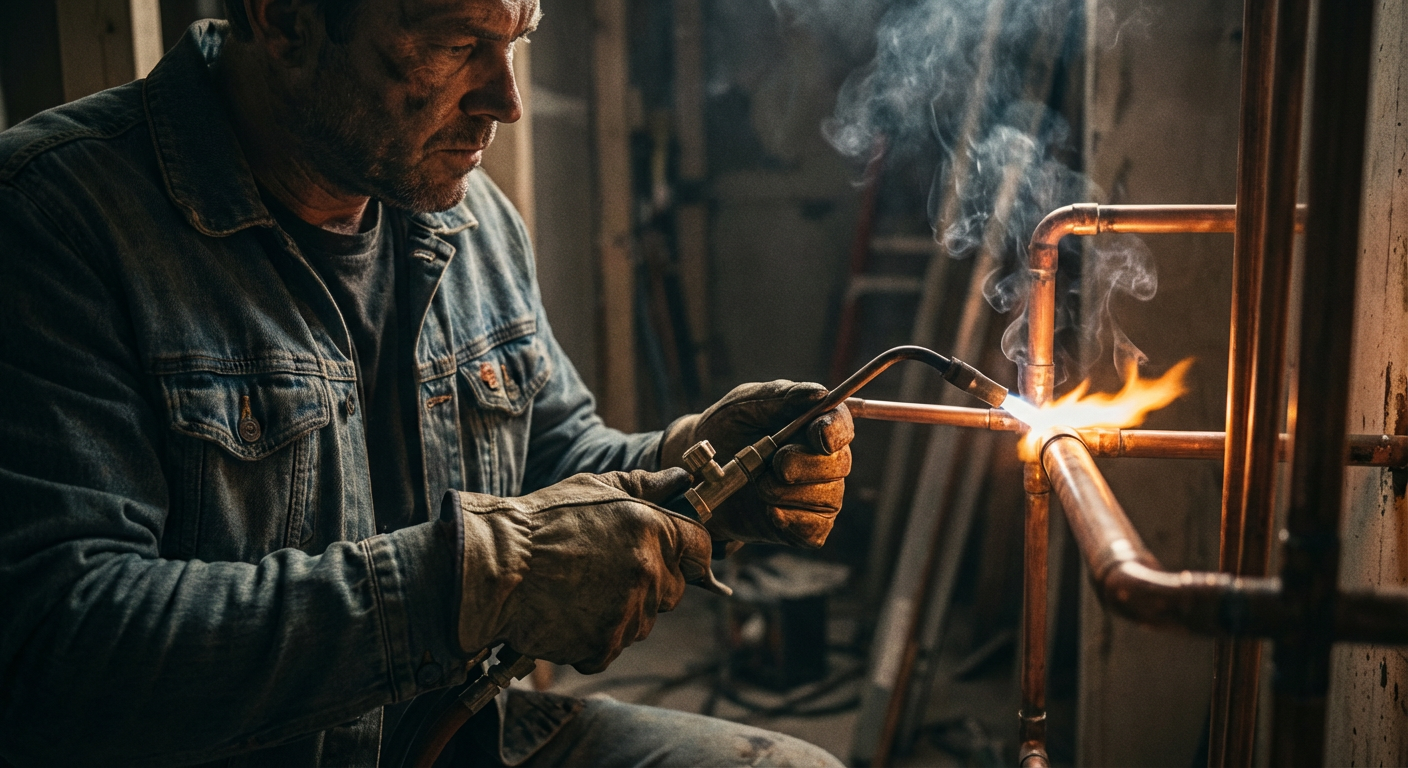
Brazing copper pipe connections is a core pipefitter skill
Air cooling has a ceiling. Physics has set that ceiling, and AI hardware has already exceeded it. A hyperscale AI training facility requires more complex mechanical systems than a mid-size hospital. The liquid cooling market is doubling annually. Every new data center being designed today includes liquid cooling at some scale, and virtually all of them face the same problem: they can design the systems, but they cannot find enough qualified pipefitters to build them. This is not a trend. It is a structural reality.
To understand why pipefitters are so desperately needed in this industry, you have to understand what AI hardware actually does to its environment. A standard office building's HVAC system might need to handle 10 to 20 watts per square foot. A traditional data center runs 50 to 100 watts per square foot. A hyperscale AI training cluster runs 300 to 500 watts per square foot in the GPU rows. The heat is not just more. It is in a different category entirely.
When NVIDIA's latest AI chips are operating under full training loads, each chip generates heat equivalent to a powerful space heater. A single server containing eight of these chips produces as much heat as a small sauna. When you put hundreds of these servers in a row, and thousands in a facility, air cooling becomes physically inadequate regardless of how many fans you use or how cold you keep the supply air. The thermal physics do not change because you want them to.
Liquid cooling solves this problem because water carries heat approximately 25 times more efficiently than air per unit volume. A chilled water loop running through a cold plate attached directly to a GPU chip can remove heat almost as fast as it is generated. Rear-door heat exchangers mount on the back of server racks and use chilled water coils to cool the exhaust air before it leaves the rack. Immersion cooling submerges entire servers in thermally conductive dielectric fluid. All of these approaches require pipe, fittings, pumps, heat exchangers, cooling towers, and the skilled hands to install and maintain them.
The liquid cooling market as a category is doubling annually. That pace of growth, combined with a baseline plumber and pipefitter workforce that was already not large enough to meet general construction demand, creates a shortage that is genuinely severe. Union reps quoted in a CBS News documentary described demand at "two, three, or sometimes even four times" their current membership for individual data center projects. One union local in a data center hub market described turning down projects because they simply did not have the workforce to staff them.
The Cowboy State Daily's February 2026 report on Wyoming plumber shortages delaying data center construction was one example of a national pattern. In Texas, Virginia, Ohio, and Arizona, the same dynamic is playing out: projects funded and designed but delayed because qualified mechanical contractors cannot find enough pipefitters. The geographic spread of data center construction means this shortage affects virtually every market in the country where data center development is active, which in 2026 is essentially everywhere.
The plumbing and pipefitting trades have well-established training pathways. The good news is that both of the main paths lead to the same journeyman credential, and both include reasonable options for people who are changing careers in adulthood.
The United Association of Plumbers and Pipefitters (UA) runs a five-year apprenticeship program that combines paid on-the-job training with classroom instruction. Like IBEW apprenticeships, this program is nearly free to the apprentice. You pay nominal application and materials fees (typically a few hundred dollars total), and the rest is covered by the joint apprenticeship training committee funded by contractor and union contributions.
The five-year timeline is the honest tradeoff compared to some of the other trades on this list. This is a longer commitment before you reach journeyman scale. But what you get at the end is one of the most respected trade credentials in the construction industry, a union card that travels with you to any market in the country where UA is active, and a specialization pathway into data center mechanical work that commands substantial premium pay.
You earn wages from day one at apprentice scale, typically 40 to 50 percent of journeyman scale, with step increases every six months. In many markets, journeyman pipefitter scale is $35 to $50 per hour before overtime. The math on five years of earning while learning, even at apprentice scale, is compelling.
Vocational and technical schools offer one to two year plumbing and pipefitting programs that cost $5,000 to $15,000 depending on the school and location. These programs do not replace the UA apprenticeship in terms of credentials, but they can give you enough foundation to get hired as a helper or entry-level apprentice, which then counts toward your journeyman hours.
Community colleges in many states offer plumbing programs specifically designed to feed into apprenticeship programs. These hybrid paths can be attractive if you want structured classroom preparation before entering an apprenticeship or if you are in a market where apprenticeship slots are competitive.
Once you are a journeyman pipefitter, the data center specialization is where the significant pay premium comes from. This specialization typically involves additional training and certification in several areas:
| Career Stage | Typical Compensation | Notes |
|---|---|---|
| Apprentice (Years 1-2) | $35,000 to $55,000 | Earn while you learn |
| Apprentice (Years 3-5) | $50,000 to $75,000 | Step increases every 6 months |
| Journeyman Plumber/Pipefitter | $62,970 to $85,000 | BLS median, general work |
| DC Specialized Pipefitter | $75,000 to $100,000+ | 20% or more DC premium |
| Union Journeyman (DC Market) | $80,000 to $120,000 | With overtime and per diem |
| Liquid Cooling Specialist | $120,000 to $183,000 | Top of the specialty |
"The Most Wanted Talent in the US AI Industry: Plumbers."
Futunn News, 2026
This headline circulated widely in the trades because it captured something that people in the industry had been experiencing but had not seen named so directly. The AI infrastructure buildout has created a specific, acute, and currently unsolvable shortage of qualified mechanical tradespeople who understand complex piping systems. The "unsolvable" part is temporary: it is being solved right now by people making exactly the kind of career shift this course is about. But the window of exceptional demand and premium pay is real, and it is open right now.
Data center mechanical work sits at the high-complexity end of the plumbing and pipefitting trades. It is not rough-in residential plumbing. It is precision process piping that touches compliance, documentation, engineering coordination, and quality assurance in ways that most plumbing work does not. Your professional background, particularly if it involved precision thinking, documentation discipline, or systems complexity, is more directly applicable here than in most trades.
Data center construction projects involve layers of contract complexity that most trades workers find overwhelming. Subcontractor agreements, scope of work definitions, change order negotiations, code compliance documentation, and lien law all come into play on large projects. Pipefitters who can read and understand contracts, communicate clearly in writing, and navigate complex compliance requirements move into project management and superintendent roles faster than any other background. Your ability to understand what a contract actually says, and what it means when scope changes, is directly valuable to contractors who struggle to find technically capable people with professional communication skills.
Here is something that surprises people: pipefitting tolerances in process piping are measured in thousandths of an inch. Pressure testing documentation requires logging specific readings at specific time intervals. System commissioning involves verifying flow rates, temperature differentials, and pressure drops against design specifications, then documenting the results in formats that are auditable by the mechanical engineer of record. This is precision work where attention to detail matters in a very concrete, testable way. Accountants and analysts who find satisfaction in exactness tend to excel in this kind of environment. Your instinct to document carefully and verify against specification is exactly what this work demands.
Large data center mechanical projects involve coordinating multiple subcontractors, managing a crew of journeymen and apprentices, sequencing work around facility constraints, and keeping a project on schedule when material deliveries, inspections, and concurrent trades all create dependencies. This is operations management in a physical context. Pipefitters with strong organizational instincts and coordination skills move into foreman and general foreman roles relatively quickly, and site superintendent tracks become realistic within eight to twelve years. If you have spent a career managing complex operations, the tools you use to do that work transfer directly.
If your background is in mechanical or chemical engineering, data center liquid cooling systems will be intellectually engaging in a way that is hard to find in most physical trades. You will be working with real thermodynamic systems: heat transfer calculations you understand at a fundamental level, fluid dynamics that you can reason about from first principles, and materials specifications that you can evaluate against your engineering knowledge. The gap is practical skill with tools and physical installation, which you gain through the apprenticeship. The conceptual framework you already have will make you an unusually capable pipefitter and an extremely strong candidate for specialist and engineering-adjacent roles.
Here is what a typical workday looks like for a journeyman pipefitter specializing in data center liquid cooling systems, currently working on a new hyperscale facility under construction:
This is not hyperbole. A modern AI training data center includes chilled water systems, cooling towers, supplemental cooling units, fluid management systems for direct liquid cooling loops, glycol systems, condenser water systems, and in many cases fuel oil systems for backup generation. The coordination between mechanical, electrical, structural, and controls trades on a major data center project rivals any hospital construction in complexity. The people who understand all of it, not just one piece, are extremely valuable. A journeyman pipefitter who understands the whole mechanical system, can read the full set of construction documents, and can coordinate with other trades becomes essential to the project team.
The UA apprenticeship is five years. That is a real commitment, and I want you to think honestly about it before you decide this is your path.
For someone who is 28, five years to journeyman is four years before you hit 33 with a permanent, high-paying, in-demand trade credential and the beginning of a specialization in liquid cooling that puts your income in the $80,000 to $120,000 range with a clear path to $150,000 or more as a specialist or superintendent. That math is compelling.
For someone who is 42, five years to journeyman means arriving at the journeyman credential at 47. That is still a 15 to 20 year career runway in a trade that does not have mandatory retirement. Your analytical and professional skills will accelerate your advancement once you are a journeyman. Foreman roles in this specialty often come within three to five years of journeyman status for people with strong organizational skills. This is still a very strong long-term investment.
The physical demands are real but not extreme in the way that lineworker work is. Construction pipefitting is physical: you will be on your feet, you will carry pipe and fittings, you will work in a range of environments from comfortable mechanical rooms to outdoor construction sites in summer heat. It is not desk work. But it is not the aerial, extreme-weather, high-voltage environment of lineworker work either. Most healthy adults in reasonable physical condition can meet the demands of this trade.
If the five-year commitment feels too long, consider this: you start earning on day one of the apprenticeship at 40 to 50 percent of journeyman scale. In many markets, that means $20 to $25 per hour from the beginning, with regular raises. You are not waiting five years to make money. You are making meaningful money from week one while your skill and credential are building.
Data center construction projects often go up in markets where there is not enough local union labor to staff them. This means contractors bring in journeymen from other markets, and those workers receive per diem payments (typically $90 to $150 per day, tax-free) plus housing. On a six-month data center project with per diem, a journeyman pipefitter can add $15,000 to $25,000 in tax-free income on top of their regular wages. Union pipefitters who are willing to travel follow the work, and the work right now is in data center construction markets that are desperate for exactly their skill set. This is not for everyone, but for someone without strong geographic constraints, travel work can dramatically accelerate wealth accumulation in the early journeyman years.
When people think about the skilled trades most connected to the AI economy, they usually think about electricians or data center technicians. Plumbers and pipefitters do not come to mind immediately. That gap between perception and reality is exactly where opportunity lives.
The physics of AI hardware demand liquid cooling. Liquid cooling demands pipe. Pipe demands pipefitters. This chain is not a trend that could change direction. It is a physical consequence of how these systems work. Every AI training cluster, every large language model, every data center being built to run the AI tools disrupting white-collar work requires the hands of skilled pipefitters to physically construct and maintain the cooling systems that keep it running.
The demand is not speculative. Union locals are turning down projects because they cannot staff them. Data center construction timelines are slipping because mechanical contractors cannot find qualified people. A CBS News documentary covered the shortage. Futunn News called plumbers the most wanted talent in the AI industry. The Cowboy State Daily documented construction delays caused directly by the shortage. This is happening right now, in this year, in the same year you are reading this.
You have analytical skills. You have professional discipline. You understand complex systems and documentation and precision. Those are exactly the qualities that make a journeyman pipefitter into a foreman, and a foreman into a superintendent, and a superintendent into someone building the infrastructure that powers the AI economy while earning $120,000 to $183,000 doing work that cannot be automated, cannot be offshored, and cannot wait.
The pipe needs to be installed. You could be the person who installs it.
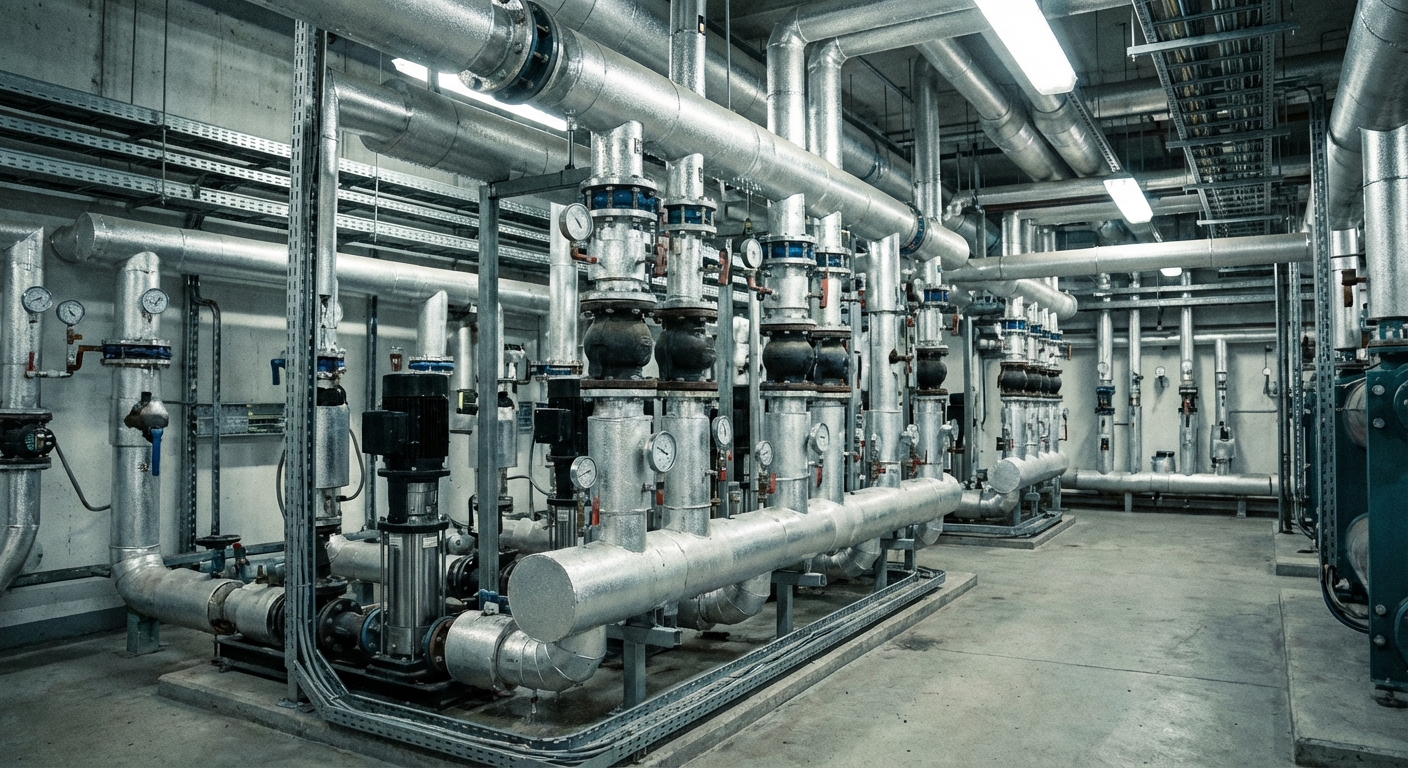
Chilled water manifolds distribute cooling across an entire data center floor