Module 7 of 12
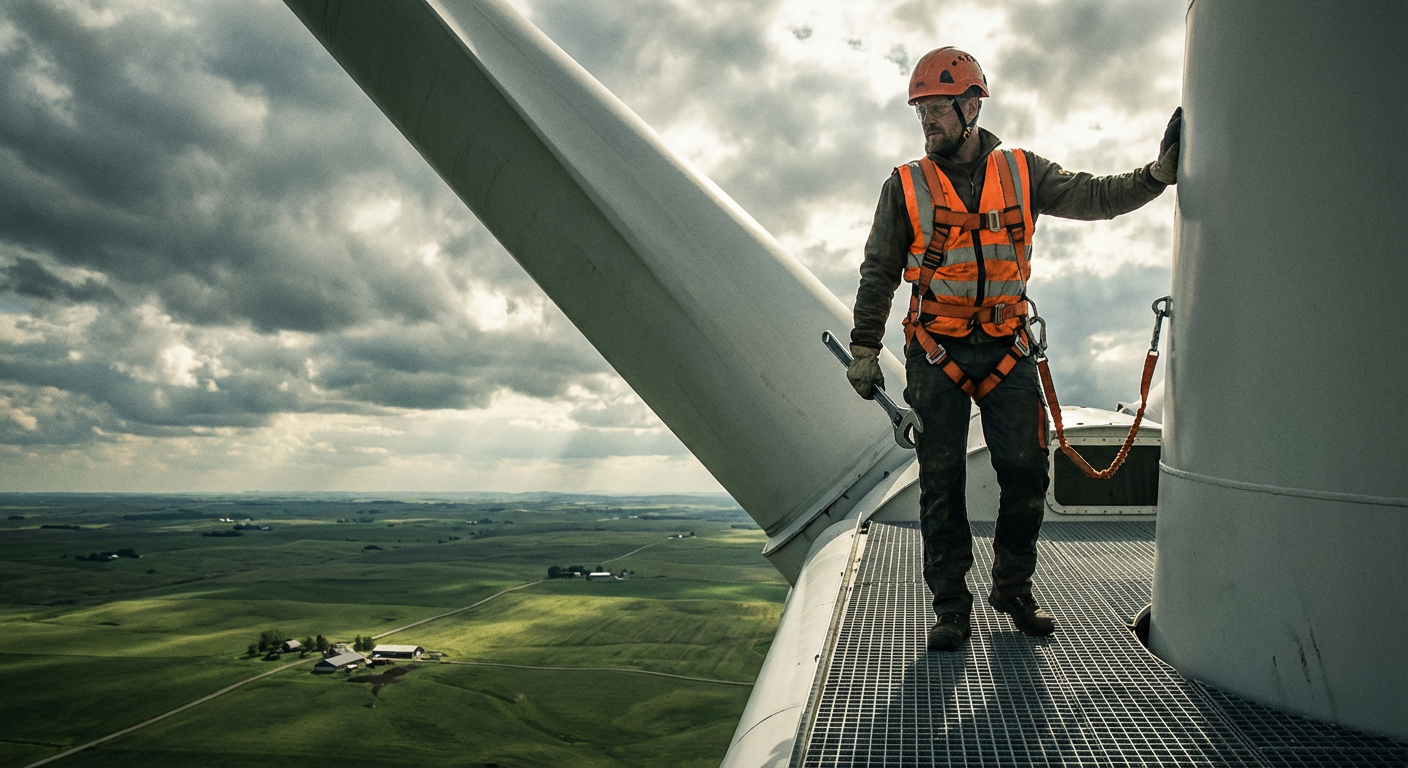
Here is something that does not get said enough: the artificial intelligence boom is one of the biggest drivers of clean energy demand in history. Think about what powers a data center running large language models around the clock. Thousands of servers, cooling systems, networking equipment, all drawing enormous amounts of electricity, every hour of every day. The numbers are staggering. A single large AI data center can consume as much power as a small city.
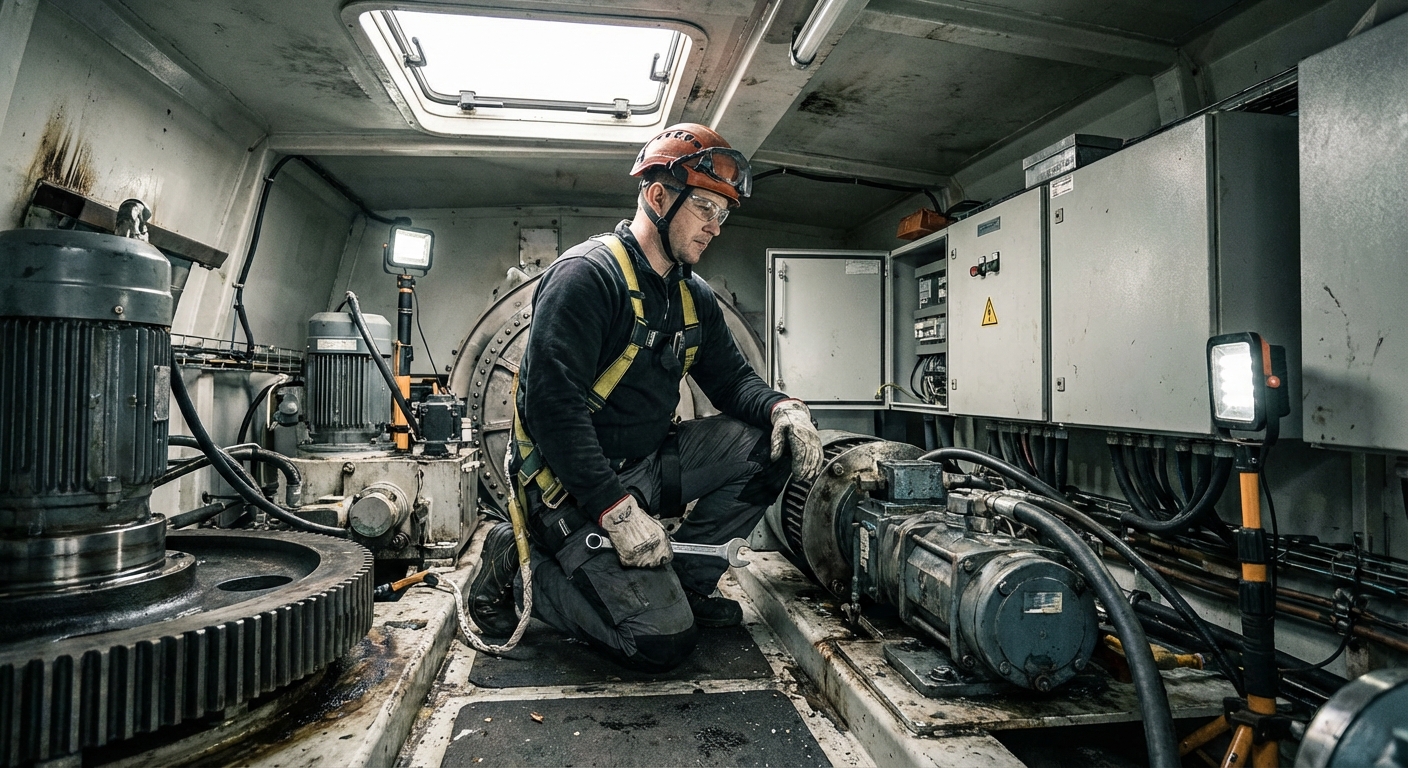
The nacelle houses the generator and gearbox -- the heart of a wind turbine
Microsoft, Google, Amazon, and Meta have all made public pledges to power their operations with clean energy. That is not marketing. Those pledges are backed by legal contracts called power purchase agreements, or PPAs, and all four of those companies have signed massive PPAs specifically for wind energy. Microsoft has committed to matching 100% of its electricity consumption with renewable sources. Google signed a multi-gigawatt wind PPA to power its AI infrastructure. The pattern is clear: the companies building AI need wind power to do it responsibly, and they need a lot of it.
The wind industry cannot meet those commitments without dramatically scaling its workforce. That is where you come in.
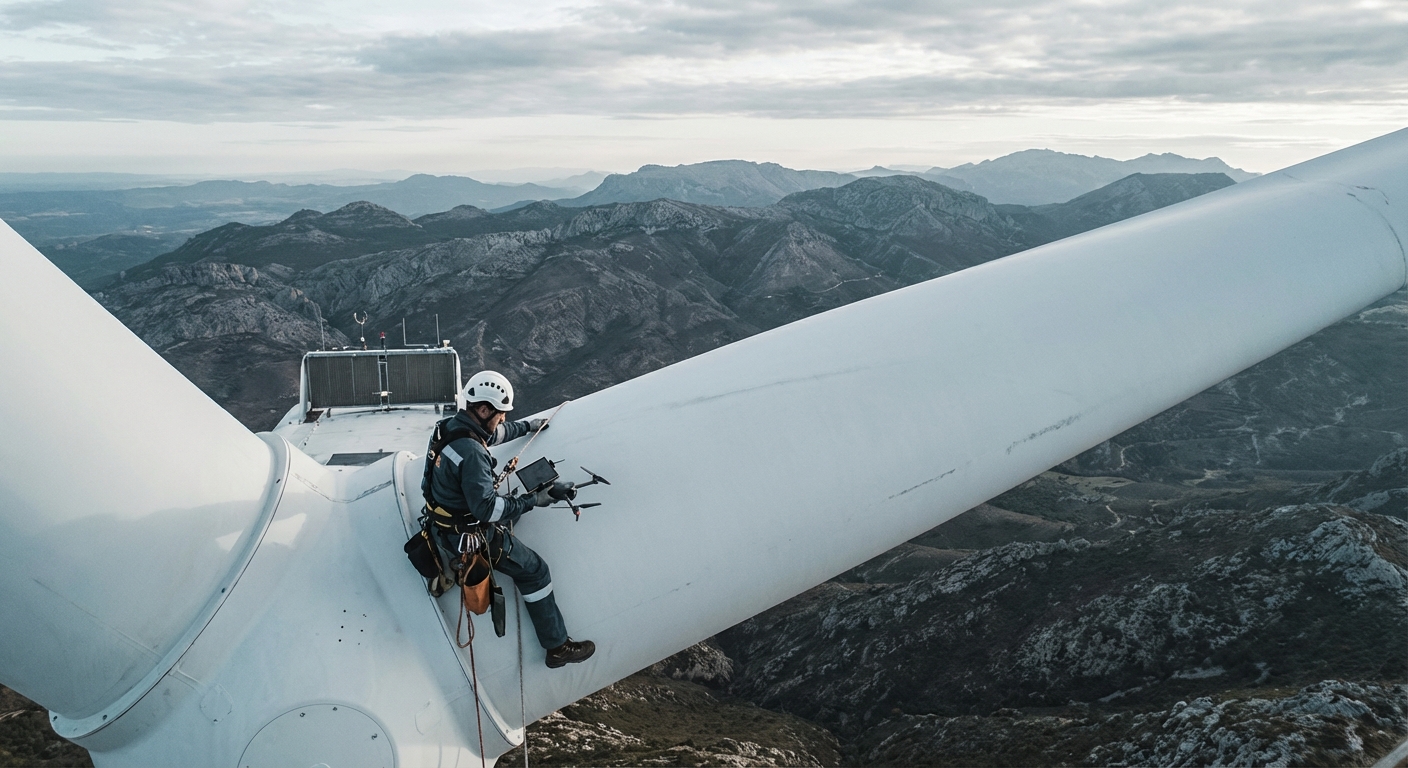
Blade inspections happen hundreds of feet in the air -- not for everyone, but well paid
Let's be concrete about money, because salary ranges on career websites tend to be either vague or wildly inaccurate. Here is what the data actually shows.
| Career Stage | Annual Salary Range | Notes |
|---|---|---|
| Entry Level (0-2 years) | $49,000 to $55,000 | First job out of training program |
| BLS Median (all experience) | $62,580 | Official May 2024 figure |
| Experienced (5+ years) | $75,000 to $88,000 | Journeyman-level, multi-platform certified |
| Lead Technician or Specialist | $88,000 to $100,000+ | Team lead, systems trainer, diagnostic specialist |
| Offshore Wind | $100,000+ | Plus housing and travel allowances; East Coast projects exploding |
Notice what offshore wind does to the top end of this career. The United States is in the early innings of a massive offshore wind buildout along the East Coast. Offshore technicians earn base salaries over $100,000 plus tax-advantaged housing and travel allowances while working rotation schedules (two weeks on, two weeks off is common). For someone coming from a white-collar career who already knows how to manage complexity and communicate professionally, those lead and specialist roles are very reachable within a few years.
Here is a picture that surprises most people from knowledge-worker backgrounds: wind turbine technicians are not just wrench-turners. They are field engineers who happen to also have hands-on mechanical skills.
Modern utility-scale wind turbines are extraordinarily sophisticated machines. A typical three-megawatt onshore turbine contains a SCADA system (Supervisory Control and Data Acquisition) that streams real-time telemetry on hundreds of variables: blade pitch, rotor speed, nacelle temperature, vibration signatures on every bearing, power output, grid synchronization data. The turbine talks to a control center. When it flags an anomaly, a technician goes out to investigate. When something needs maintenance, the SCADA history tells the story of what led up to it.
That sounds familiar if you have worked with distributed systems, server monitoring, or operational dashboards. Wind turbines are, in a very real sense, complex computers installed on 300-foot towers, exposed to weather, running 24 hours a day, seven days a week. The field is full of people who want both the technical depth and the physical dimension of working in it.
On a typical day, you might run vibration analysis on a gearbox bearing to catch a developing fault before it becomes a catastrophic failure, update a predictive maintenance log, troubleshoot a sensor that is throwing false alerts, or calibrate a blade pitch controller. You are working with real data, making real diagnostic decisions, and the stakes are real: a turbine that goes down unexpectedly costs the operator tens of thousands of dollars per day in lost power production.
This is not a consolation prize for people who could not do something else. Your white-collar background gives you genuine advantages that employers value and that translate directly to higher-level roles in this field.
You will feel immediately at home with SCADA systems, remote diagnostics, and the data infrastructure behind modern wind farms. Many large operators are deploying machine learning models for predictive maintenance, anomaly detection, and performance optimization. A technician who can read a Python diagnostic script or understand the logic behind a vibration analysis algorithm is worth significantly more than one who cannot. The turbine control systems run on real-time operating systems with software you will recognize. Your curiosity will go into overdrive the first time you get hands-on with a turbine control cabinet.
Fleet management of 50 to 200 turbines across a wind farm looks a lot like managing any other distributed operation. Maintenance scheduling, parts inventory, crew dispatch, KPI tracking against availability targets (the industry standard is 98% uptime or better), vendor management for specialized components. The skills you used to run a logistics operation or a manufacturing plant translate directly. As you move into lead tech and site supervisor roles, your operations background becomes your primary value proposition to an employer.
The economics of a wind farm are genuinely interesting. Levelized cost of energy (LCOE) analysis, availability factor optimization, the financial impact of reducing unplanned downtime, warranty management for major components like gearboxes and blade sets. When you understand both the technical side and the financial side, you become the person who can translate field conditions into business impact. That is a rare skill set, and it commands premium compensation in project management and asset management roles.
Preventive maintenance documentation is the financial accounting of wind operations. Every work order, every parts replacement, every inspection finding feeds into warranty claims, tax depreciation schedules, insurance documentation, and asset lifecycle planning. Wind farm operators are required to maintain detailed maintenance records both for regulatory compliance and for their project finance lenders. A technician who keeps meticulous, accurate records is enormously valuable. Your attention to detail and documentation instincts are not soft skills here. They are hard operational requirements.
Picture someone who spent eight years as a software developer at a mid-size tech company. Good salary, fully remote, objectively comfortable. But also spending a lot of time staring at screens inside apartments, feeling disconnected from anything physical or tangible. Reading about the wind industry's growth, they start a two-year community college wind technology program at night and on weekends. They finish in 18 months, earn their GWO safety certification, and land an entry-level position with a wind operator in the Midwest at $52,000.
Within two years they are a lead diagnostics tech at $78,000, using their programming background to write better data queries against the SCADA historian than anyone else on the team. Two years after that, they are a regional operations technology lead at $95,000, spending half their time in the field and half designing the predictive maintenance system for a 120-turbine portfolio. Physical work, meaningful work, and the technical depth their brain needs. The path exists.
Good news: the training pathway for wind turbine technician is one of the most straightforward in the trades. You do not need a four-year degree. You do not need years of apprenticeship before you can earn. The community college and manufacturer training ecosystem has matured significantly.
These are typically one to two year programs offered at community colleges in wind-producing states: Texas, Iowa, Kansas, Minnesota, Colorado, Wyoming, and increasingly in coastal states building offshore capacity. Costs range from $3,000 to $12,000 for the full program. You graduate with hands-on experience on training turbines, relevant certifications, and connections to local employers who recruit directly from the program. Many programs have job placement rates above 90%.
Companies like Vestas, GE Vernova, and Siemens Gamesa run their own technician training academies. These programs run three to six months and are frequently paid by the employer who is hiring you. The catch is that you typically need to have a job offer or be actively being recruited before you get access to manufacturer training. But if you can get in, it is among the fastest paths to being field-ready, and you come out with platform-specific certifications that are highly valued.
If you have military experience in mechanical or electrical systems, the transition into wind is shorter. Several wind operators have active veteran hiring programs, and your military training may satisfy prerequisites for some certifications. The GI Bill covers many community college wind programs.
Employment projections can sometimes feel abstract, so let's make this concrete. The United States currently has roughly 75,000 wind turbine technicians. A 50% growth projection over ten years means adding approximately 37,500 jobs, roughly 2,300 per year, every year, for the next decade. That is net new jobs, not replacements for people who retire.
Globally, the picture is even bigger. The industry needs approximately 628,000 technicians worldwide by 2030, up from around 475,000 today. The United States is one of the largest wind markets in the world, and it is still in a major growth phase. Offshore wind alone is projected to add tens of thousands of new jobs along the East and West coasts over the next decade.
There is also a strong replacement demand story here. The wind turbines installed in the early buildout years (2005 to 2015) are now entering major maintenance cycles. Gearboxes need rebuilding. Blades need repair. Control systems need upgrades. Even if zero new turbines were built from today, there would still be strong demand for skilled technicians just to maintain what already exists.
Is this career limited to rural areas? Onshore wind farms are rural, yes. That is part of the deal, and for some people it is a feature rather than a bug. But offshore wind is changing the geography significantly. Projects under development off the coasts of New York, New Jersey, Massachusetts, Maryland, Virginia, and California are creating urban-proximate opportunities with shore-based support roles and rotation schedules that keep you connected to metro areas.
How physical is the work? Honest answer: it is physically demanding. You are climbing towers, working in confined spaces, carrying equipment, and spending time outdoors in variable weather. That said, it is not brute-force labor. The job rewards technical skill and methodical thinking as much as physical capability. Many experienced techs in their 40s and 50s do the work comfortably. Good body mechanics and proper technique matter more than raw strength.
What about the future as turbines get more automated? More automation means more sophisticated equipment, not fewer technicians. You cannot remotely replace a main bearing or repair a blade. You cannot fix a yaw drive motor by logging into a system. The SCADA data tells you what to investigate, but a human still has to climb the tower and do the work. Automation increases the diagnostic and technical sophistication of the role, which is good for people with technical backgrounds.
How does this career handle economic downturns? Energy infrastructure investment is more recession-resistant than most sectors. The long-term contracts (PPAs often run 20 to 25 years) between wind operators and utilities or large commercial buyers create stable revenue streams that continue regardless of economic conditions. The AI data center buildout specifically is a multi-decade investment cycle. The demand for wind power maintenance does not disappear when the stock market corrects.
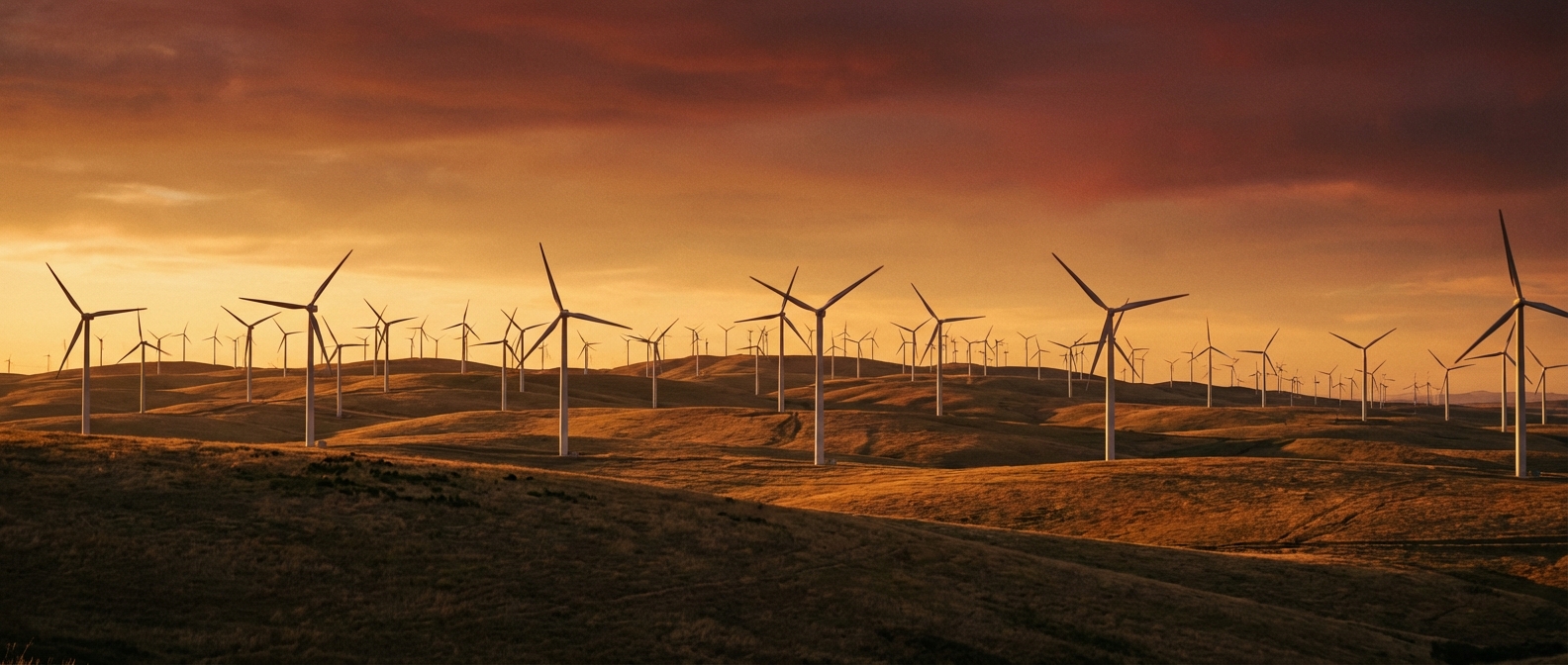
Modern wind farms are the power source for tech company AI operations