Module 8 of 12
Let's be honest with you about something before we go further, because we want you making decisions based on accurate information rather than outdated headlines.
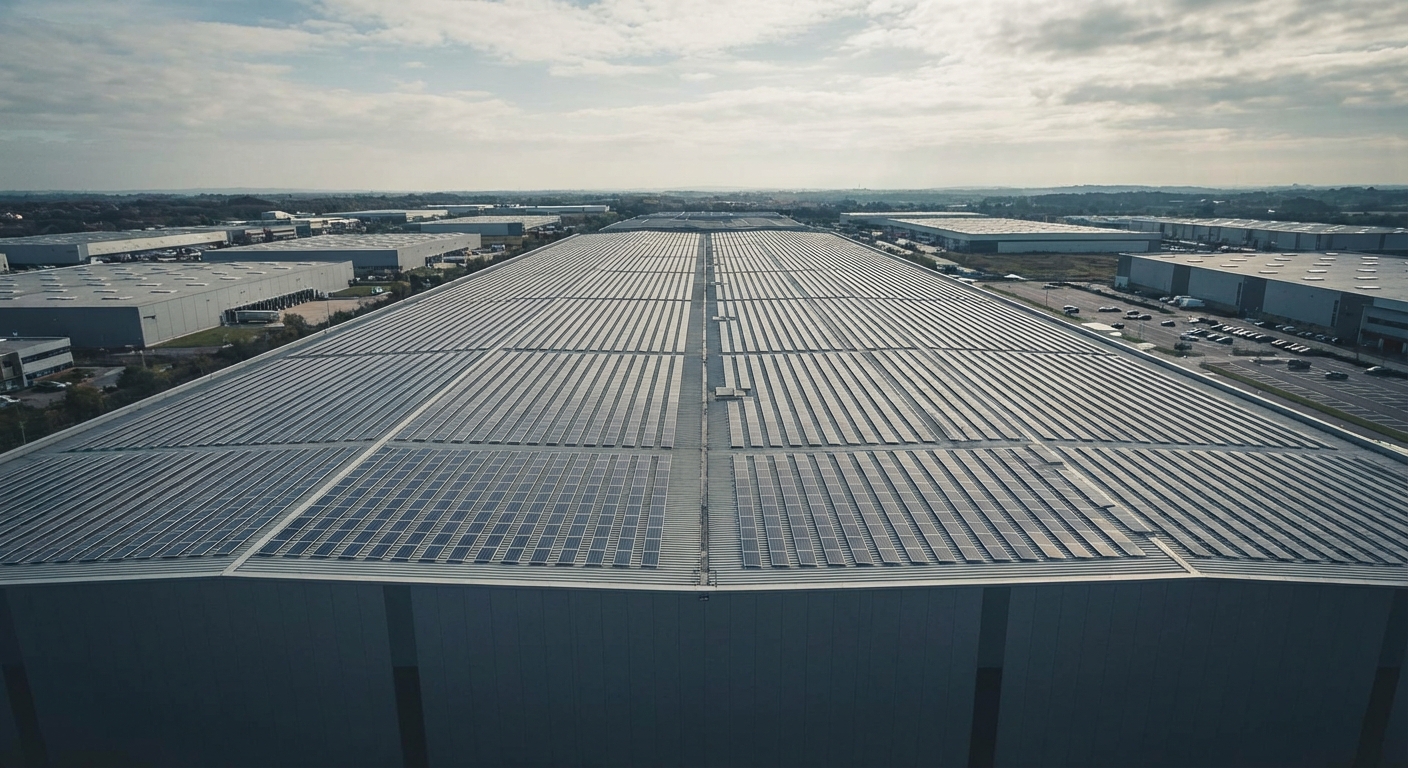
Commercial rooftop solar installations are the bread and butter of solar PV work
Residential solar had a tough 2025. Rising interest rates squeezed the consumer financing market that fueled the rooftop solar boom, several large residential installers restructured or reduced headcount, and homeowner demand slowed in some markets. If you have heard anything negative about solar jobs recently, that is probably the context.
Here is what happened on the other side of the ledger at the same time: commercial and utility-scale solar grew 6% in 2025. Large corporations, utilities, municipalities, and data center operators kept investing heavily in solar installations measured in megawatts, not kilowatts. The projects getting built right now are big: rooftop arrays on warehouse and distribution center portfolios, ground-mounted utility-scale fields that stretch for miles, solar-plus-storage systems being designed specifically to power data centers with clean energy guarantees.
The lesson is not that solar is in trouble. The lesson is that the sophisticated, commercial end of solar is where the durable career opportunity lives, and that is exactly what this module is focused on.
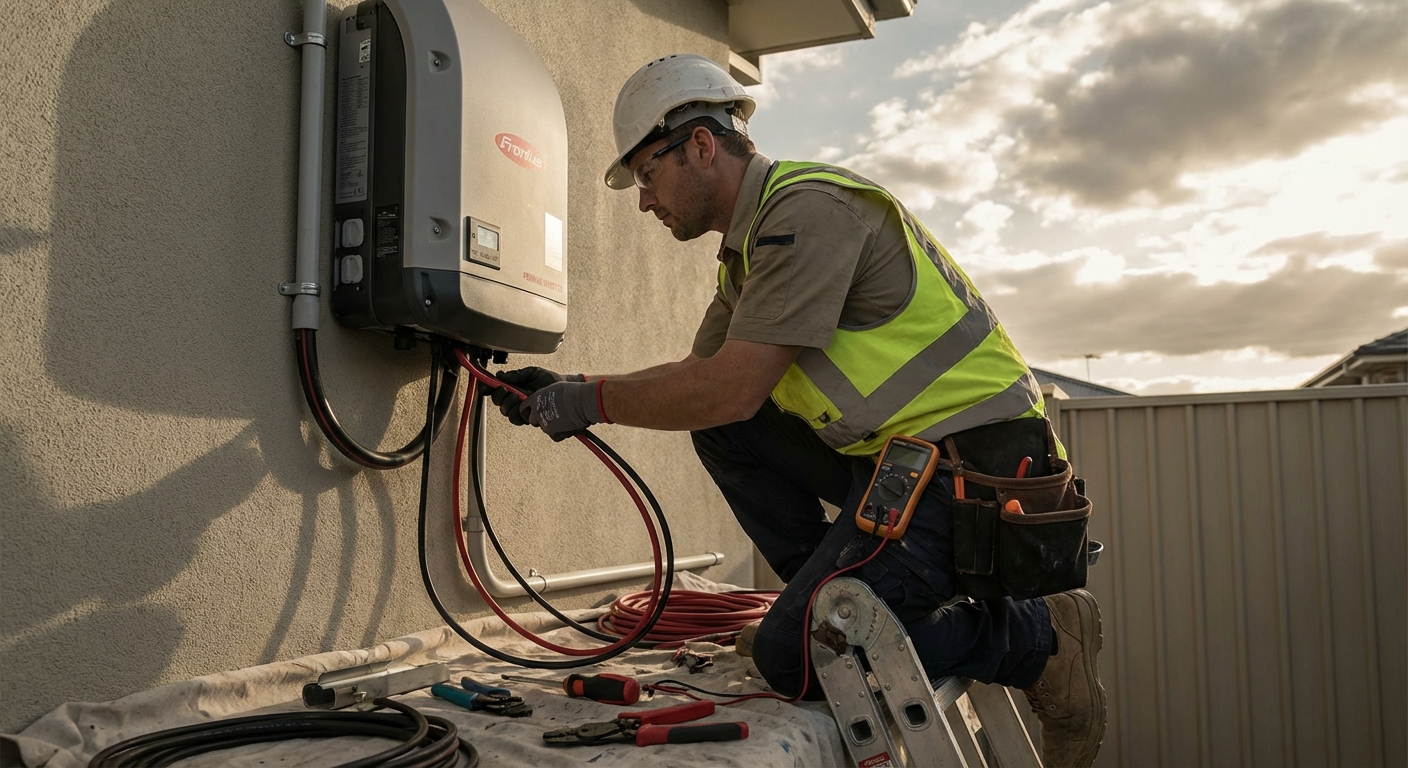
Inverter installation requires both electrical and solar-specific knowledge
We covered this dynamic in the wind module, but it deserves its own treatment here because solar has a specific role in the data center energy story.
The big tech companies powering artificial intelligence need clean electricity, and they need it reliably, at scale, with delivery guarantees. Wind power is excellent but intermittent. Solar is also intermittent on its own, but solar paired with battery storage is a different product entirely. A solar-plus-storage system can charge batteries during peak generation hours and discharge them to maintain consistent power delivery around the clock. It can be sized and dispatched to match a data center's load profile almost exactly.
Right now, sophisticated solar-battery systems are being designed and built specifically for data center applications. The installation work these systems require goes well beyond slapping panels on a roof. It involves high-voltage DC wiring, battery energy storage system (BESS) integration, inverter programming, utility interconnection engineering, and sophisticated commissioning protocols. These are not entry-level rooftop jobs. They are complex electrical projects that pay commensurately.
If you come from a technical background and you get commercial solar installation experience plus BESS training, you are positioned for some of the most interesting and well-compensated work in the clean energy sector.
Here is the honest picture on compensation. Solar PV installer sits at the lower end of the salary range among the careers in this course, particularly at entry level. We are not going to sugarcoat that. But the trajectory is strong, and the role has something else going for it: it is one of the fastest paths from training to your first paycheck, and it opens doors into electrical work, project management, and solar development roles that pay significantly more.
| Role | Salary Range | Notes |
|---|---|---|
| BLS Median (all solar installers) | $51,860 | Official May 2024 figure, includes residential |
| Commercial / Utility-Scale Installer | $55,000 to $80,000 | Higher complexity, larger systems, better pay |
| Foreman or Project Lead | $70,000 to $95,000 | Managing crews on commercial projects |
| Solar-Electrical Hybrid (Master Electrician) | $80,000 to $110,000+ | Full electrical license plus solar specialization |
| Technical Sales (Solar Developer) | $80,000 to $150,000+ | Commercial solar sales with technical credibility |
Notice that last row. One of the most powerful uses of solar installer experience is combining it with communication skills to enter technical sales. Commercial solar projects are complex financial and engineering decisions for the companies buying them. A salesperson who can walk a CFO through the ITC tax treatment, explain the system design, and credibly discuss installation logistics closes deals that a purely financial salesperson cannot. People from accounting, finance, and legal backgrounds who pick up hands-on solar credentials are particularly well-positioned here.
Commercial and utility-scale solar installation is a serious skilled trade. The day-to-day work is physical, technical, and increasingly sophisticated. Here is an honest picture of what you would be doing.
The white-collar angles in solar are genuinely varied and genuinely valuable. This is one of the fields in this course where people from different professional backgrounds find the sharpest overlap with what they already know.
Commercial solar projects are financial instruments as much as they are engineering projects. The federal Investment Tax Credit (ITC) currently at 30%, accelerated depreciation schedules under MACRS, power purchase agreement structures, net present value and internal rate of return calculations for 25-year system lifetimes, production-based incentives, and state-level tax credits all combine to determine whether a commercial solar project pencils out for the buyer. A solar installer who can explain this financial stack to a business owner or CFO is worth dramatically more than one who cannot. If you have spent time in accounting or financial analysis, this financial structure will feel familiar. The technical credibility from installation experience makes your financial knowledge more actionable, not less.
Commercial solar projects generate a lot of legal work: land leases for ground-mount projects, utility interconnection agreements (these can run hundreds of pages and involve complex regulatory frameworks), tax equity financing structures, power purchase agreements, engineering procurement and construction contracts, and permit applications. A lawyer who also understands the physical installation side, who can walk a field and understand what they are looking at, commands rates that pure legal specialists cannot. Solar project development firms actively recruit people with both legal training and technical credibility. If you currently practice in real estate, energy, or tax, the overlap with solar is direct and substantial.
Running a commercial solar installation project is a real operations management challenge. You are coordinating permitting timelines, material delivery schedules, subcontractor crews, utility inspection calendars, and customer communication simultaneously. On large utility-scale projects with multiple construction crews working across hundreds of acres, the project management complexity rivals any infrastructure build. Your experience managing multi-stakeholder projects, dealing with schedule compression, and tracking KPIs on complex deliverables applies directly. Lead installer and project superintendent roles at commercial solar companies pay $75,000 to $95,000 and actively seek people who can manage both the technical and operational dimensions.
Commercial solar sales is one of the most lucrative career pivots available from a marketing background, but only if you add technical credibility. Commercial solar customers, facilities managers, CFOs, and sustainability officers, have been sold to by purely financial salespeople for years. They are sophisticated, they ask technical questions, and they can tell when someone is reading from a script. A commercial solar sales representative who has actually installed systems, who can answer questions about wire management, inverter sizing, or BESS integration from real experience, earns trust that purely financial pitches cannot. Base salaries start around $80,000 with commissions pushing total compensation to $150,000 and above on large project sales. The combination of communication skill and technical credibility is genuinely rare and genuinely valuable.
Consider what a solar installation background can open. Someone with a background in corporate finance decides to transition into clean energy. They complete a 16-week trade school solar program, pass their NABCEP PV Associate exam, and spend two years doing commercial rooftop work at $58,000 per year. During that time, they build a deep understanding of the financial analysis that goes into commercial solar deals, because their finance background makes them curious about the numbers behind every project they install. They move into a solar development role at $95,000, analyzing project economics and managing utility interconnection processes. Within three years they are leading the commercial pipeline for a regional solar developer at $130,000 base plus deal bonuses. The technical foundation enabled the financial career to operate at a level that would not have been possible otherwise. That is the gateway value of this field.
One of the most compelling things about solar installation as an entry point into the trades is the speed from training to employment. If you need income within six months, solar is one of your best options. Here is the landscape.
The shortest programs run six weeks to three months and cover PV fundamentals, electrical safety, racking installation, string wiring, inverter installation, and commissioning basics. These shorter programs ($1,000 to $4,000) are designed to get you interview-ready for entry-level commercial installer positions. Longer programs of six months to one year ($4,000 to $10,000) cover more depth on electrical theory, battery storage systems, commercial system design, and project management. If you have any background in electrical work or STEM fields, the shorter programs are often sufficient for entry-level work.
The North American Board of Certified Energy Practitioners (NABCEP) is the gold standard credential in the solar industry. There are two key certifications to know:
Here is a strategic point that many people miss when planning a solar career: combining solar installation skills with an electrical license dramatically expands your earning potential and career options. Electricians who specialize in solar and battery storage are in extremely high demand. The path is longer (electrical apprenticeship takes 4 to 5 years), but if you are playing a 5 to 10 year career game, starting solar work while simultaneously enrolling in an electrical apprenticeship program is one of the highest-return moves in this course. We cover electrical licensing in depth in Module 1.
Clean energy jobs grew three times faster than the overall economy in 2024, adding nearly 100,000 new positions. Solar was the largest driver of that growth. Even with the residential market cooling, the commercial and utility pipeline is enormous.
The solar-storage combination is becoming the dominant technology for new commercial builds. Battery energy storage systems are being paired with solar on projects that two years ago would have been solar-only. That adds scope and complexity to every installation, which means better pay and more interesting work for technically capable installers.
Agrivoltaics (combining solar with agriculture) is another growing segment where solar arrays are installed over farmland in configurations that allow crops to grow beneath the panels. These projects require sophisticated site engineering and are increasingly common in agricultural states. The segment is growing fast and needs skilled installers who can work in rural environments.
Floating solar on reservoirs, parking canopy structures, building-integrated photovoltaics (BIPV) on commercial facades: the applications keep expanding. Entry-level solar work teaches you a foundational skill set that applies across all of them, and the industry keeps creating new specializations with premium compensation for people who develop expertise in emerging application types.
Is the residential solar decline a reason to avoid this field? No, with the caveat that you should specifically target commercial and utility-scale work. The residential market is cyclical and dependent on consumer financing conditions. The commercial market is driven by corporate energy procurement, federal tax incentives, and utility-scale economics, all of which are more stable and more structurally supported. Orient your training and your job search toward commercial from the start and you are on solid ground.
How physical is solar installation? It is genuinely physical work. Carrying panels and racking components, working on rooftops and in the sun, pulling wire through conduit, climbing ladders. Entry-level work is more physically demanding than senior roles. As you move into foreman, project management, or commissioning specialist positions, the physical intensity decreases and the technical and management complexity increases. Staying in good physical shape and learning proper lifting and working techniques matters for longevity in the field.
Can I do this if I am afraid of heights? Commercial rooftop work involves heights, typically one to four stories. Utility-scale ground-mount work is all at grade level, no height exposure at all. If heights are a significant concern, orient toward ground-mount utility projects. There is plenty of work there and it is growing faster than rooftop commercial.
What states have the best solar job markets? California remains the largest solar market in the US by a significant margin, though permitting reform has improved conditions in other states. Texas, Florida, Arizona, Georgia, and North Carolina all have large and growing commercial solar markets. The Southeast is expanding particularly fast right now. Utility-scale development is active in the Southwest, Mountain West, and increasingly the Midwest.
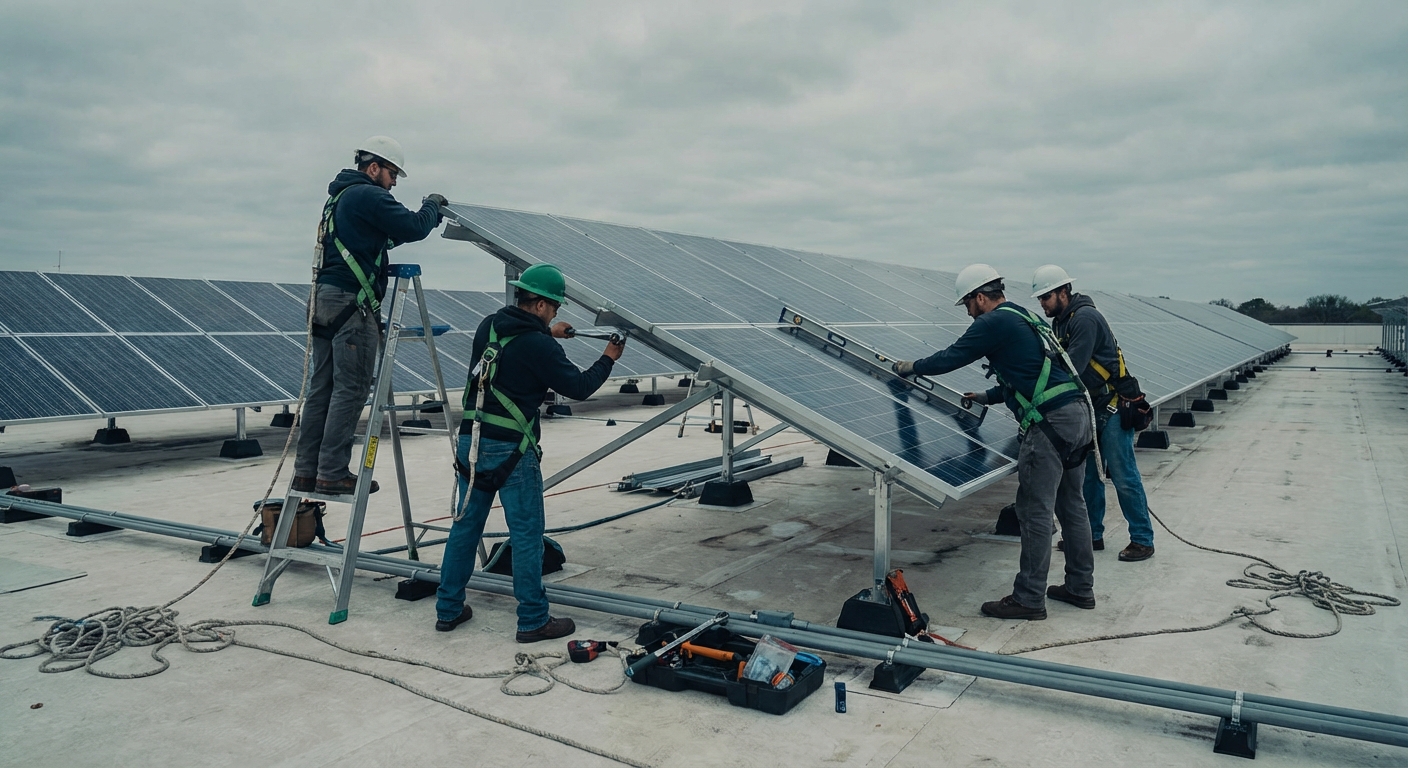
Optimizing panel angle and orientation maximizes system output