Module 9 of 12
Most of the careers in this course involve established trades with long histories and well-worn training pathways. EV charging infrastructure is something different: a brand-new specialization built on top of existing electrical work, exploding in real time, with credential requirements that are still being standardized and a talent pipeline that is years behind demand.
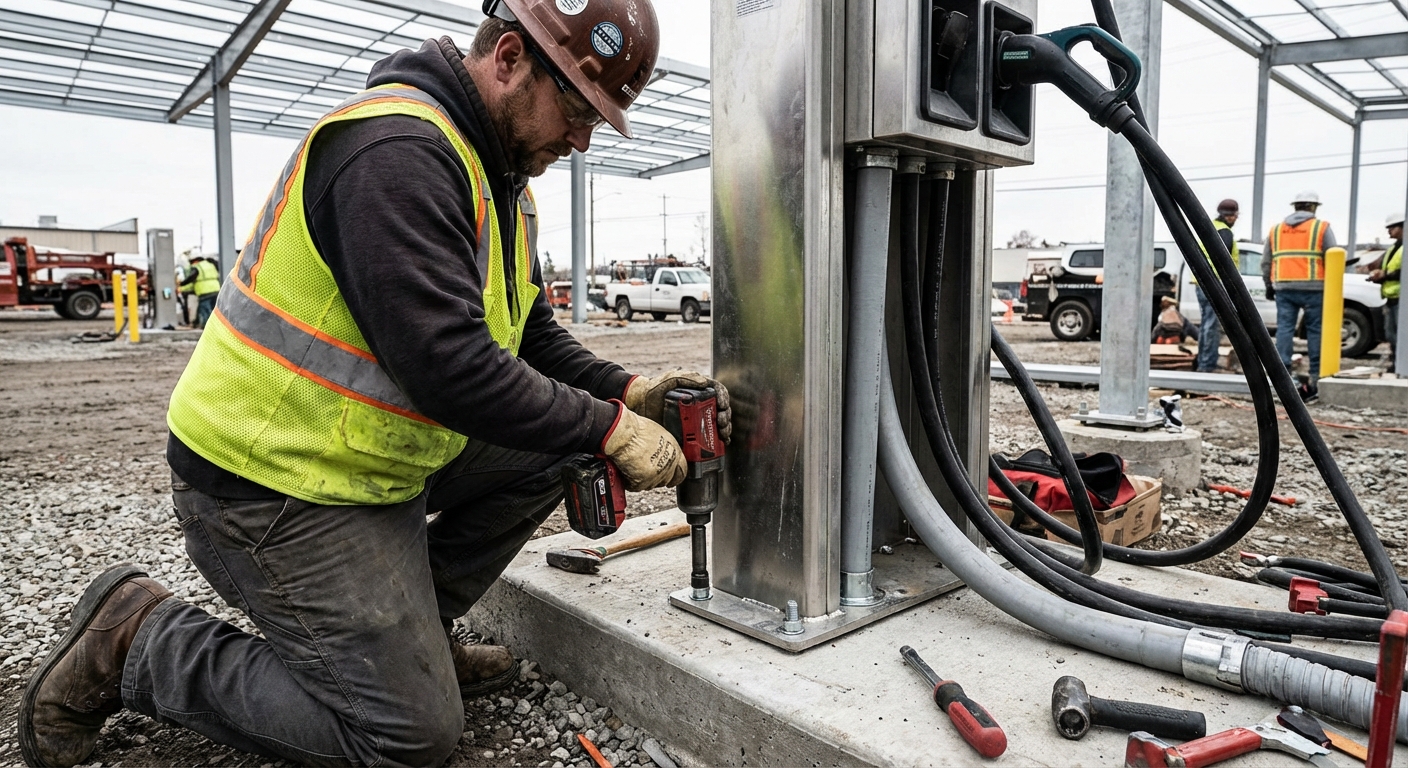
DC fast charger installations are the highest-value work in the EV charging sector
That combination creates a specific kind of opportunity. The people getting into this field right now, in 2025 and 2026, are positioning themselves as senior practitioners before the market fully matures. Five years from now, the EV charging sector will have the same established hierarchy as every other trade. The window to enter as a genuine pioneer rather than a follower is open right now, but it will not stay open indefinitely.
At the same time, we want to be clear about the foundation this career requires. You cannot walk into EV charging installation from a white-collar background without first developing core electrical skills. The path runs through electrical licensing, specifically at the journeyman or residential level, before the EV specialization layer makes sense. We cover that foundation in Module 1. If you have not read that module yet, do it before this one, because everything in this module assumes that electrical foundation is either in place or in your plan.
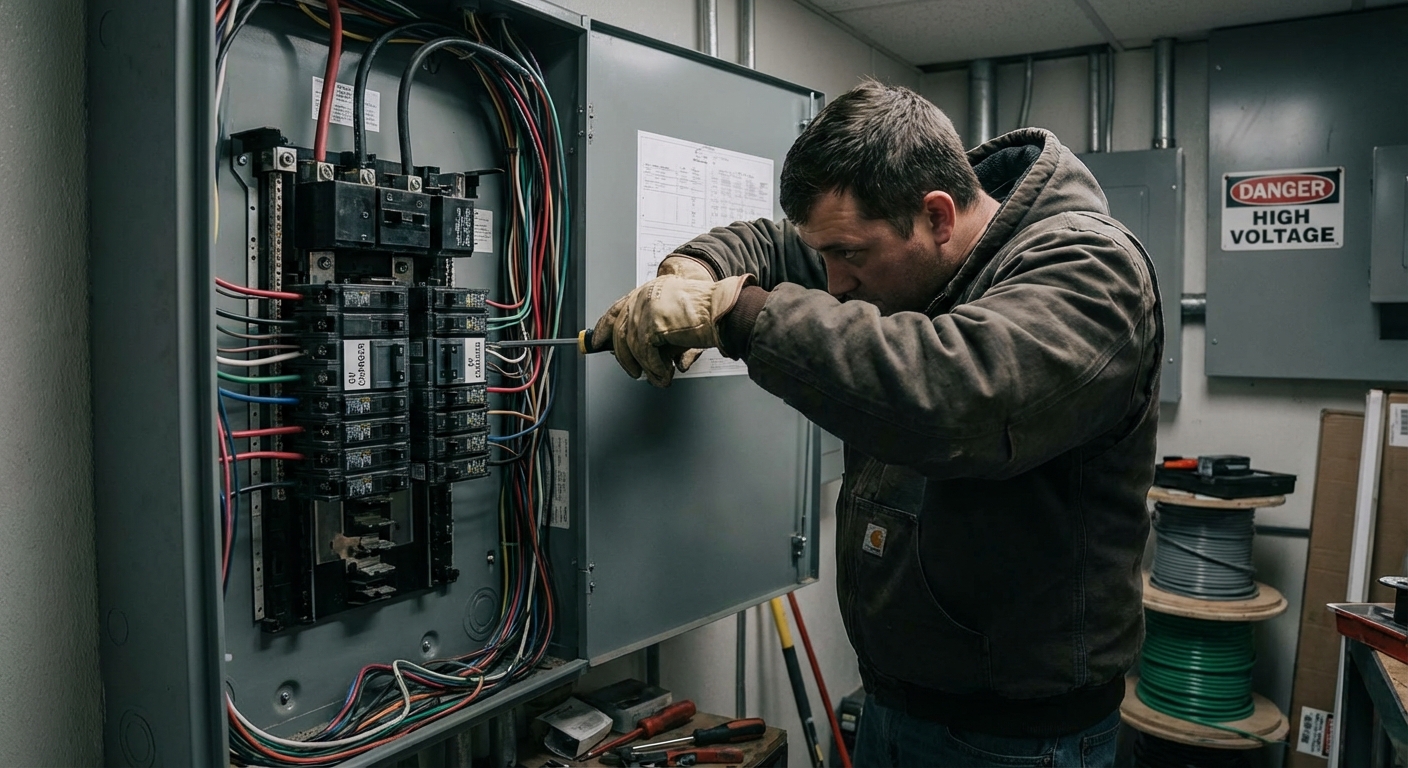
Most EV charging installations require a panel upgrade -- doubling the scope and pay
Consider that 30% annual growth in DC fast-charging ports. In 2025 alone, more than 18,000 new DC fast-charging ports were deployed across the United States. Each of those ports requires electrical installation, software configuration, network setup, and ongoing maintenance. The infrastructure being built right now will also need regular service calls, firmware updates, hardware replacements, and troubleshooting for its entire service life. This is not a one-time installation market. It is a recurring service market with a growing installed base.
The BLS projects 36% growth by 2030 specifically for EV automotive technicians, but the broader EV charging infrastructure role, which covers both installation and ongoing maintenance, is growing even faster than that. The 160,000+ jobs projected by 2032 represent a sector that barely existed at meaningful scale five years ago.
This is one of the higher-compensation opportunities in this course, particularly at the specialist level. The salary range reflects both the technical complexity of the work and the current shortage of qualified installers.
| Role | Salary Range | Notes |
|---|---|---|
| Entry-Level EVSE Installer | $25-$35/hour ($52,000-$72,800/year) | Licensed electrician with EVITP cert, first job in EV |
| General EV Charging Technician | $50,000 to $75,000 | Field installation and service, 1-3 years experience |
| Experienced EV Tech (5+ years) | Up to $107,000 | Multi-platform certified, diagnostic specialist |
| EVSE Installer Company Employee | $88,941 to $113,928 | Average salary at specialist EV charging companies |
Regional variation is real and worth understanding. Colorado shows average salaries around $57,418, reflecting a market that is building out capacity but has not yet reached the premium compensation tier. Tennessee shows around $41,687, typical of earlier-stage markets where EV adoption is lower. Contrast those with California, where EVITP-certified electricians on utility-scale commercial charging projects earn significantly above the national average.
The strategic implication: if you are geographically flexible, entering this field in a high-EV-adoption market now positions you better than waiting for your local market to mature. The skills and credentials you build in a high-activity market transfer anywhere.
This deserves its own section because it is genuinely significant and not well understood by most people looking at this field from the outside.
The federal government has committed billions of dollars specifically for EV charging infrastructure through the National Electric Vehicle Infrastructure (NEVI) program and related funding streams. These are not aspirational budget items. They are designated, allocated funds flowing to states for charger deployment on highway corridors, in underserved communities, and at fleet facilities.
This government funding also creates something important for your career stability: it insulates EV charging deployment from short-term economic volatility. Federally funded infrastructure projects have multi-year contracts and committed budgets. They do not get cancelled because of a quarter of bad economic data. The foundation of demand in this market is more structurally durable than in most sectors.
The connection between artificial intelligence and EV charging infrastructure is less direct than the wind and solar connections, but it is substantial and growing.
Every major technology company has committed to electrifying its vehicle fleet. Amazon is deploying 100,000 electric delivery vans. FedEx and UPS have massive electrification commitments. The autonomous delivery vehicle programs at Google, Amazon, and various startups require electric vehicles and the charging infrastructure to support them. Corporate campuses are being retrofitted with workplace charging to support employee EVs. Data center facilities are installing fleet charging for service and delivery vehicles.
AI-optimized logistics systems are also creating demand for smart charging infrastructure specifically. An AI demand response system that manages a fleet of 200 electric delivery vans needs charging stations with smart capabilities: OCPP-compliant communication protocols, dynamic load management, integration with fleet management software, demand response participation in utility programs. These are not basic Level 2 chargers plugged into a wall. They are networked infrastructure systems that require sophisticated installation and configuration skills.
The $105 billion global market projection reflects this convergence: vehicle electrification, AI-optimized logistics, smart grid integration, and corporate sustainability commitments all creating simultaneous demand for the same infrastructure.
EV charging infrastructure has some of the most direct white-collar skill overlaps of any trade in this course. The technical and business complexity of this field creates real value for people who come in with professional backgrounds.
OCPP (Open Charge Point Protocol) is the dominant communication standard for EV chargers, and it is a genuinely interesting protocol to work with. It is an open, JSON-based standard that defines how chargers and central management systems communicate: charge point status, transaction management, remote start and stop, firmware updates, smart charging profiles. If you have worked with REST APIs or IoT communication protocols, OCPP will feel familiar. Beyond OCPP, smart charging systems involve demand response APIs, utility integration interfaces, and fleet management software integrations. A licensed electrician who also understands OCPP, can configure smart charging parameters, and can troubleshoot network connectivity issues is arguably the most valuable EV charging professional in the country right now. That combination of electrical credentials and software fluency is extremely rare, and companies building charging networks are actively searching for people who have it.
Multi-site commercial fleet charging rollouts are large-scale operational projects. Consider a company deploying EV charging at 50 locations across five states: site assessments, utility interconnection at each site, permitting in multiple jurisdictions, equipment procurement, installation crews coordinated across regions, utility inspections, and system commissioning. Managing that kind of program requires real operations management capability. The companies building out commercial charging networks are hiring program managers and project managers who can handle this complexity. Entry-level electricians with no project management background cannot run these programs. You can, especially after you add the technical foundation of electrical work and EV-specific certifications. Regional operations manager and national rollout manager roles at charging companies pay $90,000 to $130,000 and are chronically difficult to fill.
EV charging infrastructure is increasingly an investable asset class. Private equity funds, infrastructure investors, and family offices are allocating capital to charging networks as yield-generating infrastructure. The analysis of these investments requires understanding utilization rates, revenue per port, operating costs, incentive structures (federal tax credits apply to EV charging equipment too), and long-term demand projections. A financial analyst or wealth manager who also understands how these systems actually work, who has seen the installation complexity and knows what drives uptime and utilization, has a genuinely differentiated perspective for investment analysis or client advisory work. This is one of those fields where technical credibility makes financial work more accurate and more persuasive.
EV charging installations involve a surprising amount of legal complexity. Utility interconnection agreements for high-power installations (some DC fast charging facilities draw multiple megawatts from the grid and require utility-grade interconnection processes). Commercial property easements and charging station agreements for installations on leased or shared properties. Permitting requirements that vary by municipality and state. Federal NEVI program compliance documentation. Accessibility requirements under ADA for public charging stations. Liability frameworks for charging network operators. A lawyer who has hands-on experience with actual EV charging installations brings a level of practical understanding to these issues that pure legal specialists cannot match. Energy law and infrastructure law practices are active growth areas right now, and EV charging is a significant part of that.
Imagine a developer with ten years of backend experience who decides to make a career change. They spend four years completing a residential electrician apprenticeship while continuing to work part-time in software. They get their residential license, add EVITP certification, and start doing EV charging installations for a regional electrical contractor. On their first commercial fleet charging project, they are the only person on the crew who understands what the customer means when they ask about OCPP 2.0 compliance and smart charging profile support. They spend a Saturday reading the OCPP specification and come back Monday able to answer every question the customer has. Within a year they are the go-to person for every technically complex EV charging project the contractor takes on, earning $105,000. Two years later, a national charging network operator hires them as a technical solutions architect at $135,000, traveling to complex installations and designing the software integration layer between charging hardware and fleet management systems. The electrical license opened the door. The software background determined the ceiling.
EV charging infrastructure has a more complex certification landscape than most trades, partly because it is new and the credentialing ecosystem is still maturing. Here is the map.
You need either a journeyman electrician license or a residential electrician license before EV charging specialization makes sense. This takes 2 to 5 years via apprenticeship (the standard path) or a combination of trade school and experience hours depending on your state. We cover this in detail in Module 1. Do not skip it. EVITP certification without electrical licensing is like having a pilot certification without actually being able to fly. The electrical license is the thing that lets you legally do the work, pull permits, and work unsupervised on commercial projects.
The Society of Automotive Engineers offers an EVSE (Electric Vehicle Supply Equipment) Technician certification that covers the service and maintenance side of EV charging equipment: fault diagnosis, component replacement, software troubleshooting, safety procedures for high-voltage DC equipment. Cost is $300 to $800. This credential is particularly valuable if you want to focus on the service and maintenance segment rather than new installation, or if you want to work for a charging network operator managing an existing installed base.
ChargePoint, ABB, EVBox, BTC Power, and other equipment manufacturers offer technician certification programs that run one to five days, often paid by the employer when they are deploying a specific brand of equipment at scale. These are practical working credentials: they teach you how to install, configure, and troubleshoot specific equipment platforms. Once you are in the field, your employer will typically fund these as needed. They demonstrate platform-specific competence to customers and qualify you for warranty service work.
Yes, this path takes longer and costs more than some other options in this course. That is the honest picture. The compensation ceiling and the structural demand are also higher than most other options. Whether this trade-off makes sense depends on your timeline, your existing background, and how much weight you give to career longevity versus speed to first job.
The EV charging sector is evolving fast. A few trends worth understanding as you plan your career path.
Bidirectional charging (V2G) is coming. Vehicle-to-grid (V2G) technology allows EVs to discharge power back to the grid during peak demand events. This turns every EV into a small battery storage asset. V2G installations are more complex than standard EVSE work, require utility coordination, and command premium installation fees. The installers who get ahead of this technology will be well-positioned when it becomes mainstream.
Commercial fleet charging is the biggest near-term growth segment. While public charging gets more press, commercial fleet charging, delivery vans, municipal fleets, corporate campuses, airport ground support equipment, is the largest driver of new installation volume right now. Fleet operators are installing dozens to hundreds of chargers at single facilities. These are complex, high-value projects that need skilled project managers as much as skilled electricians.
Demand charge management is becoming a core skill. Large commercial charging installations can trigger significant demand charges from utilities, costs based on peak power draw rather than total energy consumption. Smart charging systems that spread charging load to minimize demand peaks can save customers tens of thousands of dollars per year. Understanding how these systems work and how to configure them properly is increasingly important and increasingly valued.
Autonomous vehicle charging will create new installation categories. Autonomous delivery vehicles from Amazon, FedEx, and others need automated charging systems that do not require a human to plug in a cable. These systems involve robotics, precision positioning, and specialized connectors. The installation and maintenance of autonomous charging systems will be a distinct specialty within the next five years.
Is this career at risk if EV adoption slows? EV adoption is slowing compared to the most optimistic projections from a few years ago, but it has not reversed. There are more EVs on the road every year, and the fleet electrification commitments from major commercial operators are contractual, not optional. The federal funding designated for NEVI is already allocated. Even in a slower-growth scenario, the infrastructure gap between current capacity and required capacity is enormous and will take a decade or more to close. This is not a bet on a linear growth projection. It is a bet on a fundamental infrastructure buildout that is already contractually committed.
What if my state is not a leader in EV adoption? NEVI funding is distributed to all 50 states, not just California and the coasts. Rural corridor charging is a federal priority, not a luxury feature. Early-entry markets often offer less competition for jobs and more opportunity to establish yourself as a local expert before the market gets crowded. The skills you build transfer to higher-demand markets if you choose to relocate.
How does this compare to pure electrical work as a career path? EV charging specialization is best understood as a layer on top of electrical work, not a replacement for it. An electrician who specializes in EV charging earns more than a general commercial electrician in most markets, has access to a faster-growing segment of the electrical industry, and has more options for career advancement into technical sales, program management, and operations roles. The downside is that you are more exposed to EV market conditions than a general electrician. Diversifying your electrical skills rather than going all-in on EV charging only reduces that exposure.
What about the safety aspects of high-voltage DC charging? DC fast chargers operate at high voltages, some at 1,000 volts DC or above. The safety protocols for high-voltage DC are different from AC electrical work and are specifically covered in EVITP training. The risk is real but manageable with proper training, proper PPE, and strict lockout and tagout procedures. Most EV charging fatalities and injuries have involved improper procedures or lack of training. If you follow proper protocols, the risk profile is similar to other high-voltage electrical work.
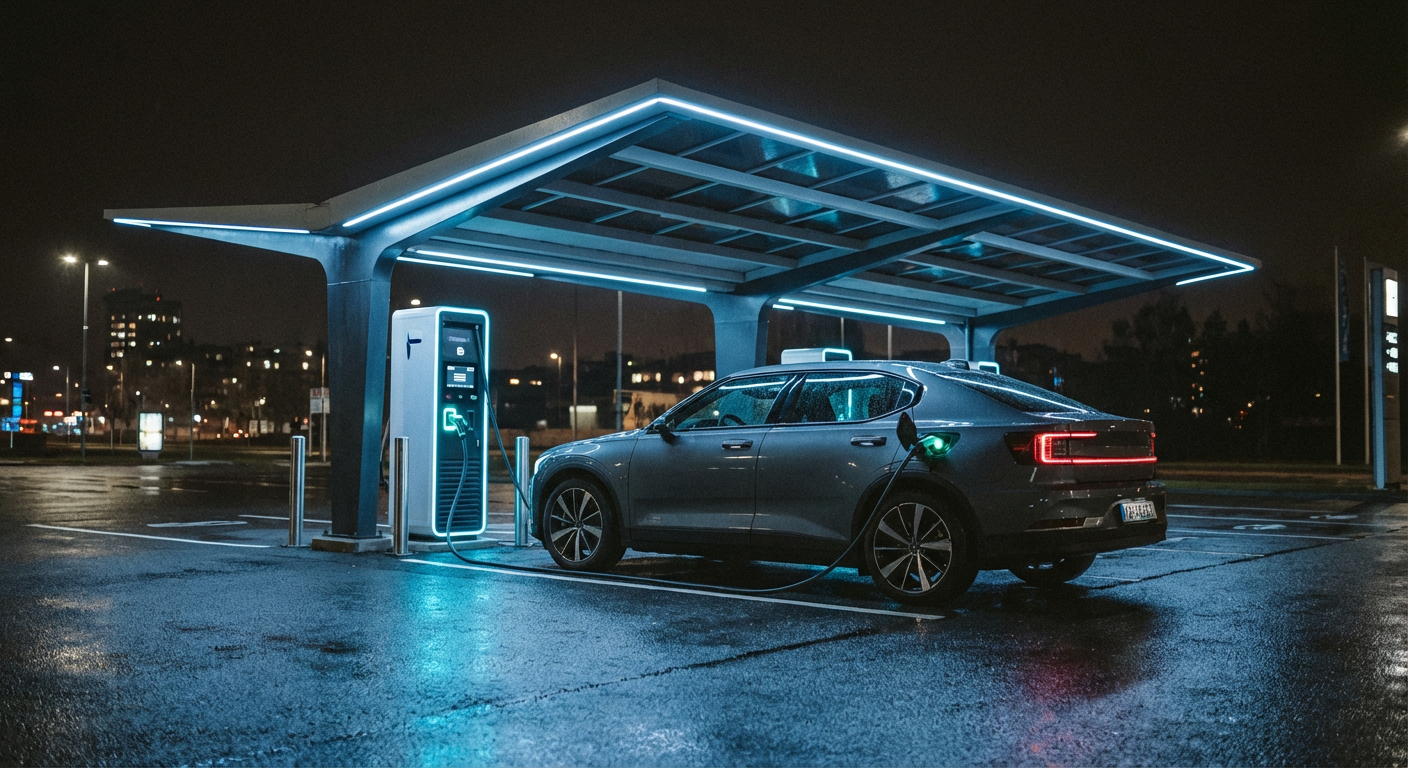
EV charging infrastructure is expanding rapidly across commercial properties nationwide